Summary:
Here’s something that doesn’t get said enough: sealing marble the wrong way can make it look worse than before. Not dramatically worse — but dull, uneven, or hazy in a way that’s frustrating when you’ve just paid for a professional service. The culprit is almost always sequence. Clean before you seal. Polish before you seal. Never the other way around. This sounds simple, but it’s where most marble care goes sideways — whether it’s a DIY attempt or a contractor who cut corners. If you want to understand what the right process actually looks like, and why each step matters, keep reading.
Why Marble Cleaning and Sealing Order Is Everything
Marble is calcium carbonate — a beautiful, porous, and chemically reactive stone. That combination means it absorbs liquids easily, reacts badly to acids, and shows surface damage in ways that other materials don’t. Cleaning and sealing address two different problems, and they only work when done in the right sequence.
Sealing is meant to close the stone’s pores so liquids can’t absorb and stain it. But if the surface isn’t clean before you apply sealer, you’re locking in whatever is already there — grease, mineral deposits, cleaning product residue, or old sealer that’s broken down. The new sealer bonds poorly, coverage is uneven, and the surface ends up looking cloudy or patchy.
The sequence that actually works: deep clean first, repair any damage, polish the surface, then seal. Each step prepares the stone for the next one. Skip or reverse any of them, and you’re not just wasting time — you’re potentially making the stone harder to restore later.
What Happens When You Seal Marble Without Cleaning It First
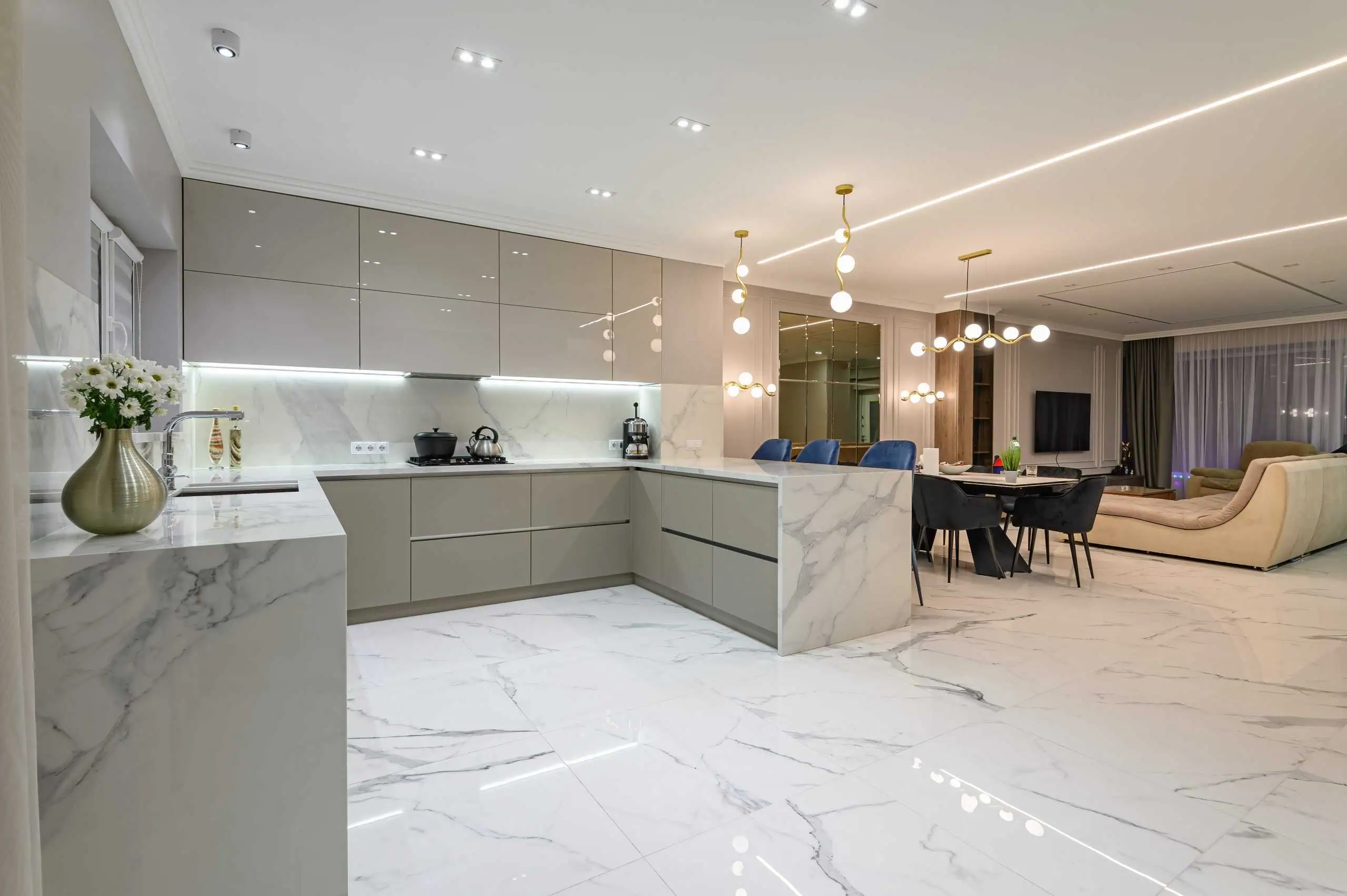
This is the most common sequence mistake, and it happens more often than you’d think — including with some professional services that rush the job. When sealer goes onto a surface that hasn’t been properly cleaned, a few things go wrong.
First, the sealer doesn’t penetrate evenly. Natural stone has pores, and those pores need to be open and clear for a penetrating sealer to do its job. If there’s a film of soap residue, hard water deposits, or old wax on the surface, the sealer sits on top of those contaminants rather than soaking into the stone. The result is a hazy, streaky finish that looks worse in certain lighting — and is difficult to correct without stripping the sealer and starting over.
Second, anything trapped under the sealer stays there. In New York County apartments and buildings, marble countertops and bathroom floors accumulate mineral buildup from hard city tap water, residue from cleaning products that weren’t designed for stone, and in some cases, mold or mildew in grout lines. Sealing over any of that doesn’t neutralize it — it encases it.
Third, if there are etch marks on the surface — those dull, whitish spots caused by acidic contact — sealing doesn’t fix them. Etching is a chemical reaction that changes the actual finish of the stone. It’s not a stain sitting on top; it’s structural surface damage. No sealer addresses it. The only way to remove etch marks is to polish or hone the stone, which means polishing must happen before sealing, not after. If you seal first and then realize the surface still looks dull, you’ve added a step to your own problem.
In pre-war New York County buildings — the kind of co-ops and condominiums on the Upper East Side and Central Park West with original marble bathrooms and lobby floors that are 80 or 100 years old — surface contamination and etch accumulation are almost guaranteed. That history doesn’t disappear under a coat of sealer. It has to be addressed directly, in the right order.
Why Marble Polishing Has to Come Before Sealing — Not After
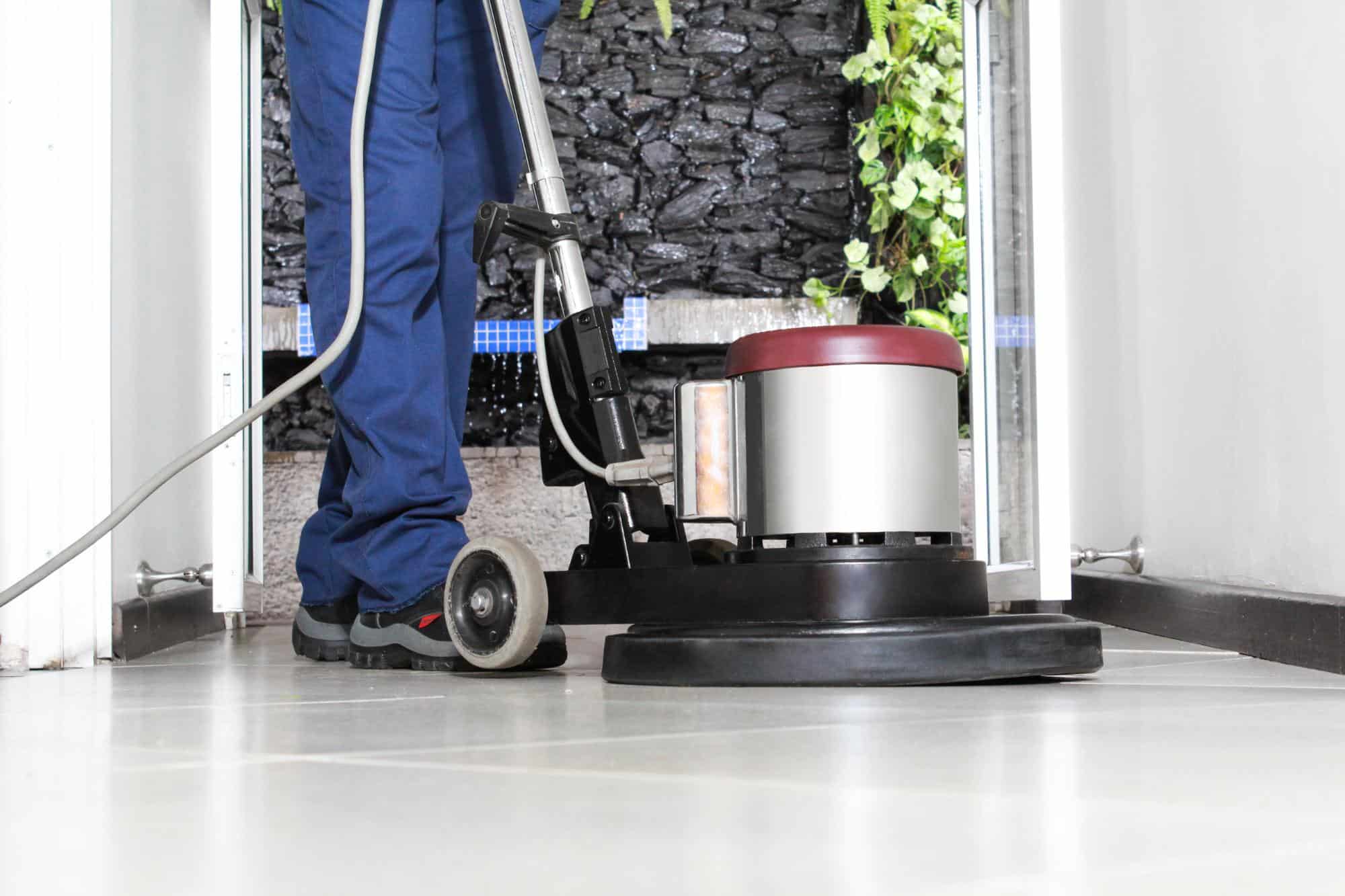
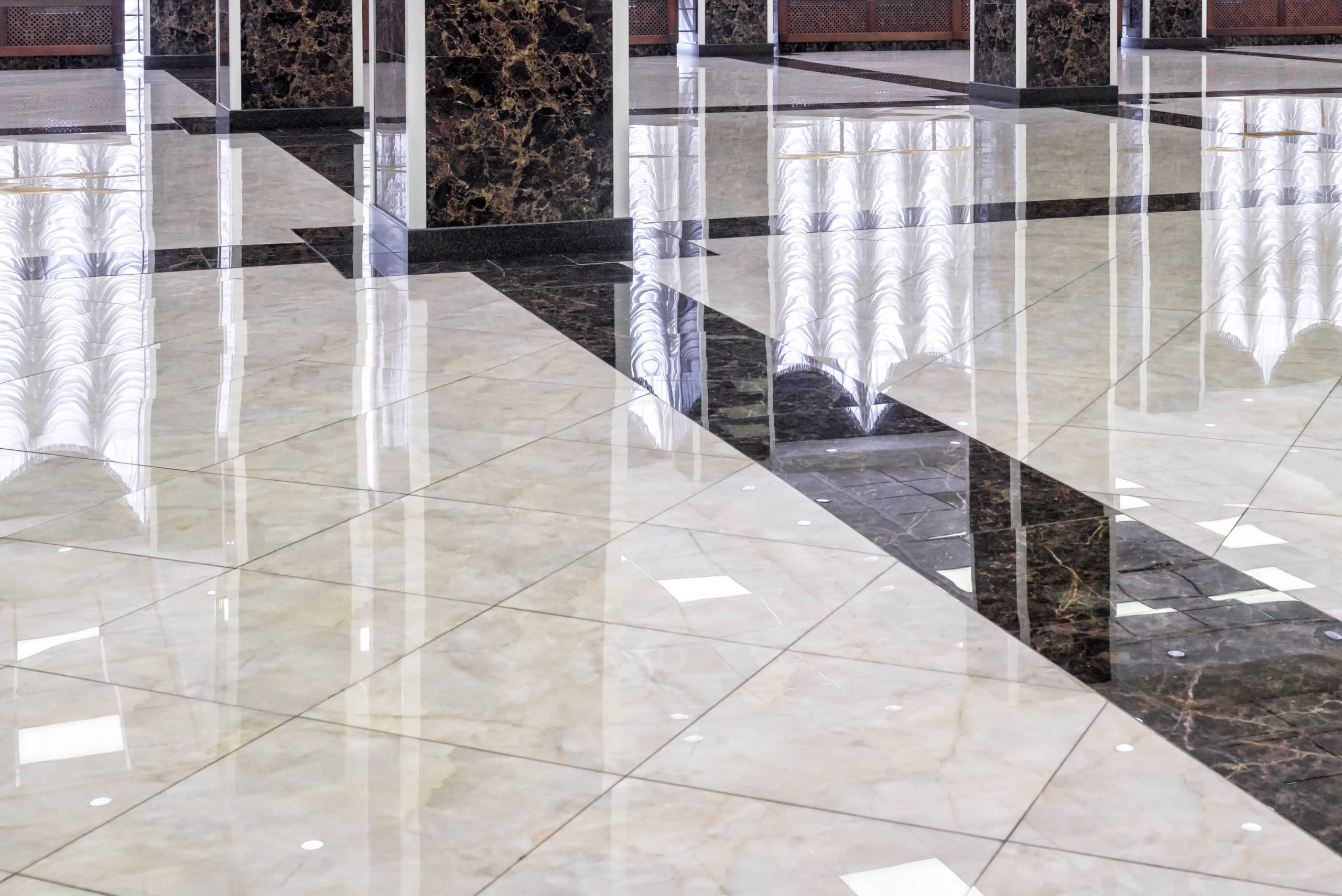
If your marble has etch marks, fine scratches, or a dull, flat appearance, polishing is the step that fixes it. Polishing uses progressively finer diamond abrasive pads to remove surface damage and restore the stone’s finish — whether that’s a high-gloss mirror shine or a softer, honed look. It’s the step that makes marble look like marble again.
But here’s the part that trips people up: polishing must happen before sealing. The reason is practical. Polishing is an abrasive process — it physically removes a thin layer of the stone’s surface to eliminate scratches and etch marks. If you’ve already applied sealer, polishing removes it. Now you’ve done extra work, used extra product, and you still need to reseal when you’re done. Worse, if you skip polishing entirely because you assume the sealer will improve the appearance, you end up with a sealed surface that still looks dull — because the sealer doesn’t add shine, it just protects what’s already there.
The correct marble polishing and sealing sequence runs like this: assess the stone’s condition, clean thoroughly with a pH-neutral stone-specific cleaner, make any necessary repairs to chips or cracks, polish using diamond pads in the appropriate grit sequence, then apply penetrating sealer in two coats and allow it to cure fully before the surface returns to use. That cure window is typically 24 to 48 hours.
The two-coat detail matters more than most people realize. Highly porous marble varieties — Calacatta, light Carrara, and similar stones that are common in New York County renovation projects — absorb sealer quickly. A single coat often isn’t enough to fully close the pores. The first coat soaks in; the second coat fills what the first coat missed. Applying only one coat and calling it done leaves the stone under-protected, which means staining can still occur even on a recently sealed surface. We apply two coats as standard practice because one coat isn’t always enough, and the difference in protection is significant.
Marble Floor Maintenance in New York County: What the City Actually Does to Your Stone
New York County marble faces conditions that most marble care guides aren’t written for. The general advice — clean regularly, seal annually, avoid acidic products — is correct as far as it goes. But it doesn’t account for what actually happens to marble in a New York City building.
Winter is the most damaging season for lobby and entryway marble. Rock salt and de-icing chemicals from treated sidewalks get tracked in on foot traffic and deposited directly onto stone floors. Salt is mildly abrasive and slightly acidic — a combination that accelerates surface wear and etching over time, especially on high-traffic floors. A lobby that sees dozens or hundreds of residents and visitors daily in January and February is dealing with a very different maintenance reality than a single-family home in a quieter market.
Hard water is another factor specific to the city. New York County tap water contains minerals that leave deposits on marble surfaces — particularly visible in bathrooms, around sink areas, and on any marble that gets regular water contact. These deposits build up gradually and require professional cleaning to remove safely, without damaging the stone in the process.

How Often Should Marble Be Cleaned and Sealed in New York County?
The honest answer is: it depends on the surface, the traffic, and what it’s been exposed to. But there are some useful baselines.
For residential marble — bathroom floors, countertops, shower surrounds — penetrating sealers typically provide protection against staining for one to two years under normal use before reapplication is needed. That assumes the surface was properly cleaned and polished before sealing, and that the right number of coats were applied for the stone’s porosity level.
For high-traffic surfaces — building lobbies, elevator banks, commercial restaurant floors, hotel common areas — the timeline is shorter. Heavy foot traffic, cleaning product exposure, and the seasonal salt damage described above all degrade the sealer faster. Annual professional assessment is a reasonable baseline for commercial marble in New York County, with cleaning and resealing as needed based on what that assessment finds.
The simplest way to check whether your marble needs sealing is the water test. Put a few drops of water on the surface and watch what happens. If the water beads up and sits on top, the sealer is still doing its job. If the water darkens the stone within a few minutes, the marble is absorbing liquid and the sealer has worn down. That’s your signal to schedule professional service — not because the marble is ruined, but because it’s now vulnerable to staining that could have been prevented.
One thing worth knowing: if the surface looks dull or has visible white spots, the water test result is almost secondary. Dullness and white spots are typically etch marks — and as covered earlier, those require polishing, not sealing. Sealing a surface with active etch damage doesn’t restore the finish; it just protects the damaged surface from further staining. The polishing step has to come first.
For pre-sale preparation in New York County’s real estate market — where properties in neighborhoods like NoLita trade above $4,000 per square foot — the condition of marble surfaces has a direct impact on buyer perception and sale price. Dull, etched, or stained marble in a kitchen or bathroom is a visible signal to buyers that the property hasn’t been well maintained. Professional cleaning, polishing, and sealing before listing is one of the more cost-effective ways to improve how a property shows.
The Products You're Using Might Be the Problem
This is one of the most common situations we encounter: a homeowner who has been diligently cleaning their marble for years, and whose marble looks progressively worse for it. The surface is dull, there are faint whitish patches in the areas that get cleaned most often, and no amount of scrubbing improves it. The marble isn’t dirty. It’s been etched — by the cleaning products themselves.
Vinegar is the most common culprit. It’s popular as a “natural” cleaner, and it works well on many surfaces. Marble is not one of them. Vinegar is acidic, and acid reacts with calcium carbonate — the mineral that marble is made of — and chemically alters the surface finish. The same goes for lemon-based cleaners, citrus sprays, and many general-purpose bathroom cleaners that contain mild acids. Even products labeled as “stone safe” sometimes aren’t, and the damage accumulates slowly enough that people don’t connect the cleaning product to the deteriorating surface.
The right cleaner for marble is pH-neutral and formulated specifically for natural stone. That’s not a marketing distinction — it’s a chemical one. pH-neutral products clean without reacting with the stone. Anything outside that range, acidic or alkaline, risks damaging the surface over time.
The reason this matters in the context of cleaning and sealing sequence is that product damage has to be addressed before sealing. If a surface has been etched by years of the wrong cleaner, polishing is required to restore the finish — and that polishing has to happen before the sealer goes on. Skipping straight to sealing over an etched surface gives you a protected surface that still looks bad.
In New York County apartments, where residents often use whatever cleaning products they have on hand for bathroom and kitchen marble, this kind of cumulative product damage is extremely common. It’s also entirely reversible with the right professional process — which is worth knowing before anyone assumes their marble is beyond help. Most of the time, it isn’t.
Getting Marble Cleaning and Sealing Right the First Time
The sequence isn’t complicated once you understand it: clean thoroughly, repair what needs repairing, polish out any etch marks or surface damage, then seal — two coats for porous stone, with full cure time before the surface goes back into use. Every step depends on the one before it. Skipping or reversing any part of that process is where things go wrong.
For New York County property owners dealing with pre-war marble, high-traffic lobby floors, or surfaces that have been cleaned with the wrong products for years, professional restoration isn’t just about aesthetics. It’s about protecting a material that’s genuinely difficult and expensive to replace, in a market where condition matters.
If you’re not sure where your marble stands — whether it needs cleaning, polishing, sealing, or all three — we’re here to help. Diamond Stone Restorations Corp offers free estimates and works with both residential and commercial clients across New York County. Reach out to discuss what your marble actually needs, and we’ll tell you straight.