Summary:
You cleaned the floor. Maybe more than once. And it still looks dull, hazy, or just… not right. That’s one of the most frustrating things about marble — it can look worse after cleaning if you’re using the wrong product. The good news is that most marble floors aren’t as far gone as they appear. The bad news is that a lot of the advice out there — and a lot of the products on store shelves — can quietly make things worse over time. Here’s a clear-eyed look at what actually works on marble, what to avoid, and how to know when a floor needs more than cleaning can offer.
What Makes a Good Marble Floor Cleaner
Marble is calcium carbonate. That matters because calcium carbonate reacts with acid — and a surprising number of everyday cleaners are acidic. Vinegar, lemon juice, many “natural” all-purpose sprays, and even some tile cleaners will etch marble on contact. The damage isn’t always immediate or dramatic, but it accumulates. Over months and years, it shows up as dull patches, white spots, and a surface that no longer reflects light the way it should.
The only cleaners that are genuinely safe for marble are pH-neutral, stone-specific formulas. Products like MB Stone Care’s MB-1 or similar stone-safe cleaners are designed to lift dirt without reacting with the stone. They don’t leave wax films, they don’t strip sealers, and they don’t etch the surface. That’s the baseline. Anything outside that category carries real risk, even if the label says “natural” or “gentle.”
Common Cleaners That Damage Marble — And Why People Keep Using Them
Vinegar is probably the most common offender. It has a pH of around 2.5, which makes it highly acidic — fine for cutting grease on a stainless steel sink, genuinely destructive on marble. The etching it causes isn’t a surface stain you can wipe away. It’s a physical change to the stone itself, where the polished layer has been chemically removed. You can’t mop that out.
Bleach is another one. It’s alkaline rather than acidic, but it’s still too harsh for marble and will dull the finish over time, especially with repeated use. The same goes for most bathroom cleaners, grout cleaners, and anything with ammonia. These products are formulated for ceramic tile or porcelain — materials that can handle a wider pH range. Marble cannot.
The reason people keep using these products is simple: they work on other surfaces, they’re already in the cabinet, and the damage to marble happens gradually. You don’t see the harm from one use. You see it after six months of regular cleaning, when the floor that used to shine now looks flat and worn.
Wax-based polishes are a different kind of problem. They don’t etch the stone, but they leave a film that builds up over time and traps dirt inside it. The floor looks cloudy or hazy, even right after cleaning. Many homeowners assume the marble itself is deteriorating when really they’re just looking at layers of accumulated wax residue. It’s fixable, but it requires professional removal — not more mopping.
The pattern here is consistent: products that seem harmless, or that work fine elsewhere in the house, can quietly degrade marble over time. By the time the damage is obvious, it’s usually beyond what any cleaning product can reverse.
What Actually Cleans Marble Floors Without Causing Damage
For everyday maintenance, the routine is straightforward. Dry dust-mopping first to remove grit and debris — small particles act like sandpaper underfoot and scratch the surface over time. Then a damp mop with a pH-neutral stone cleaner, wrung out well so you’re not flooding the floor with water. Rinse with clean water. Dry thoroughly. That’s it.
The products worth using are the ones specifically formulated for natural stone. MB Stone Care, Granite Gold, and similar professional-grade brands make stone-safe daily cleaners that are widely available and not expensive. They clean effectively without leaving residue or reacting with the stone’s chemistry. For most marble floors in good condition, this routine — done consistently — is enough to maintain the surface between professional treatments.
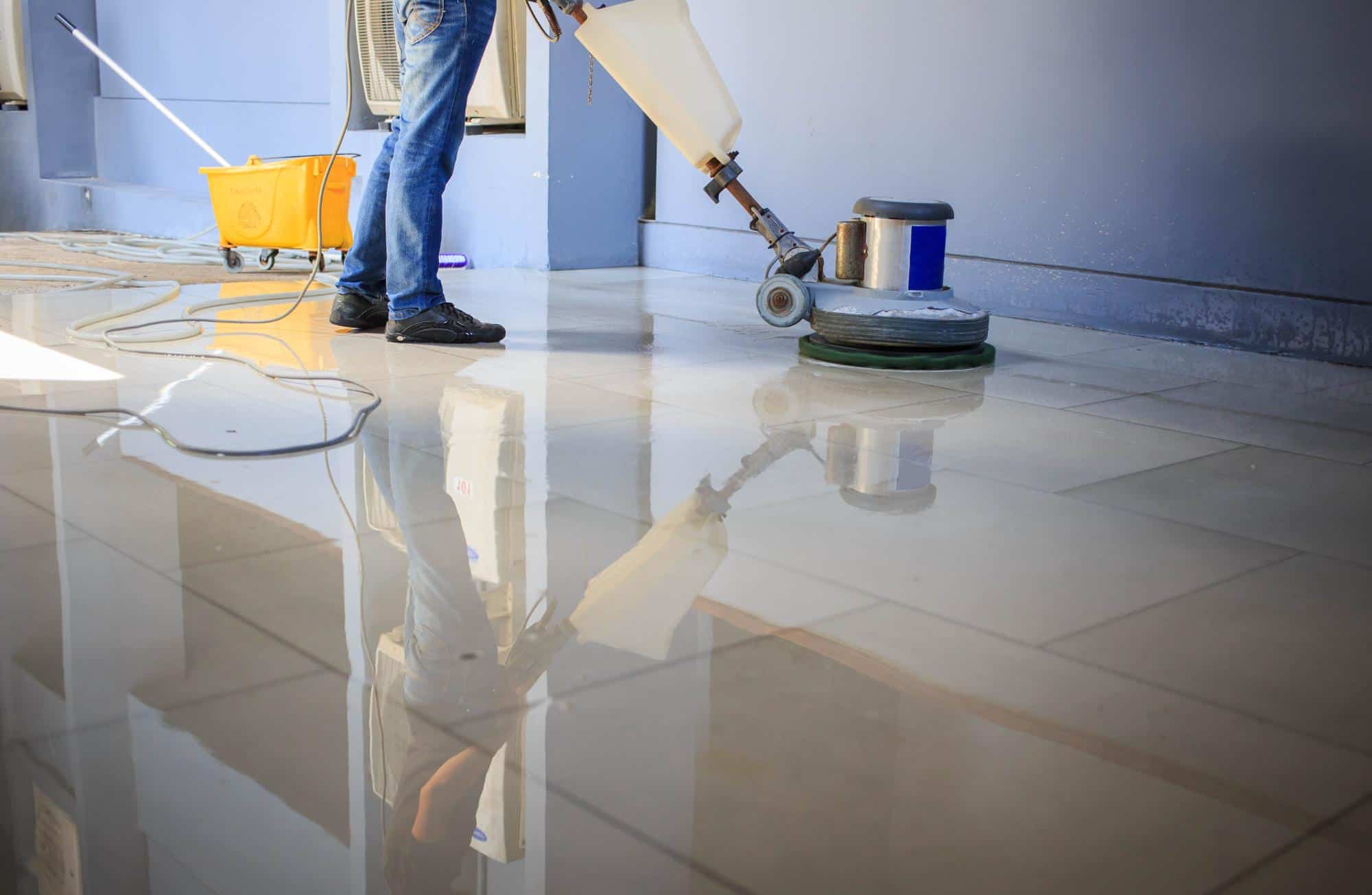
What it cannot do is reverse damage that’s already there. A pH-neutral cleaner will not remove etch marks. It will not restore a dull, worn finish. It will not lift deep staining that has penetrated the stone. Those outcomes require mechanical work — specifically, diamond abrasive polishing that physically refines the surface back to its original finish. No cleaning product, regardless of what the label claims, can replicate what diamond polishing does. The chemistry simply doesn’t work that way.
This is the line that matters most for marble owners: cleaning maintains a surface that’s in good condition. It does not restore a surface that isn’t. If your floor is already showing dullness, haze, etching, or discoloration that cleaning hasn’t touched, you’re past the point where product selection is the answer. The floor needs restoration, not a different cleaner.
For residents throughout New York County, this distinction matters. Pre-war buildings on the Upper West Side, in the West Village, and in the Financial District contain original marble that’s been cleaned — sometimes incorrectly — for decades. The damage in those floors isn’t from neglect. It’s from years of well-intentioned maintenance with the wrong products. That’s a restoration job, not a cleaning problem.
Marble Polishing Cost: What Professional Restoration Actually Runs
Once you’ve determined that cleaning isn’t going to cut it, the next question is what professional restoration costs — and whether it’s worth it compared to replacement. The short answer is that it almost always is. Professional marble polishing typically runs between $5 and $18 per square foot, depending on the condition of the stone and the scope of work required. Full replacement, by contrast, can cost $50 to $125 or more per square foot once you factor in demolition, fabrication, and installation.
On a 400-square-foot floor, that’s the difference between roughly $2,000–$7,200 for restoration and $20,000–$50,000 or more for replacement. For most floors, restoration isn’t just the more affordable option — it’s the smarter one, because it preserves the original material rather than sending it to a landfill and starting over.
Marble Polishing Price Breakdown: What Affects the Cost
The marble polishing price for any given project depends on a few key variables. Surface condition is the biggest one. A floor with light dullness and minor surface scratches requires less work than one with deep etching, staining, or lippage — the uneven edges between tiles where one sits higher than another. The more preparation work required before polishing begins, the higher the cost.
Grit progression matters too. Restoring a heavily damaged floor means starting with coarser diamond abrasive pads and working through multiple finer grits before the polishing stage. Each additional pass takes time and equipment. A floor that only needs a light polish can skip the early stages entirely, which brings the price down considerably.
Accessibility is a real factor in New York County in a way it simply isn’t in most other markets. Getting restoration equipment into a 15th-floor co-op on the Upper East Side involves elevator padding, coordination with building staff, compliance with the building’s contractor hours — typically 8 AM to 5 PM on weekdays — and often proof of insurance before anyone sets foot in the building. Many co-op and condo boards throughout New York County require contractors to carry $1 to $2 million in liability coverage per occurrence, plus workers’ compensation. These logistics add time, and time affects pricing. A company that doesn’t account for this upfront will either surprise you with additional fees later or cut corners on access protocols that your building requires.
Surface area affects cost in a straightforward way — larger areas are more efficient to work and often come in at a lower per-square-foot rate than small jobs. A small foyer of around 100 square feet might run $500 to $1,200. A living and dining area at 400 square feet could be $1,200 to $4,800 depending on condition and required work. Marble countertop restoration for a typical kitchen generally falls in the $1,000 to $2,000 range.
What you should expect from us is a detailed estimate that reflects the actual scope — not a low number designed to win the job followed by additions once work begins. We provide straightforward quotes with no hidden fees, based on a real assessment of what your floor needs.
Marble Refinishing Cost vs. Replacement: The ROI Case for Restoration
The marble refinishing cost question comes up most often when the damage looks serious. Deep scratches, significant etching across large areas, staining that has penetrated the stone — these things can make a floor look genuinely beyond saving. In most cases, they aren’t.
Professional diamond honing — the step before polishing for more severely damaged stone — physically removes the damaged surface layer by working through a progression of abrasive grits, from coarser to finer, until the stone is smooth and ready to be polished back to its original finish. This process can address damage that looks irreversible to the untrained eye. The floors that come out of a full honing and polishing treatment often look better than they did when originally installed, because the process removes years of accumulated micro-scratches and surface wear that were present even before the obvious damage occurred.
Professionally restored marble, properly sealed after the work is done, can realistically extend the life of the surface by 15 years or more. That’s not a marketing claim — it’s the practical outcome of removing the damaged layer, restoring the surface integrity, and applying a penetrating sealer that protects against future staining. Marble sealing should be refreshed every 6 to 12 months for optimal protection, but the restoration itself is a long-term investment.
From an environmental standpoint, restoration is the obviously better choice. Replacing marble means demolition, disposal, quarrying new stone, fabricating it, and installing it — a significant material and energy cost. Restoring it means preserving what’s already there. For property owners and managers in New York County who are increasingly attentive to the environmental footprint of building decisions, this matters. We use biodegradable polishing compounds specifically because it aligns with how we think about this work — and because many of the buildings we work in, from pre-war co-ops on the Upper West Side to commercial properties in the Financial District, have clients who care about what goes into their spaces.
The financial case is equally clear. Even at the high end of restoration pricing — $15 to $18 per square foot for a full honing, polishing, and sealing treatment — you’re spending a fraction of what replacement would cost. In a market where the average Manhattan condo trades at around $2.84 million, the condition of marble floors and surfaces directly affects property value. Restoration isn’t a cost to minimize. It’s an investment with a measurable return.
When to Stop Cleaning and Call a Marble Restoration Professional
The right cleaner matters. Using a pH-neutral, stone-safe product consistently will protect marble that’s in good shape and slow the accumulation of damage over time. But cleaning has a ceiling. If your marble is already dull, etched, stained, or hazy in ways that haven’t responded to proper cleaning, no product is going to fix that. The surface needs to be mechanically restored — and the sooner that happens, the less work it typically requires.
For homeowners and property managers in New York County, the calculus is usually straightforward once the numbers are on the table. Restoration costs a fraction of replacement, extends the life of the surface significantly, and — when done well — leaves the marble looking better than it has in years. The challenge is finding someone who actually knows what they’re doing in a market full of operators who don’t.
If you’re at that point, we’ve been doing this work in Manhattan and Astoria for over a decade. Reach out for a free quote and a straight answer about what your floor actually needs.