
Summary:
Manhattan’s stone surfaces have a hard life. Road salt tracked in off the sidewalk. Hard water leaving mineral haze on bathroom tile. A century of foot traffic grinding down lobby marble that was once mirror-bright. If your stone looks dull, stained, or just plain tired, you’re probably wondering whether it can be fixed — or whether you’re looking at a full replacement.
The answer, more often than not, is that it can be fixed. Professional natural stone restoration reverses most of what time and daily use do to these surfaces. We’ve restored hundreds of homes and buildings throughout New York County, and this guide explains how the process works, what’s involved for different stone types, and how to make the right call for your home.
Natural Stone Restoration: Understanding the Complete Process
Restoration isn’t cleaning. That’s the most important distinction to understand before anything else. Cleaning removes surface dirt. Restoration works on the stone itself — removing scratches, reversing acid etching, filling voids, and rebuilding the surface finish from the ground up.
The process follows a logical sequence. We start with a thorough assessment of the stone type and the extent of the damage, because marble, travertine, limestone, and slate each behave differently and require different approaches. From there, the work moves through grinding (when damage is deep), honing with progressively finer diamond abrasive pads, and polishing to bring the surface back to its intended finish. Sealing is the final step — protecting the restored surface so it stays that way.
Most residential jobs in New York County take one to three days. The space is usable again shortly after the sealer cures. It’s not the weeks-long construction project most homeowners expect.

How Diamond Honing and Polishing Actually Restore Stone
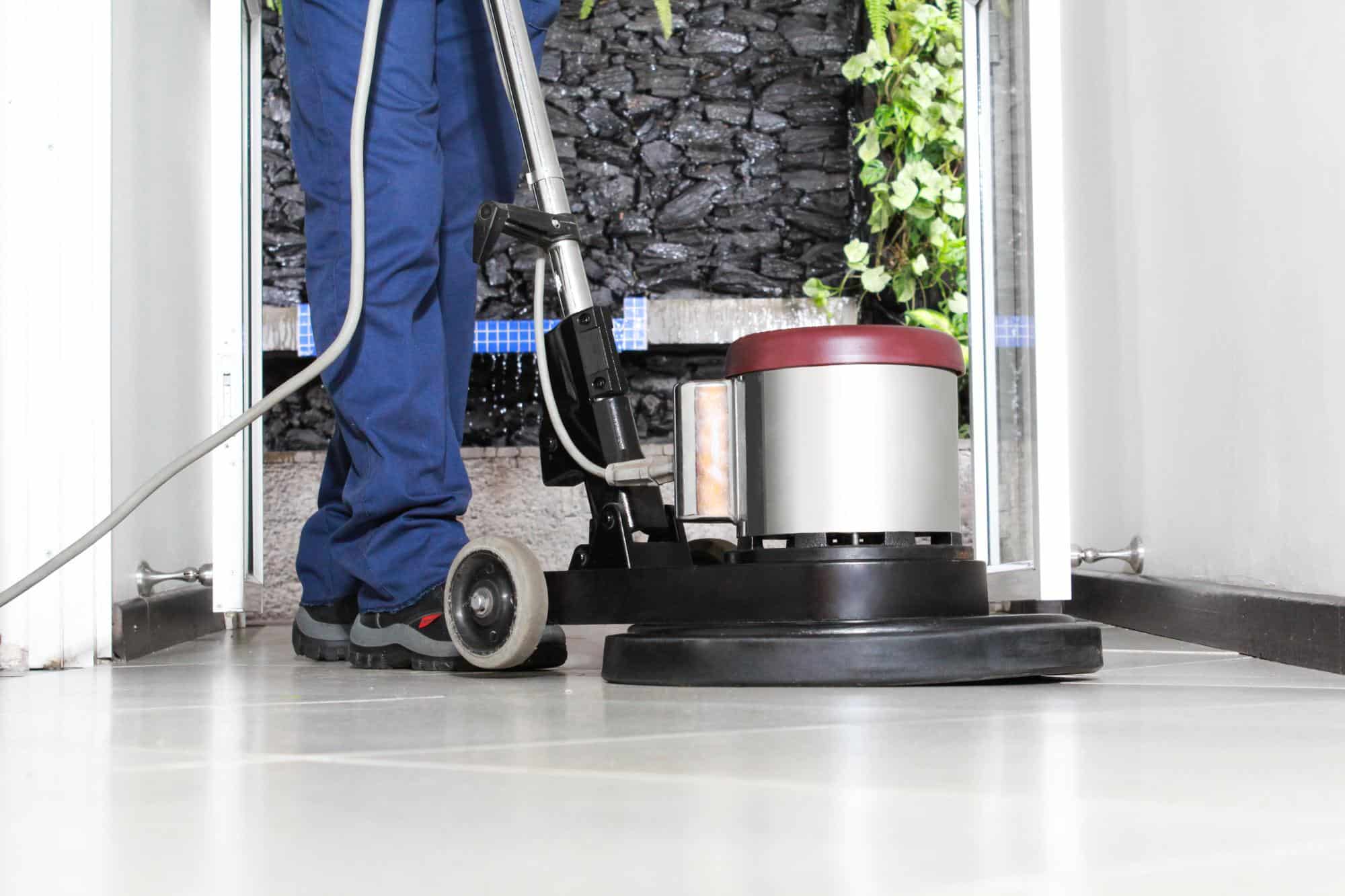
The core of professional stone restoration is diamond abrasive technology. Diamond-impregnated pads work through a series of progressively finer grits — starting coarse enough to remove deep scratches, etching, or lippage (those slightly uneven tile edges you can feel underfoot), and finishing fine enough to bring the surface to a true polish.
For polished marble, the final step involves a chemical-mechanical polishing process that interacts with the calcium carbonate in the stone itself. Done correctly, it produces a mirror-like finish that isn’t just surface shine — it’s the stone’s own natural luster, revealed. This is why a professionally restored marble floor often looks better than it did when it was first installed, not just better than it did last week.
Honing, by contrast, produces a matte or satin finish. It’s the right choice for travertine, slate, and any stone application where a non-reflective surface is preferred. The technique is the same — diamond abrasives in sequence — but the process stops before the final polishing stage.
What separates skilled restoration work from a bad experience is the assessment that happens before any equipment is turned on. We identify the stone type, evaluate the damage honestly, and explain exactly what the process will involve. If someone gives you a quote without being able to name the stone you have or describe the specific steps they’ll take, that’s a red flag worth paying attention to.
Chip and crack repairs follow the same principle of precision. Color-matched compounds are worked into damaged areas and then mechanically polished flush with the surrounding surface. When it’s done well, the repair disappears. Visible patches are a workmanship problem, not an inherent limitation of what restoration can do.
When Restoration Is the Right Call — and When It Isn't
Most stone that looks beyond saving isn’t. Etching — that dull, slightly rough patch left behind when acidic cleaners or lemon juice contact polished marble or limestone — is surface-level damage. So are scratches, hard water mineral haze, and general loss of sheen from years of foot traffic. All of it responds to professional restoration.
The cases where replacement genuinely makes more sense are structural: stone that has cracked through its substrate, tiles that have delaminated from the floor, or sections with such severe subsidence that the surface can’t be made level again. These situations exist, but they’re less common than most homeowners assume when they’re staring at a floor that looks rough.
Here’s the financial reality in New York County specifically. New stone flooring costs $6 to $20 per square foot in material alone — before demolition, custom fabrication, installation labor, and in many buildings, board approval and building management coordination. Professional restoration runs $3 to $20 per square foot depending on the stone type and condition. The savings typically land between 70 and 90 percent compared to full replacement. In a borough where the average condo sells for over $2,000 per square foot, spending $4,000 to restore a worn marble entryway instead of $20,000 to replace it is straightforward math.
There’s also the sustainability angle, which matters to a lot of New York County homeowners. Replacing stone means quarrying new material, shipping it across the world, demolishing and landfilling what’s already there, and burning significant energy in fabrication. Restoration preserves what exists. The stone in your pre-war co-op or West Village townhouse has already made its environmental cost — restoring it is the lower-impact choice by a wide margin.
Travertine Restoration in New York County Buildings: What You Need to Know
Travertine is everywhere in Manhattan’s residential stock — bathroom floors and walls in pre-war co-ops, entryway tile in mid-century buildings, shower surrounds throughout the Upper East and Upper West Sides. It’s a beautiful stone, but it has specific characteristics that make restoration a little different from marble or granite.
The most visible feature of travertine is its natural pits and voids — the small holes that form as the stone is created. In many installations these are left open, which gives the stone its distinctive texture but also traps dirt, soap residue, and moisture over time. Professional travertine restoration addresses this directly.

How Travertine Restoration Handles Pits, Etching, and Surface Wear
The standard professional approach to travertine restoration starts with filling those natural voids. Grout or epoxy filler is worked into the pits, allowed to cure, and then honed flush with the surrounding surface using diamond abrasive pads. The result is a smooth, even surface that’s far easier to clean and maintain — and looks dramatically different from the pitted, worn version most homeowners have been living with.
From there, the process follows the same honing sequence used for other stone types, working through progressively finer grits to remove scratches, etching, and surface buildup. Travertine is a calcium carbonate stone like marble and limestone, which means it’s vulnerable to acid damage from common household cleaners. Vinegar, citrus-based sprays, and generic multi-surface products etch the surface on contact — leaving dull patches that no amount of mopping will fix. This is one of the most common reasons New York County homeowners call us about their travertine floors and showers.
Sealing is especially important for travertine, and the maintenance schedule is more frequent than most people realize. In high-use areas like bathrooms, travertine should be resealed every six to twelve months. We use professional-grade impregnating sealers — products like MB Stone Care and Aqua Mix — that penetrate the stone rather than sitting on top of it, which means they protect without changing the surface appearance or making floors slippery.
One thing worth knowing: travertine restoration is a specialized skill. The combination of void-filling, honing, and sealing requires an understanding of the stone’s specific porosity and chemistry. A generalist floor cleaning company with a polishing machine isn’t the same thing. The difference shows up in the finished result — and in how long it holds up.
Limestone Restoration Methods That Actually Last
Limestone is softer and more porous than marble, which makes it both beautiful and demanding. It absorbs stains readily, etches easily from acid contact, and shows wear faster than harder stones. In New York County, it shows up frequently in bathroom floors, kitchen countertops, and the entryways of older townhouses and brownstones in neighborhoods like Chelsea, the West Village, and the Upper East Side.
The restoration approach for limestone has to account for that softness. Aggressive grinding techniques appropriate for granite would damage limestone — so we use gentler diamond abrasive sequences, progressing carefully through grits to avoid cutting too deep. Stain removal often requires specific chemistry matched to the type of stain: organic stains (coffee, wine, food) respond to one approach, mineral deposits from hard water respond to another, and oil-based stains require something different again. Getting it wrong doesn’t just fail to remove the stain — it can set it deeper or damage the surface.
Etching is the most common limestone problem we see in Manhattan homes. Because limestone is calcium carbonate, any acidic substance — including the hard water that comes out of New York County taps and sits on surfaces as it evaporates — reacts with the stone and leaves a dull, slightly rough mark. These etch marks look like stains but don’t respond to cleaning because they’re not stains — they’re physical changes to the surface. Diamond honing removes them by creating a new surface layer, and polishing restores the sheen.
After restoration, limestone needs a quality penetrating sealer applied and maintained on a regular schedule — typically every one to three years depending on the application and traffic level. Properly sealed and maintained limestone holds up well and stays looking clean. Without sealing, it will absorb everything it contacts, and the restoration work will degrade faster than it should.
Choosing a Natural Stone Restoration Service in New York County
Manhattan’s stone surfaces face conditions that most other markets don’t — aging building stock, hard water, salt and grit from city winters, and the kind of daily traffic that wears things down fast. Most of what that produces is restorable. The dull marble lobby, the etched travertine bathroom, the stained limestone countertop — these are problems with professional solutions, not reasons to gut and replace.
The key is working with someone who actually knows the material in front of them. Stone type identification, honest assessment, named techniques, professional-grade products — these are the signals that separate quality restoration work from a disappointing experience.
We’re based right across the East River in Astoria and serve homeowners and property managers throughout New York County. If you’re trying to figure out what your stone needs, reach out for a straightforward conversation about what you’re dealing with — no pressure, just a clear picture of what’s possible.
—
**Frequently Asked Questions**
**What is natural stone restoration and how does it work?** Natural stone restoration is the process of repairing and refinishing a stone surface back to its original condition — or better. It’s different from cleaning. The process involves assessing the stone type and damage, then working through diamond abrasive honing in progressively finer grits to remove scratches, etching, and surface wear. Polishing follows to restore sheen, chip and crack repairs are blended seamlessly into the surrounding stone, and a professional-grade sealer is applied to protect the finished surface. Most residential jobs in New York County are complete in one to three days.
**What types of natural stone can be restored?** Marble, travertine, limestone, granite, slate, flagstone, and terrazzo can all be professionally restored. Each requires a different approach — travertine needs void-filling before honing; limestone requires gentler abrasive sequences because of its softness; marble responds to chemical-mechanical polishing that interacts with the stone’s calcium carbonate. The stone type has to be correctly identified before any work begins, because using the wrong technique on the wrong stone causes damage rather than fixing it.
**How do I know if my natural stone can be repaired or needs replacement?** In New York County, the vast majority of stone surfaces that look damaged are dealing with surface-level issues — etching, scratching, staining, mineral buildup, or loss of polish — all of which professional restoration reverses. True structural failure (stone cracked through its substrate, tiles fully delaminated, severe subsidence) is far less common than homeowners assume. If your stone looks bad but is still physically intact and level, restoration is almost certainly viable. We can confirm it with a professional assessment.
**What causes natural stone surfaces to deteriorate?** In New York County specifically, the main culprits are hard water mineral deposits that accumulate on bathroom and kitchen stone, road salt and abrasive grit tracked in during winter months, acidic household cleaners that etch calcium carbonate stones like marble, travertine, and limestone, and the cumulative effect of heavy foot traffic in high-density residential buildings. Pre-war co-op lobbies and townhouse entryways see particularly accelerated wear because of the volume of daily use. Regular professional maintenance — cleaning, resealing on the right schedule — slows all of it down significantly.