Summary:
Organic Stains: Food, Coffee, Wine, and Leaves
Organic stains are caused by substances that naturally decompose, such as fruit, wine, coffee, and leaves. These are common in kitchens, entryways, and outdoor patios. On lighter stones like marble or limestone, these stains can appear as brown, yellow, or pinkish discoloration. In many cases, professional stone cleaning and stone polishing can remove organic stains, especially when addressed quickly. Deep-set stains may require poultice applications or multiple treatments as part of a full marble restoration or granite restoration process.
Rust Stains from Metal Fixtures and Furniture
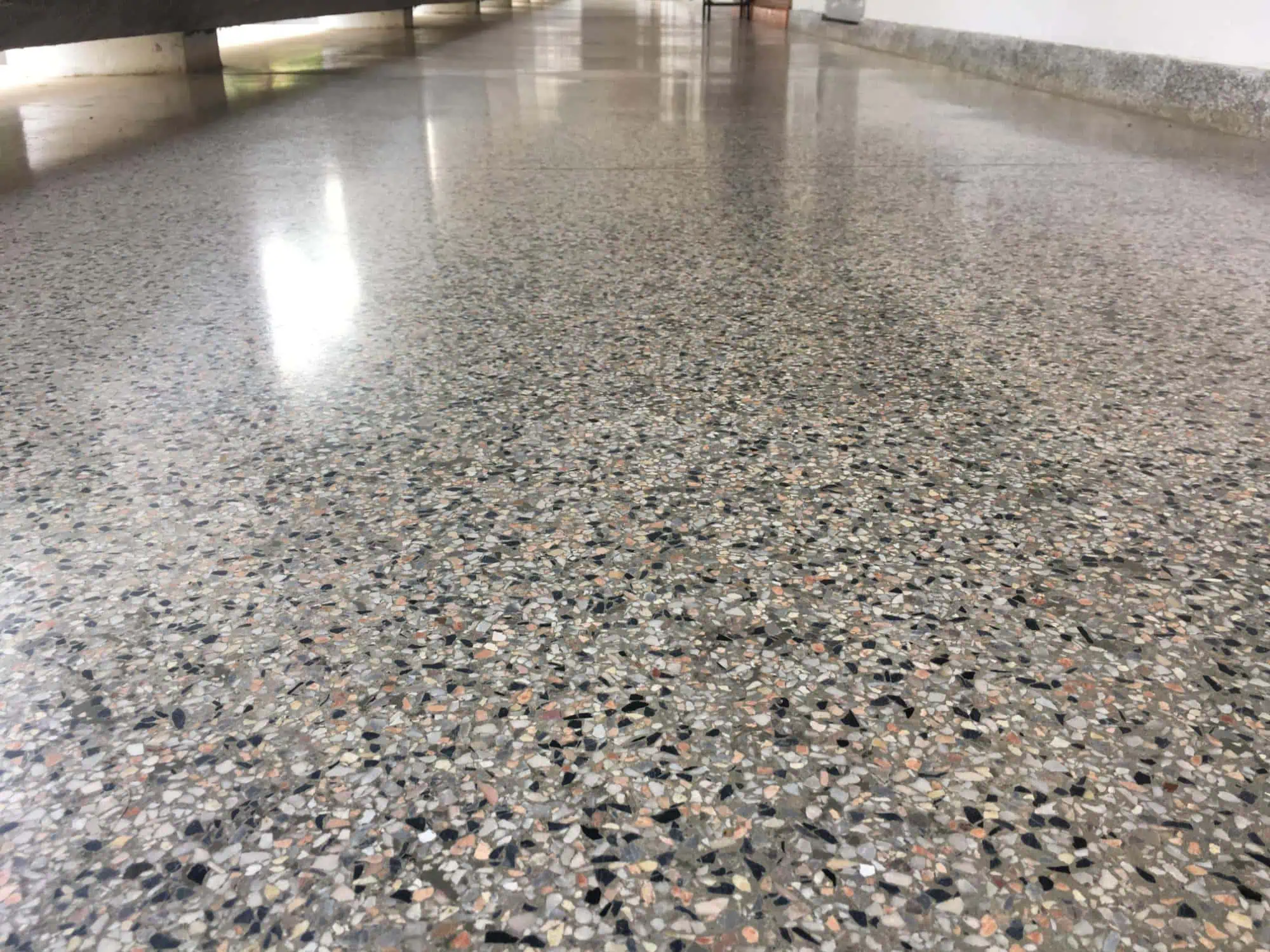
Iron tools, plant stands, or even metal screws can cause rust stains on porous stone surfaces. These appear as orange or reddish marks, often difficult to remove with standard cleaning. Professional stone restoration services use specialized rust removers and techniques that don’t damage the stone underneath. This is common in terrazzo restoration projects, where embedded metal elements may leave behind discoloration.
Oil and Grease Stains from Cooking or Cosmetics
Greasy residues from cooking oils, lotions, or makeup often affect granite countertops and bathroom vanities. These substances seep into the stone and darken the surface. Stone cleaning services can remove oil stains using degreasing agents and absorbent poultices. However, sealing is recommended afterward to help prevent future absorption.
Water Stains, Etching, and Hard Water Marks
Water spots and mineral deposits are another common issue, especially in bathrooms and around faucets. While water stains can often be wiped away, etching is caused by acidic liquids reacting with calcium in marble, which can leave dull and cloudy marks. These cannot be scrubbed out but can be corrected with stone polishing. In professional stone restoration, honing or buffing is used to smooth out etched areas and restore the stone’s natural gloss.

Biological Growth: Mold, Mildew, and Algae
In damp areas or exterior settings, mold and mildew can appear on stone surfaces. These stains can darken grout lines or leave a greenish hue on porous materials. Stone cleaning and disinfecting treatments can safely remove biological stains, followed by sealing to prevent regrowth. This is useful for high-humidity areas in Manhattan buildings or shaded outdoor spaces in Astoria.
Can All Stains Be Removed?
While most stains can be removed through professional stone cleaning, stone repair, or surface refinishing, some deeply embedded or aged discoloration may only be reduced and not fully erased. The sooner stains are addressed, the higher the success rate. For deep-set damage, stone crack repair or surface honing may be required to achieve the best outcome.
Restore Your Stone with Confidence
From food and oil to rust and mildew, most stains can be successfully treated with the right tools and expertise. Whether you need marble restoration in Manhattan or terrazzo restoration in Astoria, professional stone restoration brings results.