
Summary:
You noticed the problem a while ago — dull patches on the kitchen counter, cloudy rings on the bathroom vanity, a lobby floor that used to gleam and now just looks tired. You’ve tried cleaning it. Nothing changed. Now you’re wondering whether you need a professional, what that’s going to cost, and whether it’s even worth it before you just replace the whole thing.
Those are exactly the right questions. And if you’re in New York County, the answers are a little different than what most national pricing guides will tell you. Here’s what marble restoration actually costs in 2026 — and what drives the price up or down.
Marble Repair and Restoration: What the Process Actually Involves
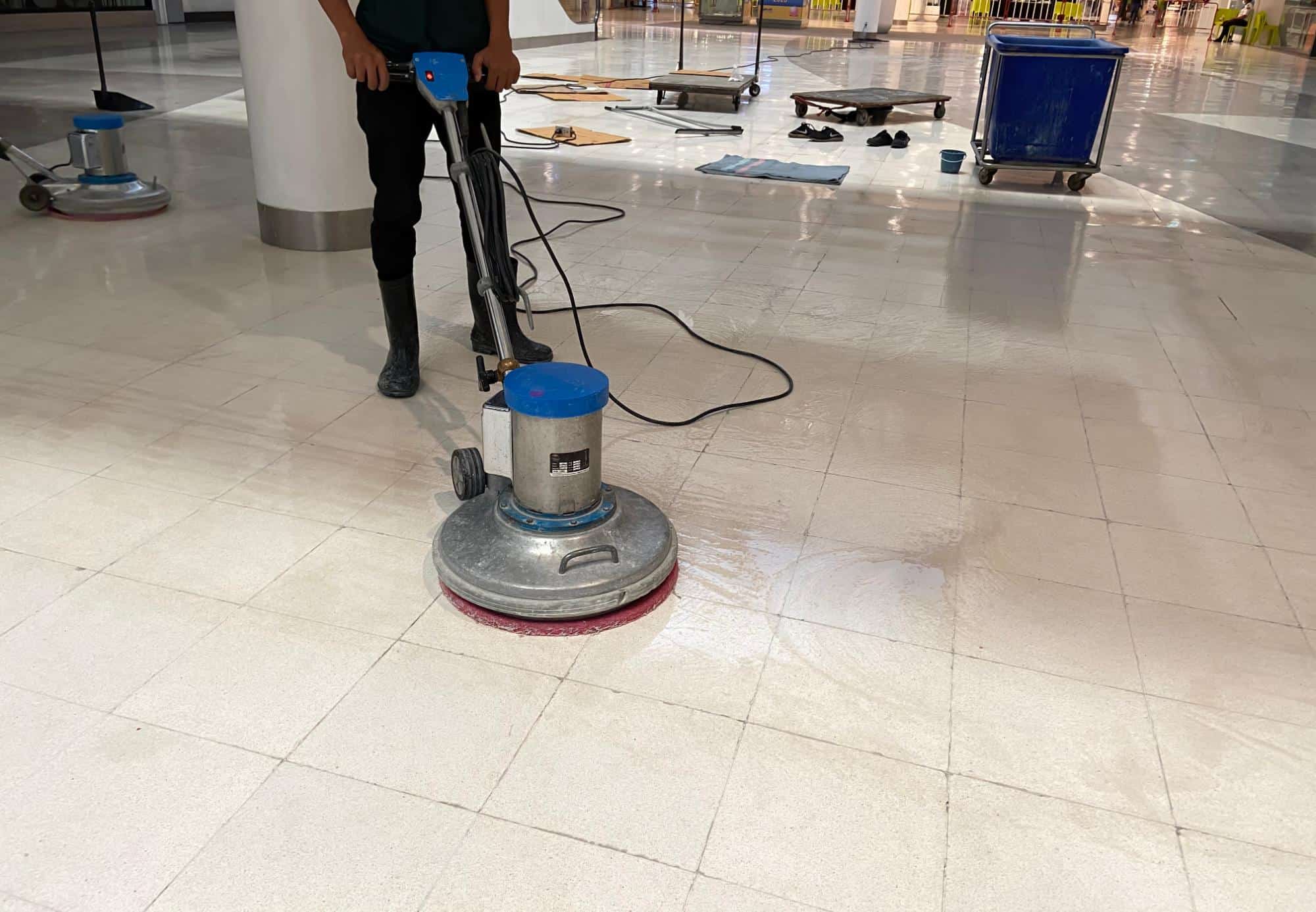
“Marble restoration” gets used loosely, but the work itself is precise. A proper restoration isn’t just polishing — it’s a multi-stage process that starts with assessing the damage, then works through honing to remove scratches and etching, followed by progressively finer diamond abrasive passes that rebuild the surface’s clarity and sheen. The final stage is sealing, which protects the restored surface from future staining and wear.
The reason the process matters for pricing is simple: not every marble surface needs every stage. A countertop with light etching might only need polishing and sealing. A heavily trafficked lobby floor with deep scratches and years of grime buildup is a different job entirely. Understanding where your marble falls on that spectrum is the first step toward understanding what you’ll pay.

What Does Marble Restoration Cost Per Square Foot in New York County?
Based on completed projects across New York County, homeowners are currently paying between $534 and $729 on average for marble restoration, with a full range of $436 to $827 depending on the scope of work. On a per-square-foot basis, professional marble restoration typically starts around $10 to $25 per square foot for polishing services — with more involved work, including grinding, honing, and sealing, landing at the higher end of that range.
Floors and countertops are priced differently. Marble floor restoration generally runs $5 to $18 per square foot depending on the damage level and the finish you’re after. Countertop restoration tends to cost more per square foot because of the precision involved — expect $5 to $25 per square foot, or roughly $1,200 to $3,500 for a full kitchen countertop restoration. Sealing treatments, when done as a standalone service, typically run $200 to $700 per area.
A few things push the price up in New York County specifically. Labor rates here are higher than the national average. Many residential buildings — co-ops and condominiums especially — require licensed, insured contractors before granting access, which filters out the lower-cost generalists. And practical logistics matter: elevator buildings, limited street parking, and tight apartment access all add time to a job. These aren’t arbitrary markups — they’re real cost drivers that explain why a quote you get in New York County will almost always be higher than the national average figures you find online.
That said, the comparison that actually matters isn’t New York County pricing versus national averages. It’s restoration versus replacement. Full marble replacement in New York County — demolition, fabrication, materials, and installation — runs $50 to $150 per square foot or more. On a 200-square-foot kitchen or lobby, that’s the difference between a $2,000–$5,000 restoration and a $10,000–$30,000 replacement project. Most homeowners and property managers, once they see those numbers side by side, stop asking whether restoration is expensive and start asking why they waited so long.
Water Rings on Marble Removal: Why Cleaning Them Doesn't Work
Here’s something worth knowing before you spend another afternoon scrubbing your countertop: most of what New York County homeowners call “water rings” aren’t water damage at all. They’re etching — a chemical reaction that happens when acidic substances come into contact with marble’s calcium-based surface. Coffee, wine, lemon juice, vinegar, even certain cleaning products can trigger it. The mark isn’t sitting on top of the marble. It’s in the surface itself, where the acid has literally dissolved a thin layer of the stone.
This distinction changes everything when it comes to cost and approach. A stain — something that has penetrated the pores of the marble — can sometimes be drawn out with a poultice. But an etch mark is physical damage to the surface, and the only way to remove it is to re-polish the stone. Wiping it, sealing over it, or using a DIY marble kit won’t fix it. In many cases, the wrong approach makes it worse.
The reason this matters for pricing is that etching is far more common than most people realize — and it’s almost always caught later than it should be. In a New York County apartment, where the kitchen counter might see coffee, citrus, and wine on a daily basis, light etching can develop quickly. Left alone, it deepens. A surface with fresh, shallow etching is a straightforward polishing job. A surface where the etching has been ignored for a year or two, or where someone has repeatedly tried to buff it out with the wrong product, requires more stages to correct — and costs more as a result.
New York County’s hard tap water adds another layer to this. The minerals in the water can leave deposits on marble surfaces that look like water spots but are actually a combination of mineral buildup and underlying etching. Building residents in the West Village, Hell’s Kitchen, and Tribeca deal with this constantly on bathroom vanities and shower walls — surfaces that get daily exposure to both water and acidic products. The earlier a professional assesses the damage, the simpler and less expensive the fix.
Marble Restoration vs. Replacement: The Cost Case for New York County Property Owners
The question most people are really asking when they search for marble restoration cost isn’t just “what does this service cost?” It’s “is this worth it, or should I just start over?” In New York County’s real estate market, that question has a clear answer almost every time.
Restoration delivers 80 to 95 percent of the visual impact of brand-new marble at 10 to 30 percent of the cost. For a homeowner on the Upper West Side or in Tribeca with original marble floors or a Calacatta countertop, that math is hard to argue with. And for property managers overseeing a building lobby in Midtown or a condominium common area in NoHo, the operational case is just as strong — restoration takes one to three days with minimal disruption, while replacement means weeks of demolition, construction noise, and resident complaints.

When Is Marble Restoration Worth It — and When Is Replacement the Right Call?
Restoration makes sense in the vast majority of cases — but not every case. The honest answer is that a surface needs to be assessed in person before we can tell you with confidence which direction to go.
Etching, dullness, surface scratches, minor chips, most staining, and general loss of polish are all restorable. These are the issues that account for probably 90 percent of what homeowners and property managers are dealing with when they reach out to us. The multi-stage diamond abrasive process handles all of it — starting with coarser grits for deeper damage and working through progressively finer passes until the surface regains its finish, then sealing to protect the result.
Replacement becomes a realistic conversation when the structural integrity of the marble itself is compromised — deep fractures that run through the full thickness of the slab, severe spalling, or damage so extensive that the stone can no longer hold a finish. These situations exist, but they’re far less common than most people assume. A surface that looks completely destroyed to an untrained eye is often fully restorable with the right equipment and technique.
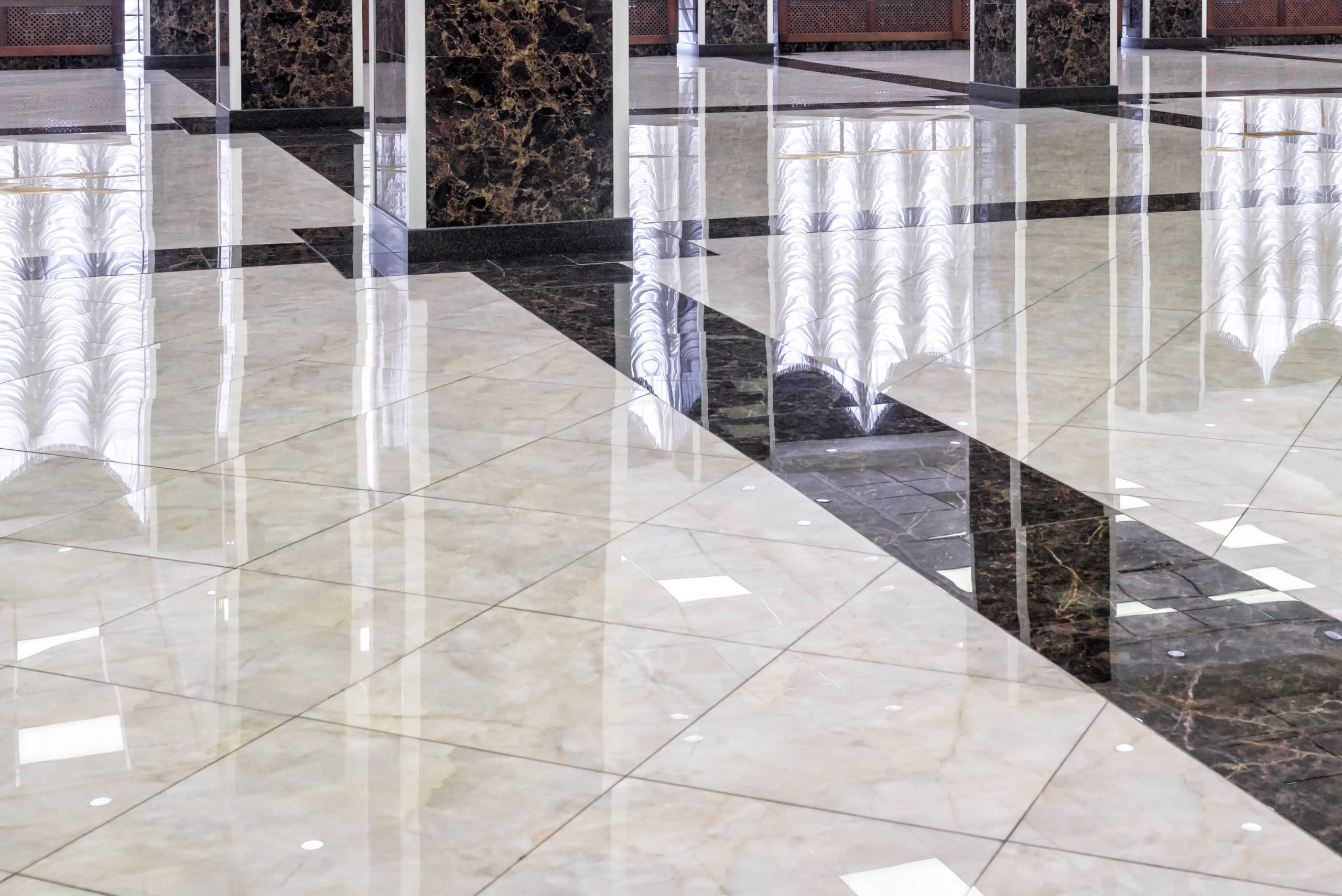
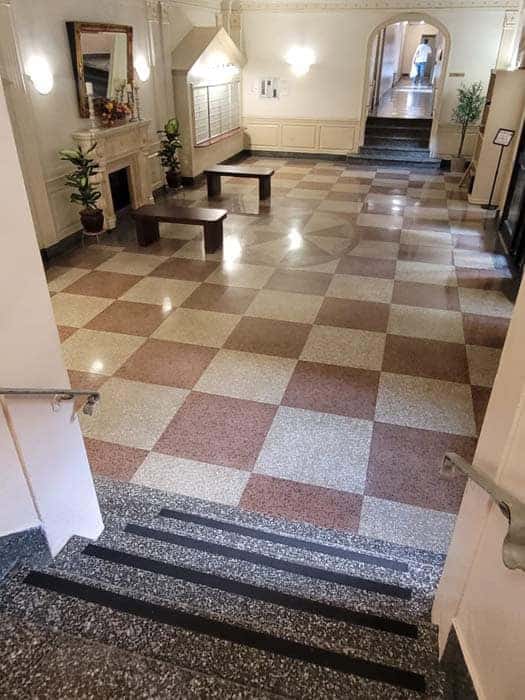
In New York County’s pre-war buildings — and there are thousands of them, from the Upper East Side down through the Village — the marble in lobbies and stairwells is sometimes 80 to 100 years old. That age doesn’t disqualify it from restoration. In many cases, older marble has a depth and character that newer stone simply doesn’t have. Restoring it preserves something genuinely irreplaceable, and it costs a fraction of what sourcing and installing comparable new marble would run in today’s market.
One more consideration for New York County property owners specifically: properly maintained marble has been shown to increase property value by up to 25 percent. In a market where buyers are paying close attention to every detail of a listing, a lobby or kitchen with freshly restored marble reads very differently than one with dull, etched surfaces. Sellers in NoLita, the West Village, and the East 70s are increasingly treating marble restoration as a pre-listing investment — not a maintenance expense.
What Sets a Qualified Marble Restoration Company Apart in New York County
Not every contractor who offers marble restoration is equipped to do it well. In New York County, that distinction matters more than it does in most markets — because the stakes are higher, the buildings are more demanding, and a mistake on a pre-war marble floor or a Calacatta countertop is an expensive one to correct.
A few things separate a genuine specialist from a general cleaning company that polishes marble on the side. The first is the process itself. Diamond abrasive restoration is a multi-stage, equipment-intensive technique — not something you can replicate with a consumer polishing kit or a standard floor buffer. We assess the damage before quoting, explain what stages are needed and why, and are honest about what results are realistic for your specific surface.
The second is the products. In an occupied residential building — especially a New York County co-op or condo where residents are home full-time and building boards scrutinize everything that comes through the service entrance — the compounds used during restoration matter. We use biodegradable compounds throughout our process, which means no harsh chemical residue in your living space and no friction with building management over product safety.
The third is licensing and insurance. New York County co-op and condo boards require contractors to be licensed and insured before granting building access. This isn’t optional, and it’s one of the reasons you can’t simply hire whoever gave you the lowest quote. A contractor who can’t meet your building’s requirements isn’t a real option, regardless of price.
We also offer our own proprietary product — the Safe Marble Solution — for clients who want a maintenance option between professional visits. It’s something no other local competitor provides, and it reflects our long-term investment in the craft that separates a specialist from a generalist. Our work spans residential homes, New York County co-ops and condominiums, and large commercial projects — including multi-story building restorations where the results have consistently exceeded client expectations. When you request a quote, there are no hidden fees and no vague estimates — just a straightforward assessment of what your marble needs and what it will cost.
Getting a Fair Marble Restoration Quote in New York County
If you’ve made it this far, you already know more than most people do when they call a marble restoration company. You know that water rings are almost always etching, not water damage. You know that restoration costs a fraction of replacement — and delivers results that are nearly indistinguishable. And you know that in New York County, the building requirements and logistics are real factors that explain why local quotes look different from what you find on national pricing sites.
The next step is getting eyes on your specific surface. Every project is different, and the only way to give you an accurate number is to assess the damage, understand the finish you’re after, and account for the specifics of your building and location. There are no surprises after that conversation — just a clear scope and a straightforward quote.
Reach out to Diamond Stone Restorations Corp to schedule your free estimate. We serve residential and commercial clients across New York County and the broader NYC area, and we’re happy to answer questions before you commit to anything.