Summary:
If your lobby floors look dull no matter how often they get mopped, you’re not imagining it — and the cleaning crew probably isn’t the problem. The problem is that professional commercial hard floor cleaning and routine janitorial mopping are fundamentally different services, and most property managers don’t realize that until the damage is already done.
This page is for anyone responsible for a commercial building in New York County who wants to understand what real floor care involves, what separates a qualified restoration contractor from a general cleaning service, and how to make a decision you won’t regret later.
What Commercial Hard Floor Cleaning Actually Involves
At its core, commercial hard floor cleaning is a multi-stage process that begins with identifying what you’re working with. Not all hard floors are the same. Marble, travertine, terrazzo, ceramic tile, granite, and limestone each respond differently to cleaning agents, equipment, and pressure.
A product that’s perfectly safe on ceramic tile can permanently etch a marble surface. That’s not a small distinction — it’s the difference between a clean floor and a damaged one.
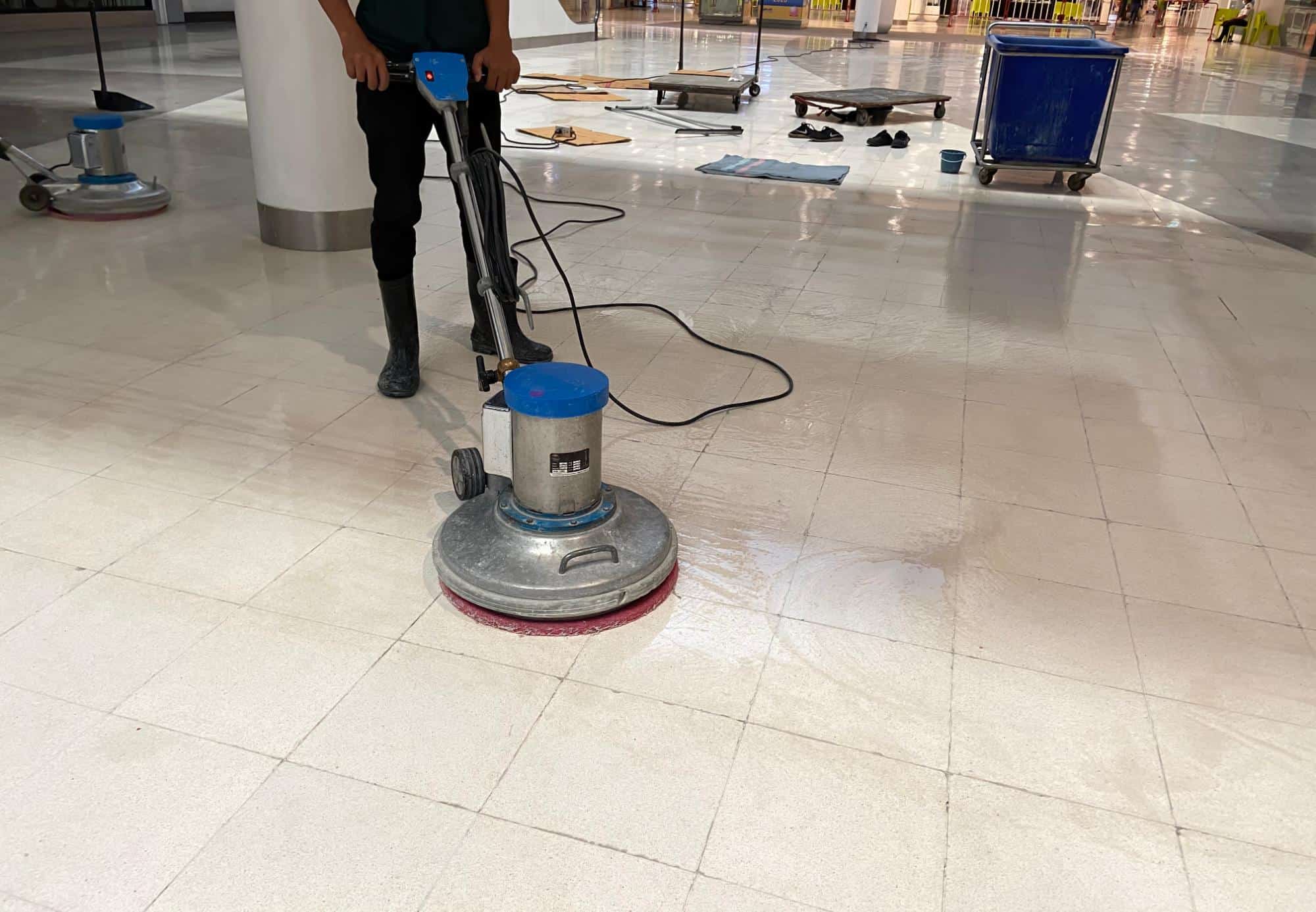
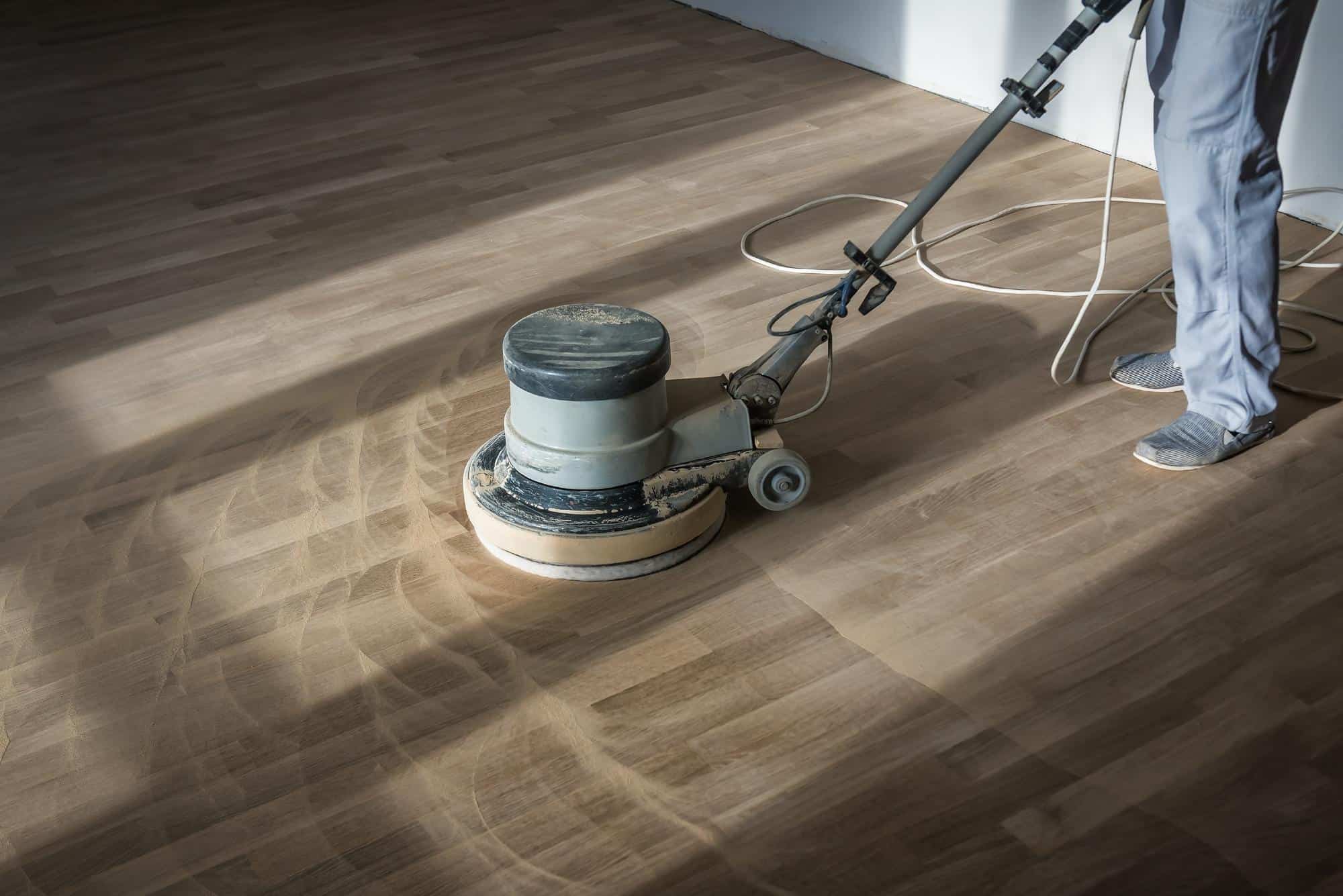
The process itself typically moves through assessment, preparation, deep cleaning, restoration (if needed), and sealing. Commercial-scale equipment — rotary scrubbers, industrial wet vacuums, automatic scrubbers — handles the physical work at a level that residential tools simply can’t replicate. But the equipment is only as effective as the knowledge behind it. Knowing which machine to use, with which solution, on which surface, is where real expertise comes in.
Marble Cleaning and Sealing: Why Standard Products Do More Harm Than Good
Marble is calcium carbonate-based, which makes it chemically reactive. Its Mohs hardness sits around 3 to 4 — softer than granite, softer than most people assume. That means even mildly acidic cleaners — vinegar, citrus-based products, some common all-purpose sprays — will etch the surface on contact.
The damage looks like dull patches or cloudy areas that no amount of mopping will fix, because the surface itself has been chemically altered. This is exactly what happens in buildings across New York County when general cleaning crews use the wrong products night after night. The floor looks like it’s being maintained. In reality, it’s being degraded incrementally, and by the time the problem becomes obvious, the surface often requires professional honing or polishing to reverse.
Proper marble cleaning and sealing involves pH-neutral stone-safe cleaners, diamond polishing to restore surface clarity, and a penetrating sealer that protects the stone from the inside rather than sitting on top of it. Topical sealers — the kind that coat the surface — can peel, yellow, and trap moisture, particularly in buildings with steam heat or significant humidity cycling, which describes most pre-war Manhattan buildings.
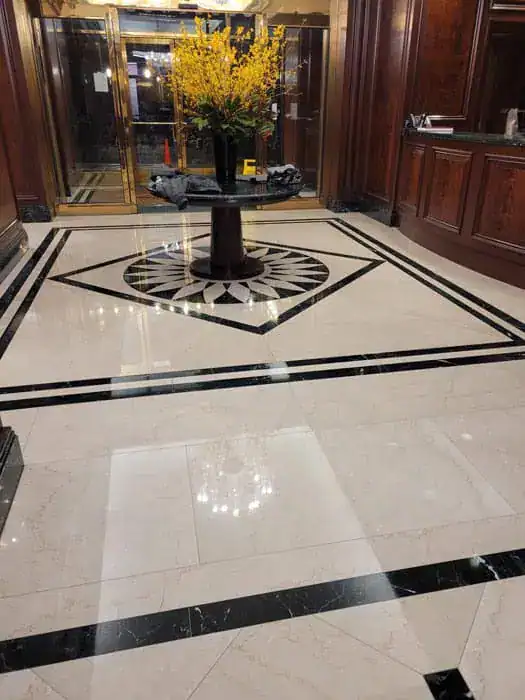
The sealing step is not optional. A marble floor in a high-traffic commercial lobby in Midtown or the Financial District can see thousands of footsteps a day. Without a properly applied sealer, that marble is essentially unprotected — absorbing oils, moisture, and contaminants with every pass.
A qualified contractor will assess the existing sealer condition before doing anything else, because the state of the sealer determines the entire scope of work. For property managers, the practical takeaway is straightforward: if your building has marble floors and your cleaning crew is using anything other than a stone-safe, pH-neutral product, the floors are being damaged. The question is only how much, and how reversible it still is.
Tile Cleaning and Sealing in Commercial Settings: Grout Is Usually the Real Problem
Ceramic and porcelain tile are more forgiving than natural stone, but commercial tile installations come with their own set of challenges — and grout is almost always the biggest one. Grout is porous by nature. In a commercial kitchen, a retail floor, or a building service corridor, it absorbs grease, cleaning product residue, and foot traffic grime constantly. Standard mopping pushes dirty water into the grout rather than lifting it out.
Professional tile cleaning and sealing starts with a deep extraction process — using rotary machines or high-pressure tools to pull contamination out of the grout lines rather than just cleaning the tile surface above them. Once the grout is genuinely clean, a penetrating grout sealer is applied to close off that porosity and make future maintenance far more effective.
The difference before and after is dramatic, and it’s not something that happens with a mop. A building that’s had its tile professionally cleaned and sealed will find that routine janitorial maintenance actually works better afterward — because the surfaces are no longer absorbing what gets applied to them.
In New York County commercial buildings, tile appears most often in service corridors, bathrooms, kitchens, and retail spaces. These are high-frequency, high-contamination environments. A sealing schedule — typically every one to three years depending on traffic — is the practical way to protect the investment and keep maintenance manageable between professional visits.
One thing worth flagging: post-construction tile cleaning is its own category. When tile is newly installed, grout haze — a thin film of grout residue left on the tile face — needs to be removed before sealing. If a sealer is applied over grout haze, it locks the haze in permanently. This is a common mistake in commercial renovation projects, and it’s one reason why professional involvement at the post-construction stage matters, not just during ongoing maintenance.
Marble Floor Maintenance: What an Ongoing Program Actually Looks Like
A lot of property managers think of professional floor care as a one-time fix — something you call in when things get bad enough. The more accurate model is a maintenance program: a scheduled approach that keeps the floors in good condition continuously, rather than cycling between neglect and emergency restoration.
For marble specifically, a maintenance program typically involves periodic professional cleaning and inspection, resealing on a schedule tied to traffic volume, and spot treatment for etching or staining as it occurs. The goal is to stay ahead of the damage rather than react to it. That’s both better for the floor and significantly more cost-effective over time.
How Often Do Commercial Marble Floors Need Professional Maintenance?
There’s no single answer that applies to every building, but there are useful benchmarks. A marble lobby in a high-traffic New York County office building — one seeing hundreds or thousands of people daily — will need professional attention more frequently than a marble floor in a lower-traffic residential co-op. As a general framework, high-traffic commercial marble typically benefits from professional cleaning and sealer inspection every six to twelve months. Lower-traffic installations may stretch to every one to two years.
The more useful indicator than a calendar, though, is the condition of the sealer. A simple water test tells you a lot: if water beads on the surface, the sealer is still doing its job. If it absorbs quickly and darkens the stone, the sealer has worn through and the floor is unprotected. Any qualified contractor should be able to assess this during a site visit.
What accelerates wear in New York County specifically is the winter season. Road salt — sodium chloride and calcium chloride — gets tracked into commercial buildings from November through March. Both compounds are corrosive to natural stone. They accelerate sealer degradation, can etch marble directly if left on the surface, and work their way into travertine’s natural voids if those voids aren’t properly filled and sealed.
This is why spring tends to be a high-demand period for professional restoration services in Manhattan — property managers are dealing with the cumulative damage of another winter. The practical implication for a building superintendent or facilities manager is to schedule a professional assessment in the spring, after winter traffic has done its work, and again in the fall before the holiday season when buildings typically want to look their best. That two-visit annual rhythm is a reasonable baseline for most commercial properties in New York County.
Travertine Cleaning and Sealing: The Porosity Problem Most Cleaners Miss
Travertine is one of the most common stones in New York County commercial buildings — lobbies, corridors, accent walls — and it’s also one of the most misunderstood. It’s a limestone formed by hot spring deposits, and its defining characteristic is natural voids: small holes and channels throughout the stone that give it its distinctive texture. Those voids are also its biggest vulnerability.
In filled travertine, those voids have been packed with grout or epoxy filler during installation. In unfilled travertine, they’re left open — which creates a surface that absorbs contaminants aggressively. Either way, travertine requires a penetrating, impregnating sealer that gets into the stone rather than sitting on top of it. A topical sealer on travertine will peel and trap moisture, especially in environments with temperature and humidity swings — which, again, describes most of Manhattan’s older commercial building stock.
Cleaning travertine correctly means using pH-neutral products, avoiding anything acidic, and taking care not to force water into the voids during the cleaning process. Pressure washing or aggressive scrubbing on unfilled travertine can dislodge filler material and widen the voids, making the problem worse. Professional travertine cleaning involves controlled moisture, appropriate chemistry, and a thorough assessment of the fill condition before any work begins.
What makes travertine particularly tricky in commercial settings is that it often looks fine on the surface while it’s quietly absorbing damage underneath. Staining that has worked its way into the voids is significantly harder to remove than surface-level contamination. By the time a travertine floor looks visibly stained or damaged, the remediation required is substantially more involved than what routine maintenance would have cost.
The sealing schedule for commercial travertine in high-traffic environments is similar to marble — every one to two years as a general guideline, with visual and water-bead testing to confirm sealer integrity between visits. The key difference is that with travertine, you’re also monitoring the fill condition and the integrity of the grout lines, both of which can deteriorate under heavy foot traffic and cleaning equipment over time.
Choosing the Right Commercial Hard Floor Cleaner for Your New York County Building
The gap between a general cleaning crew and a qualified stone restoration contractor isn’t a matter of effort or equipment size — it’s material knowledge. Marble, travertine, tile, and terrazzo each have specific requirements, and getting those requirements wrong doesn’t just mean a floor that doesn’t look great. It means damage that compounds quietly until the cost to fix it is far higher than routine maintenance ever would have been.
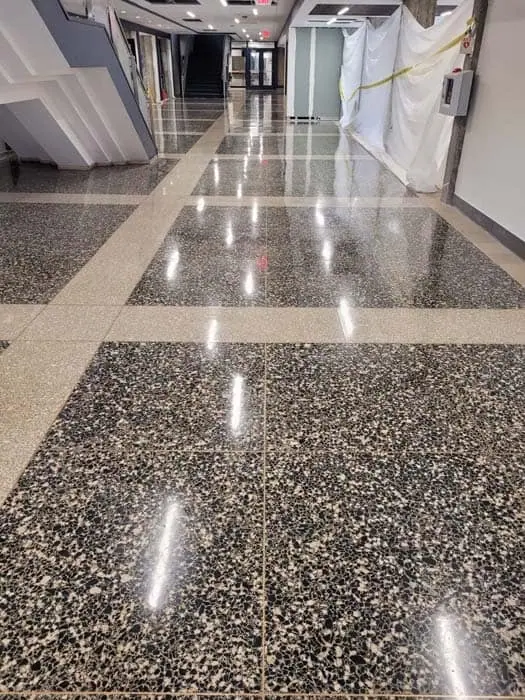
For property managers in New York County, the stakes are real. Pre-war lobbies with original marble, mid-century terrazzo stairwells, travertine corridors in Midtown office towers — these are significant assets that deserve a contractor who can actually identify what they’re working with before touching them.
If you’re not sure where your floors stand or what they need, the right starting point is a professional assessment. We at Diamond Stone Restorations Corp work with commercial properties across New York County and the broader NYC area, handling everything from routine marble maintenance to full restoration — and we’re happy to take a look and give you a straight answer about what’s actually going on with your floors.