Summary:
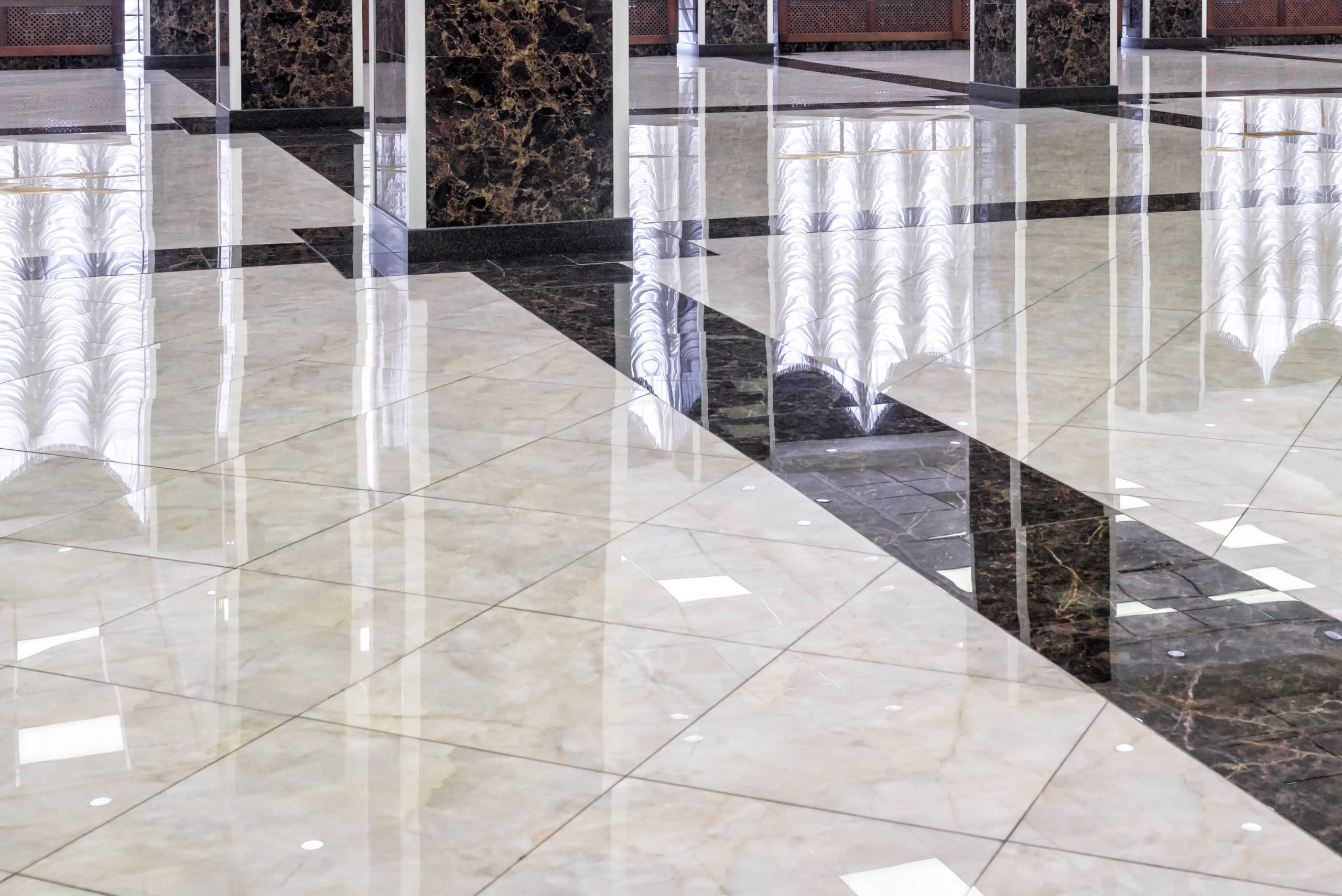
If you’re responsible for a commercial building in New York County, you already know what the lobby looks like by November. Months of foot traffic, summer humidity, and whatever gets tracked in off the sidewalk have done their work. The marble floor that looked polished in January is dull, scratched in spots, and no amount of mopping is going to change that.
Crystallization is the process that actually fixes it — not just buffs over it. And right now, before the holidays bring your highest-visibility foot traffic of the year, is exactly the right time to schedule it. Here’s what the process involves, what it does, and why Q4 is when it makes the most sense.
What Is Marble Crystallization and How Does It Work?
Marble crystallization is not the same thing as polishing, even though the two are often mentioned together. Polishing is a mechanical process — abrasive pads grind the surface progressively finer until it reflects light. Crystallization is a chemical process that happens after polishing, and it works differently.
A specialized solution — containing compounds that react with the calcium carbonate naturally present in marble — is applied to the surface and worked in with steel wool pads under a single-disc floor machine. The friction and heat generated by the machine drive a chemical reaction that forms a thin, glass-hard layer bonded directly to the stone. That layer is what gives crystallized marble its depth of shine and, more importantly, its durability.
How Is Marble Crystallization Different from Standard Marble Polishing?
This is probably the most common question we hear, and it’s worth being direct about: polishing and crystallization are not interchangeable. They’re sequential steps in a restoration process, and skipping one in favor of the other produces a noticeably different result.
When we polish marble, we’re using diamond-impregnated pads in progressively finer grits — starting as coarse as 50 grit for heavy removal and working up past 3,000 grit for a refined finish. That process removes scratches, levels the surface, and brings back reflectivity. It works by taking material away. What’s left is a clean, smooth marble surface.
Crystallization builds on that. Once the surface is polished, the crystallization solution is applied and buffed in with steel wool. The chemical reaction it creates doesn’t just sit on top of the marble — it bonds into the surface, forming a harder compound than the original stone. The result is a finish that’s more resistant to the daily wear, acidic substances, and moisture that a New York County lobby floor faces constantly.
There’s also a practical durability difference. A polished surface without crystallization will start to show wear relatively quickly in a high-traffic environment. A crystallized surface holds up significantly longer because the hardened layer absorbs what would otherwise be direct damage to the marble itself.
One thing worth noting: crystallization is only appropriate for polished marble surfaces. If your floors are honed — meaning they have a matte or satin finish rather than a reflective one — crystallization isn’t the right step. Honed surfaces need to be polished first. Applying crystallization to a honed surface doesn’t create the right chemical reaction and won’t produce the result you’re looking for. A proper assessment before any work starts is the only way to know which process your floors actually need.
Does Marble Crystallization Fix Scratches and Etch Marks?
This is where a lot of property managers run into frustration. The cleaning crew has been over the floor a dozen times, and those dull patches and faint scratches are still there. The reason is straightforward: etch marks are not stains. They’re physical damage. When an acidic substance — a spilled drink, a cleaning product with the wrong pH, or road salt tracked in from the street — contacts marble, it reacts with the calcium carbonate in the stone and literally eats into the surface. No cleaning product reverses that. The damage is in the stone itself.
Scratches work the same way. They’re carved into the surface by abrasive particles — grit from shoes, sand, the fine debris that gets tracked into a New York County lobby every single day, especially from October through March when the city is salting sidewalks. By the time you notice them, they’ve already done their work.
Crystallization alone doesn’t fix deep scratches or significant etching. That’s where the full restoration sequence matters: honing first to remove the damaged layer and level the surface, then polishing to refine it, then crystallization to harden and protect the result. When the process is done correctly and in the right order, the floor doesn’t just look better — it looks better than it has in years. We’ve had clients tell us the marble looked more impressive after restoration than it did when it was first installed.
For New York County buildings with original pre-war marble — the kind of 1920s and 1930s stone you find in Midtown office towers and Upper East Side co-op lobbies — this matters even more. That marble has been there for nearly a century. It’s not going anywhere, and it shouldn’t have to. The right restoration process can bring it back completely.
Commercial Restoration Services in New York County: Why Q4 Is the Right Time to Book
For most commercial property managers in New York County, the end of the year creates a specific and time-sensitive window. Annual maintenance budgets reset on January 1. Unspent funds don’t roll over. And the stretch between Thanksgiving and New Year’s is when your building sees more non-regular visitors — clients, board members, prospective tenants, guests — than almost any other time of year.
That combination makes Q4 the most strategically valuable time to schedule marble crystallization. Your lobby will be at its most visible exactly when it matters most, and you have a legitimate, high-value use for remaining maintenance budget that produces a result everyone can see.

How Often Does Commercial Marble Need Crystallization in a New York County Building?
The honest answer is: it depends on how much traffic your floors see. In a busy New York County office building or hotel lobby, crystallization may be appropriate every three to six months. For a lower-traffic commercial space or a luxury residential building with a well-maintained lobby, once a year is often sufficient. Residential marble floors in private homes typically follow a similar annual schedule.
What accelerates the need in New York County specifically is the winter season. From roughly November through March, road salt and de-icing chemicals get tracked into every building in the region. Those substances are acidic. They etch marble surfaces faster than almost anything else, and they do it quietly — you don’t notice the cumulative damage until the floor looks noticeably worse than it did six months ago.
Scheduling crystallization in October or November accomplishes two things at once: it restores the surface to its best condition before the holidays, and it hardens that surface before the most damaging season of the year begins. The crystallized layer is significantly more resistant to the acidic and abrasive material that New York County winters bring. You’re not just improving the appearance — you’re protecting the floor through the months when it’s most at risk.
The flip side of this is that waiting until spring means your marble has already absorbed a full winter’s worth of damage. At that point, the restoration process takes more work, more time, and potentially more steps to get back to the same result. Getting ahead of it in Q4 is genuinely the smarter maintenance decision, not just a scheduling convenience.
Marble Polishing and Sealing: What Belongs in a Complete Lobby Restoration?
Crystallization is the finishing step, but it’s not the whole picture. A complete lobby restoration for a commercial marble floor typically moves through several stages, and understanding the sequence helps you ask the right questions when you’re evaluating a service provider.
It starts with an honest assessment of the floor’s current condition. Heavily worn or damaged marble needs honing first — that’s the process of using diamond abrasive pads to remove the damaged surface layer, eliminate scratches, and level any lippage (uneven edges between tiles or slabs). From there, progressively finer polishing pads refine the surface until it reaches the reflectivity you’re looking for. Then crystallization is applied to harden and protect the result.
Marble polishing and sealing often go together as a final protective measure. After crystallization, a quality sealer applied to the surface creates an additional barrier against moisture, staining, and the daily wear that commercial floors face. The combination — polish, crystallize, seal — is what produces a result that holds up in a high-traffic New York County environment rather than fading within a few weeks.
What this means practically for a floor buffing service in a commercial setting is that the right provider isn’t just running a machine over your floor. We assess the stone type — because Carrara marble and Calacatta marble, for example, respond differently to treatment — evaluate the actual condition of the surface, and choose the right process for what’s actually there. A generic approach applied to the wrong surface can cause more harm than good. We work with each floor based on what it needs, not a one-size-fits-all schedule.
For building managers who haven’t had a professional assessment recently, Q4 is a natural time to request one. A free estimate gives you a clear picture of what the floor actually needs, what the process involves, and what the result will look like — before you commit to anything.
Ready to Restore Your New York County Lobby Before the Holiday Rush?
Marble crystallization is one of the most effective things you can do for a commercial lobby floor — and one of the most time-sensitive, given how New York County winters behave and how quickly Q4 scheduling fills up. If your building’s marble has lost its shine, if the cleaning crew can’t fix what’s there, or if you have remaining annual maintenance budget that needs to be put to good use before December 31, this is the right moment to act.
Restoration costs a fraction of what replacement would run in a New York County building — and the result, when the process is done correctly, is a floor that looks better than it has in years and holds up through the season ahead.
Diamond Stone Restorations Corp serves commercial and residential clients throughout New York County and the broader NYC area. We offer free estimates, transparent pricing, and flexible scheduling that works around your building’s hours. Reach out to our team at 929-335-0190 to talk through what your floors need and get on the calendar before the holidays.