
Summary:
You’re standing in the lobby of a building you manage in New York County. The marble floor looked fine two years ago. Now it’s dull, scratched in patches, and no amount of mopping improves it. Residents are starting to comment. A board member sent an email. And you’re not sure if this is a cleaning problem, a restoration job, or a full replacement — which is a very different conversation to have with ownership.
That’s exactly what this guide is for. We’ll walk you through how stone restoration works, what each material in your building actually needs, what it costs, and how to make a defensible decision when it’s time to act.
Marble Floor Cleaning and Polishing: What New York County Managers Get Wrong
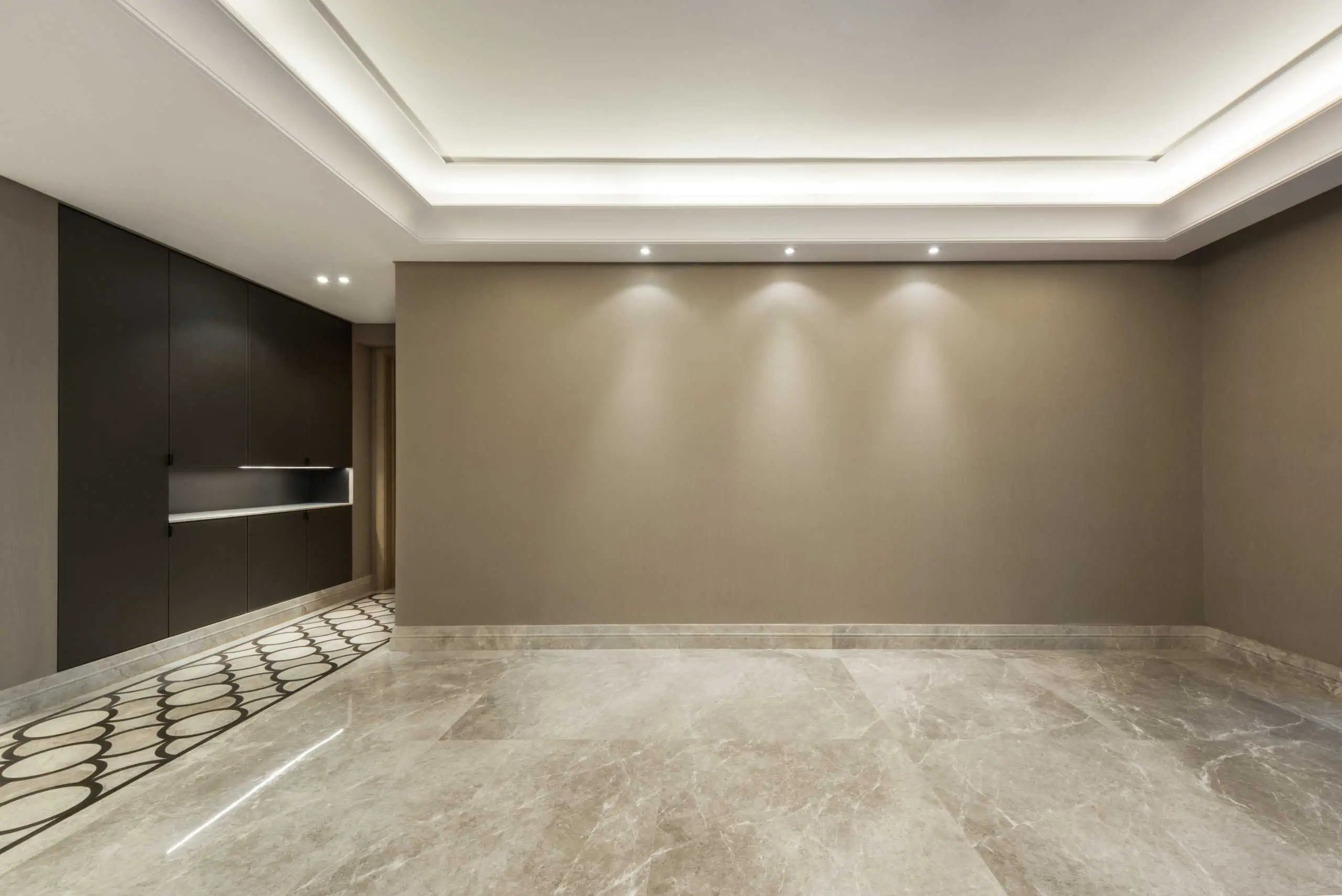
There’s a version of this problem that plays out in New York County buildings constantly. A cleaning crew is using the wrong product — something acidic, something abrasive — and over time the marble floor loses its finish. By the time it’s visibly dull or etched, the damage is already done. More cleaning won’t fix it. That’s the point where professional marble floor cleaning and polishing becomes necessary.
Cleaning and restoration are not the same thing. Cleaning removes surface dirt and residue. Restoration removes actual damage — etching, scratches, and dullness that have penetrated the stone’s surface layer. If your floors aren’t responding to regular maintenance, that’s the signal you’ve crossed from a cleaning problem into a restoration problem.

Professional Marble Cleaning and Polishing: How the Process Actually Works
Professional marble cleaning and polishing starts with an assessment — not a mop and a bucket. We look at the stone type, identify the specific damage, and determine the right approach. Marble etched by road salt looks different from marble scratched by foot traffic, and each requires a different treatment.
Once the surface is cleaned and prepped, the restoration work begins. For dull or lightly damaged marble, polishing compounds and progressively finer abrasives bring the surface back to its original finish — or better. For deeper scratches or etching, diamond abrasive grinding removes a thin layer of damaged stone to reveal fresh material underneath. This is precision work. Done correctly, it produces what our customers consistently describe as a mirror-like shine. Done by someone without the right training or equipment, it can cause permanent damage.
After polishing, a penetrating sealer matched to the stone type is applied. This is not optional. Marble is a calcium carbonate stone — it reacts chemically with acidic substances, which is exactly what New York County winters deliver in the form of road salt tracked through building entrances. An unsealed marble floor in a high-traffic lobby will degrade significantly faster than a sealed one, shortening the time between restoration cycles and increasing your long-term costs.
We also include a maintenance briefing after the work is complete — what products to use, what to avoid, and how often to schedule professional attention. That guidance is part of what separates a real restoration specialist from a cleaning company that happens to own a floor machine.
Marble Etching Repair and Marble Scratch Repair: When the Damage Goes Deeper
Etching and scratching are two different problems, and they’re worth distinguishing because managers sometimes assume they’re dealing with one when they have the other — or both.
Etching is a chemical reaction. When an acidic substance contacts marble or limestone, it dissolves a thin layer of the stone’s surface, leaving a dull, often whitish mark. In New York County buildings, the most common culprits are road salt, citrus-based cleaning products, and beverages spilled in common areas. Etching is not a stain — it cannot be cleaned away. Marble etching repair requires mechanical work: grinding or honing the surface to remove the damaged layer, then repolishing to restore the finish.
Marble scratch repair follows a similar process but addresses physical abrasion rather than chemical damage. Fine scratches from foot traffic or moving furniture can often be addressed with honing and polishing. Deeper gouges may require more aggressive diamond grinding before the polishing stage. In either case, the goal is to bring the surface to a consistent finish across the entire area — because spot-treating a scratch without addressing the surrounding surface often leaves a visible patch that looks worse than the original damage.
Here’s something worth knowing: many of the “damaged” marble floors we assess in New York County buildings were actually made worse by previous cleaning attempts. Superintendents using acidic cleaners, cleaning crews with the wrong abrasive pads, or well-meaning attempts with vinegar-based products — all of these create etching that didn’t exist before. If your floors have been cleaned aggressively and look worse for it, marble etching repair and professional marble cleaning are almost certainly the right next step, not replacement.
The marble shine that results from a proper restoration — grinding, honing, polishing, sealing — is not subtle. Customers who’ve had this work done in their buildings consistently say the results exceeded what the floor looked like when it was first installed. That’s what people actually report when the process is done correctly.
Terrazzo Floor Restoration and Refinishing in New York County's Mid-Century Buildings
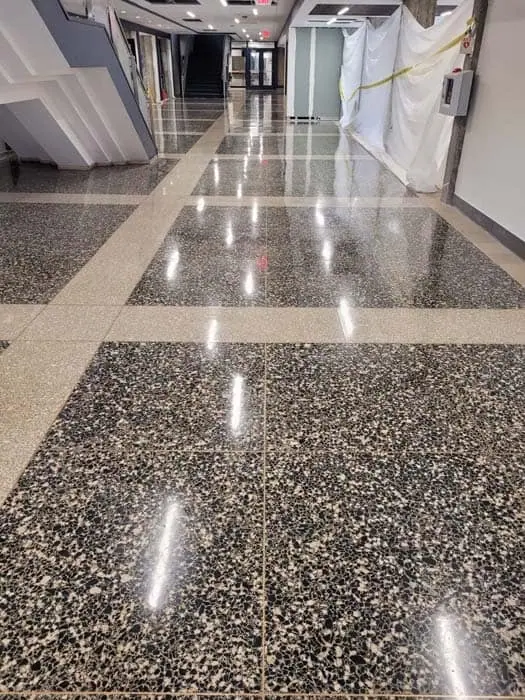
Terrazzo is everywhere in New York County’s institutional and residential building stock — post-war towers, schools, hospitals, co-op lobbies built in the 1950s and 60s. These floors were designed to last, and most of them have. But decades of foot traffic, cleaning with the wrong products, and deferred maintenance leave many terrazzo floors looking flat, stained, or worn through the surface finish.
The good news is that age alone doesn’t disqualify a terrazzo floor from restoration. Many of the floors we work on in New York County buildings are 50 to 70 years old and restore beautifully. The structural integrity is usually sound — what’s lost is the surface finish, and that can be brought back.

Terrazzo Restoration and Terrazzo Floor Polish: What the Process Looks Like and What It Costs
Terrazzo restoration follows the same fundamental logic as marble restoration: assess the damage, grind or hone the surface to remove the damaged layer, polish to the desired finish, and seal to protect the result. The difference is that terrazzo is a composite material — marble chips or other aggregates embedded in a cement or epoxy binder — which means the restoration approach has to account for both components.
Terrazzo floor cleaning and polish are often the first steps. Surface contamination, old coatings, and residue from years of cleaning products are removed before any mechanical work begins. From there, diamond grinding brings the surface down to a consistent level, removing scratches, stains, and the dull top layer. Progressive polishing compounds bring the terrazzo back to its original aggregate-and-matrix appearance — sometimes more vivid than it’s looked in decades.
Refurbishing terrazzo floors also frequently involves crack repair and void filling, particularly in older New York County buildings where the substrate has shifted slightly over time. These repairs are addressed before polishing begins so the final surface is consistent.
On cost: new terrazzo floor installation runs $30 to $100 per square foot depending on complexity and materials. Our restoration costs significantly less — typically 50 to 70 percent less than full replacement. For a 500-square-foot hallway, that difference can represent tens of thousands of dollars in avoided capital expenditure. That’s the number to bring to your board when you’re making the case for restoration over replacement.
Terrazzo refinishing — which focuses on the surface finish rather than structural repair — is appropriate when the floor is in good condition but has lost its luster. It’s a faster and less disruptive process than full restoration, and for many buildings it’s the right scope of work. The distinction matters because the right diagnosis saves you money.
New York County buildings contain a wider range of stone than most managers realize until they’re standing in front of a problem. Travertine shows up in bathrooms, elevator lobbies, and residential interiors. Limestone appears in pre-war facade details and interior flooring. Slate and flagstone are common in building entryways, terraces, and older service areas. Each material has its own damage profile and its own restoration requirements.
Travertine polishing and travertine repair address the two most common issues with this material: surface dullness from foot traffic and cleaning, and void fill for the natural holes and pits that characterize travertine’s structure. Travertine floor restoration follows the same general process as marble — assessment, grinding or honing as needed, polishing, sealing — but the void-fill step is specific to this material and important to do correctly. Travertine refinishing is appropriate when the surface finish has degraded but the stone itself is structurally sound. Left unaddressed, open voids in travertine collect dirt and moisture and accelerate deterioration.
Limestone restoration follows similar principles but requires particular care because limestone is even more chemically reactive than marble. In New York County buildings, limestone surfaces near building entrances — where winter salt exposure is highest — often show significant etching that can be mistaken for permanent damage. It’s usually not. Our professional limestone restoration can address this damage and, critically, the sealing step that follows is what prevents the same problem from recurring next winter.
Slate floor restoration and slate cleaning and sealing address a different set of challenges. Slate is a naturally layered stone that can delaminate or flake if cleaned aggressively or sealed with the wrong product. Our slate care involves gentle cleaning, targeted repair of any delamination, and application of a sealer that enhances the stone’s natural color without trapping moisture beneath the surface. Flagstone restoration in entryways and terraces often involves similar considerations, with the added complexity of outdoor exposure in buildings where flagstone extends to exterior areas.
The common thread across all of these materials is that professional stone restoration services require material-specific knowledge — not a single approach applied to everything. That’s the core difference between a specialist and a general contractor who happens to own stone equipment.
How to Choose the Right Stone Restoration Company in New York County
The most important question to ask any stone restoration company before you hire them is simple: have they worked with your specific stone type in buildings like yours? Material-specific expertise is not a credential you can fake once the work begins. A company that treats marble, travertine, terrazzo, and slate as interchangeable is one that’s likely to cause the kind of damage that makes a restoration job into a replacement conversation.
For New York County property managers, the practical checklist is short: verified reviews that describe specific outcomes, a clear process explanation before any work begins, transparent pricing with no hidden fees, and scheduling flexibility that works around your building’s operations. The ability to present a written estimate to your board — with a clear cost comparison to replacement — is also worth asking about upfront.
If you’re managing a building in New York County with stone surfaces that have seen better days, Diamond Stone Restorations Corp. offers free estimates and works around your schedule. Reach out and describe what you’re seeing — that’s usually enough to get a clear picture of what the work involves and what it costs.
—
**What do professional marble cleaning services include?**
Professional marble cleaning services go well beyond what a janitorial crew provides. At the professional level, cleaning is the first step in a broader process — surface contaminants, residues, and old coatings are removed before any mechanical restoration work begins. In most cases, a New York County property manager calling about marble cleaning actually needs a combination of cleaning and polishing, or cleaning and honing, depending on the condition of the surface. We assess the floor and tell you which scope of work applies before any commitment is made.
**Can terrazzo floors be repaired without full replacement?**
Yes — and in the vast majority of cases in New York County, they should be. Full terrazzo replacement runs $30 to $100 per square foot. Our restoration costs 50 to 70 percent less. For most floors we assess in New York County buildings, the structural terrazzo slab is sound; what’s degraded is the surface finish, and that’s restorable. Crack repair, void filling, grinding, polishing, and sealing can bring a 60-year-old terrazzo floor back to a finish that’s better than it’s looked in decades. Replacement is rarely the right first answer.
**What does refurbishing terrazzo floors actually involve?**
Refurbishing terrazzo floors is a process that typically includes surface cleaning to remove old coatings and residue, diamond grinding to level and refresh the surface, crack and void repair where needed, progressive polishing to restore the aggregate’s appearance and sheen, and application of a penetrating sealer to protect the result. The scope varies depending on the floor’s condition — a floor that’s dull but structurally intact needs less intervention than one with significant cracking or delamination. We assess every floor before recommending a scope of work, because the right diagnosis is what keeps the cost proportionate to the actual problem.