Summary:
You’ve probably already found a few cost guides online. They quote $3 to $8 per square foot, maybe up to $15, and none of them mention freight elevators, co-op board approvals, or off-hours labor. They weren’t written for New York County, NY. They were written for everywhere, which means they’re useful for nowhere in Manhattan.
This guide covers what terrazzo floor restoration actually costs here — broken down by service type, shaped by the realities of working in New York County buildings, and grounded in what we see on real projects. By the end, you’ll have a clear enough picture to know whether restoration makes sense for your space.
Terrazzo Restoration Cost: What the Numbers Actually Look Like in New York County, NY
The national baseline for professional terrazzo restoration runs $3 to $8 per square foot. But construction cost data for New York County, NY puts local terrazzo work roughly 32% above the national average — and that’s before you factor in anything specific to your building.
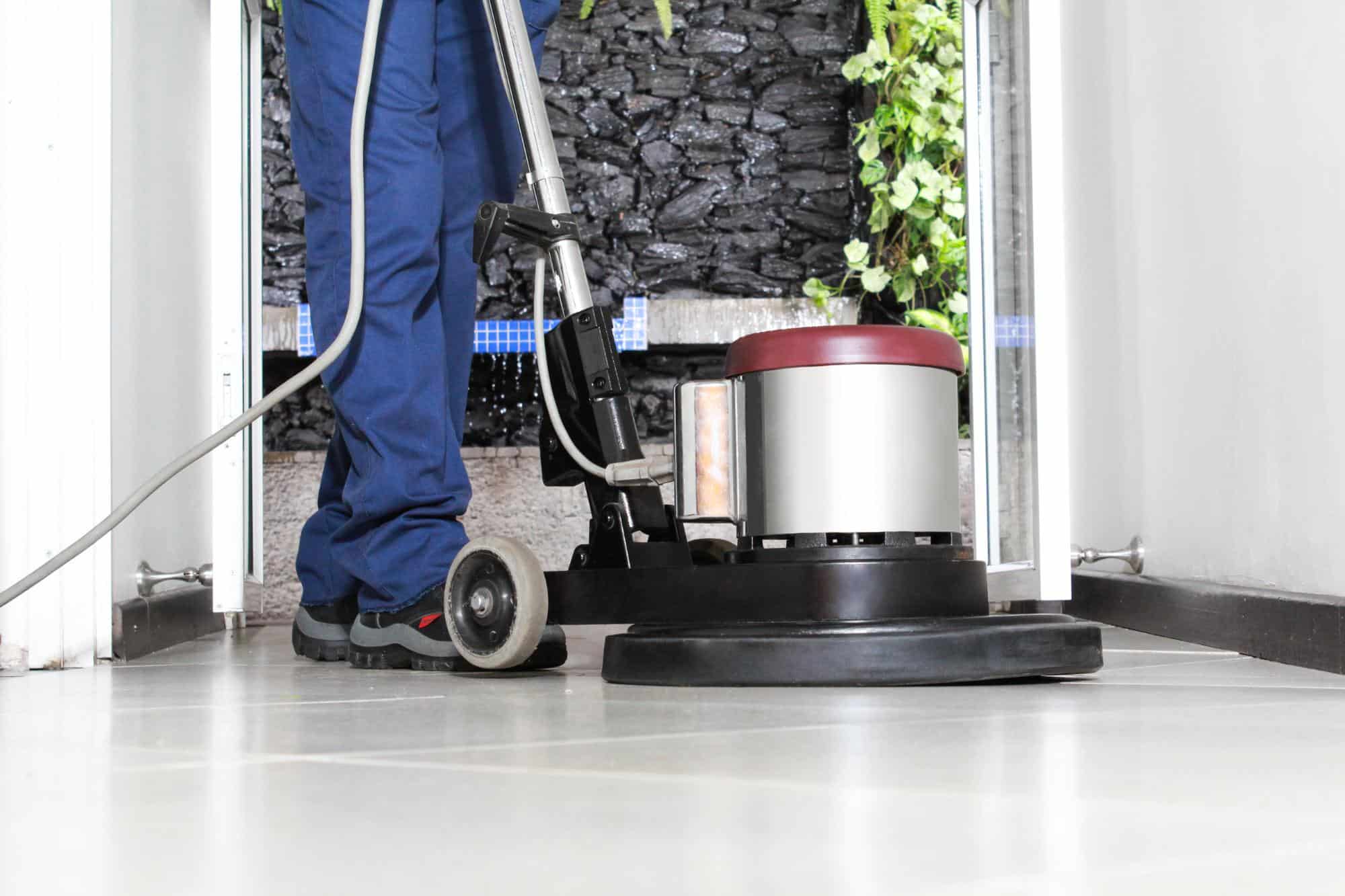
For a standard residential restoration in New York County, you’re realistically looking at $5 to $12 per square foot for diamond grinding and polishing, depending on the floor’s condition and how much prep work is involved. Commercial lobbies with heavy traffic wear and years of accumulated wax or coating buildup tend to run higher. Light polishing on a floor that’s in decent shape can come in lower.
The range is wide because the variables are real. A pre-war co-op lobby with original terrazzo needs a different approach than a 1970s commercial space with a worn but intact surface. We assess each floor individually before quoting.

What Drives Terrazzo Restoration Costs Up in New York County Buildings
If you’re in a New York County co-op or condo, or managing a commercial building, the price you pay isn’t just for the labor and materials. It reflects the full reality of working in a dense, regulated, high-access urban environment — and most contractors who quote you over the phone aren’t accounting for all of it.
Freight elevator access is one of the biggest factors. In a mid-rise or high-rise building, all equipment — grinders, polishers, vacuums, sealant systems — moves through the freight elevator. That elevator has a schedule. Buildings typically restrict freight access to specific windows, often early morning or early evening. If your project requires multiple days, that scheduling constraint affects how efficiently the work can be completed, and efficiency affects cost.
Co-op board approval is another layer that doesn’t exist in most markets. Before any contractor sets foot in a co-op building’s common areas, the board typically requires a certificate of insurance, a scope of work, and sometimes a formal approval vote. That process can take two to eight weeks. It doesn’t make the restoration more expensive per square foot, but it does mean a contractor who isn’t familiar with New York County co-op logistics will slow you down significantly.
Off-hours work is a third factor. Hotels, office buildings, and commercial properties often can’t have grinding equipment running during business hours — the noise and dust are simply not compatible with an occupied space. Evening or weekend labor in New York County carries a premium of 20 to 40% above standard daytime rates. If your lobby or commercial floor requires off-hours scheduling, that cost is real and should be in any honest estimate.
Finally, dust containment matters more in New York County than it does in a standalone house. Shared HVAC systems, neighboring units, and building management requirements often mean that dry diamond polishing — which produces far less airborne particulate than wet grinding — is the only viable method. That’s actually the better method anyway, but it’s worth knowing it’s often a requirement here, not just a preference.
Terrazzo Restoration vs. Replacement: The Cost Math for New York County Properties
This is the comparison most people searching for restoration costs actually need to see. New terrazzo installation in New York County, NY — poured-in-place cementitious or epoxy — runs $30 to $100 or more per square foot. Custom designs can go higher. Even precast terrazzo tile, the less expensive option, typically runs $15 to $35 per square foot installed, and that’s before demolition, disposal, and the added complexity of working in a New York County building.
Professional restoration, by contrast, typically costs $5 to $15 per square foot in this market depending on scope. On a 500-square-foot lobby, that’s the difference between a $7,500 restoration and a $50,000 replacement project. On a larger commercial floor, the gap is proportionally larger.
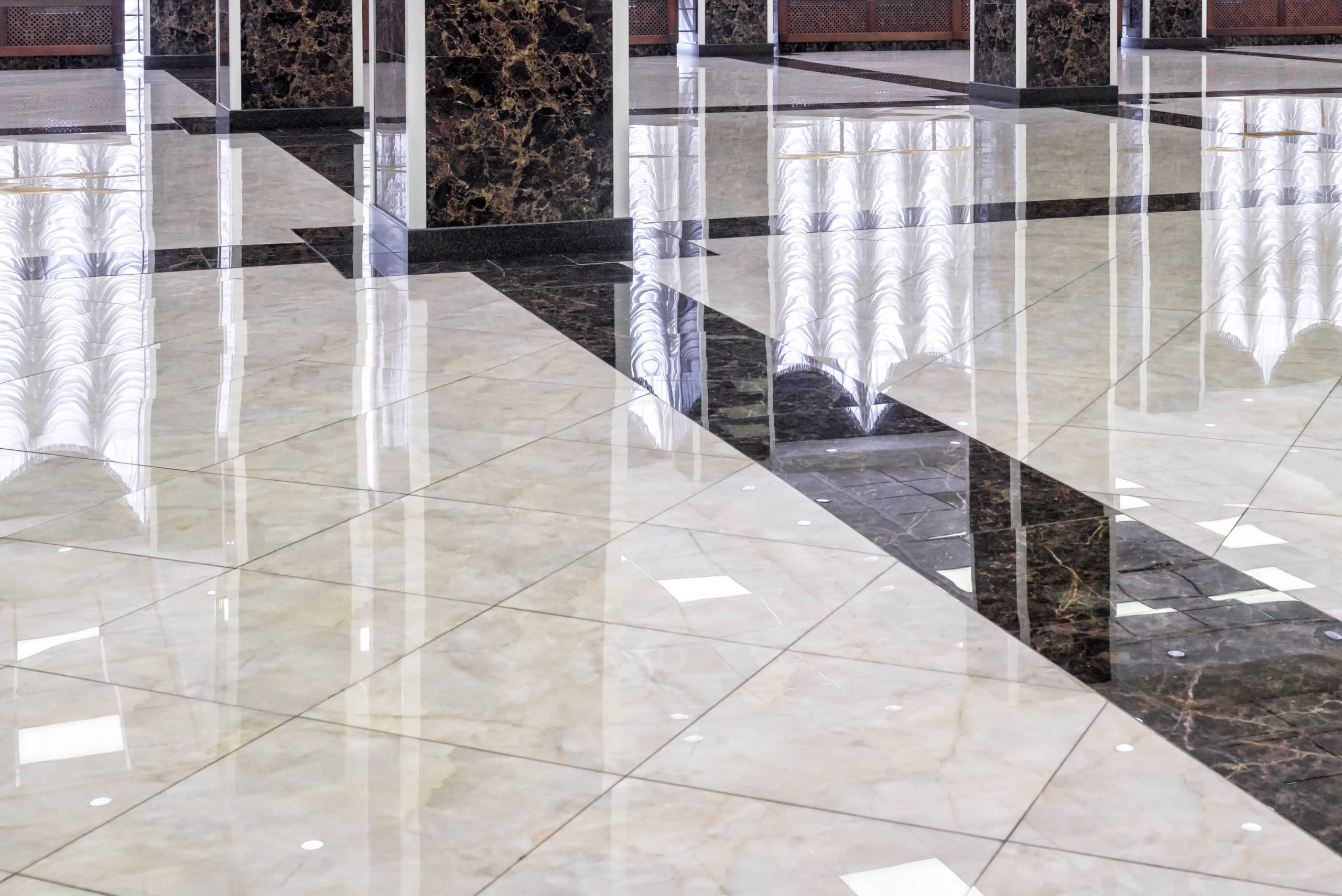
The other part of this math that doesn’t get enough attention is longevity. A properly executed diamond polish — the kind that involves progressive grinding through increasingly fine grit levels, not a quick buff and coat — holds up for eight to ten years under normal use. With proper maintenance, restored terrazzo can look good for twenty years. That’s not a short-term fix. It’s a capital improvement that resets the clock on a floor that, structurally, may have another fifty years of life in it.
New York County’s building stock makes this especially relevant. Thousands of pre-war and mid-century co-op and condo buildings throughout the Upper West Side, Upper East Side, the Village, Midtown, and downtown contain original terrazzo in their lobbies, stairwells, and common areas. Much of it is cosmetically worn — dull, scratched, stained — but structurally sound. Replacing it isn’t just expensive; in many cases it means losing original material that can’t be replicated.
The marble aggregate used in 1950s and 1960s terrazzo came from quarries that no longer operate. Once it’s gone, it’s gone. Restoration keeps that material in place. It also keeps the project within a maintenance budget rather than requiring board approval for a full capital expenditure — which, in a New York County co-op building, is a meaningful practical advantage.
Terrazzo Floor Polishing Cost vs. Full Restoration: Understanding the Difference
Not every worn terrazzo floor needs a full grinding and restoration. Some floors are in good structural condition but have lost their surface sheen from foot traffic, cleaning products, or years of wax buildup. For those, polishing alone — without the deeper grinding step — is a faster, less disruptive, and less expensive process.
The distinction matters because the two services are priced differently and deliver different results. Knowing which one your floor actually needs is something that can only be determined by looking at it in person, not by a phone quote.
What Terrazzo Floor Polishing Cost Looks Like and When It's the Right Call
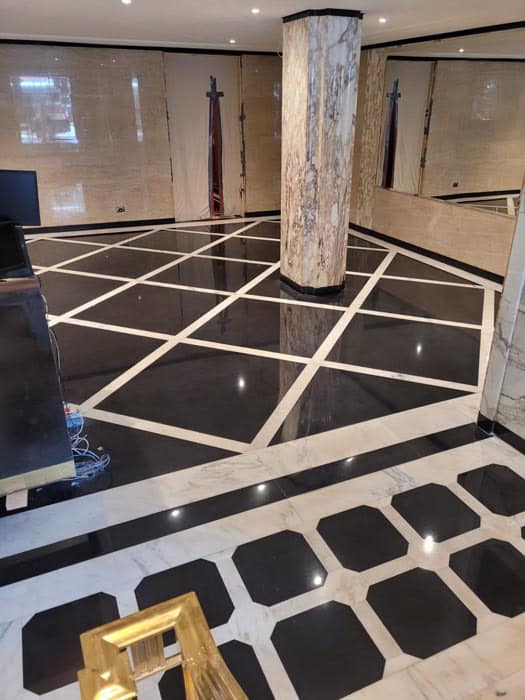
Light surface polishing — the kind that addresses dullness and minor surface wear without grinding down into the floor — typically runs on the lower end of the restoration price range. It’s the right choice when the terrazzo surface is intact, there are no significant cracks or chips, and the issue is cosmetic rather than structural.
The critical thing to understand about polishing is that quality varies dramatically based on method. Diamond polishing — using progressively finer diamond abrasive pads to mechanically refine the surface — is the industry standard for a reason. It produces a finish that lasts. The alternative, powder polishing or recrystallization, is faster and cheaper upfront but typically needs to be redone every one to two years.
Over a ten-year period, the cheaper method almost always costs more in total. This is where low quotes can be misleading. A quote that comes in significantly below the market range is often a signal that the contractor is planning to use a topical sealer or polishing compound rather than true diamond polishing. That approach can look good for a few months. Then the coating darkens, starts to peel, or traps dirt, and you’re back to square one — except now the floor also needs the coating stripped before any real work can begin.
For New York County residential clients, the practical implication is this: if your terrazzo floor is in a kitchen, bathroom, or living area and you want results that hold up through real daily use, diamond polishing is worth the higher per-square-foot cost. For commercial clients in lobbies or high-traffic corridors, the longevity argument is even stronger. Redoing a lobby floor every two years — with all the scheduling, building coordination, and disruption that involves — is far more costly than paying for a proper restoration once.
We always assess the floor’s condition before recommending a scope of work. Sometimes what looks like a restoration job turns out to need only polishing. Sometimes the reverse is true. Either way, the recommendation should come from actually seeing the floor, not from a flat rate quoted sight unseen.
Cost to Refinish a Marble Countertop in New York County, NY
Terrazzo floors and marble countertops often share the same New York County apartments, co-op kitchens, and commercial spaces — and they share the same problem. Etching, scratching, and surface dullness from daily use make both look worn long before they’re actually damaged. The good news is that both respond well to professional refinishing, and both are far less expensive to restore than to replace.
Marble countertop refinishing in New York County, NY follows a similar process to terrazzo floor restoration: diamond honing to remove surface scratches and etching, progressive polishing to restore the finish, and sealing to protect the surface going forward. The scope depends on the extent of the damage and the finish you want — a high-gloss polish looks different from a matte hone, and both are achievable depending on the stone and your preference.
The cost to refinish a marble countertop in New York County, NY varies based on the countertop’s size, the severity of the etching or scratching, and the finish being restored. As with terrazzo, the range is wide enough that a per-square-foot figure without an assessment isn’t particularly useful. What we can say is that refinishing a marble countertop is consistently a fraction of the cost of replacement — and in New York County, where stone countertops are often original to the apartment and matched to other surfaces, replacement frequently means an expensive custom fabrication job that still won’t look identical to what was there.
One thing worth knowing: customers who’ve had us refinish their marble countertops often comment that the surface looks better than it did when the countertop was new. That’s not a figure of speech. Professional diamond polishing removes micro-scratches and surface irregularities that were present even before the countertop started showing wear. The result is a surface that reflects light more cleanly and evenly than it did out of the slab yard. If your marble countertop has been dulled by lemon juice, cleaning products, or years of use, it’s almost certainly a candidate for refinishing rather than replacement.
Getting an Accurate Terrazzo Restoration Estimate in New York County, NY
The honest answer to “how much does terrazzo floor restoration cost in New York County, NY?” is: it depends on your floor, your building, and the scope of work — and any contractor who quotes you a firm number without seeing the space first is guessing.
What you can take from this guide is a realistic framework. Restoration in New York County costs more than national guides suggest, but it still costs dramatically less than replacement. Diamond polishing lasts. And the specific factors that drive costs in this market — building access, scheduling requirements, co-op logistics — are manageable when you’re working with someone who’s done this in these buildings before.
If you have terrazzo floors or marble countertops in a New York County residential or commercial space and want to know what restoration would actually cost for your project, Diamond Stone Restorations Corp offers free on-site estimates with a callback within 24 to 48 hours. No guesswork, no pressure — just a straight answer based on what we actually see.