
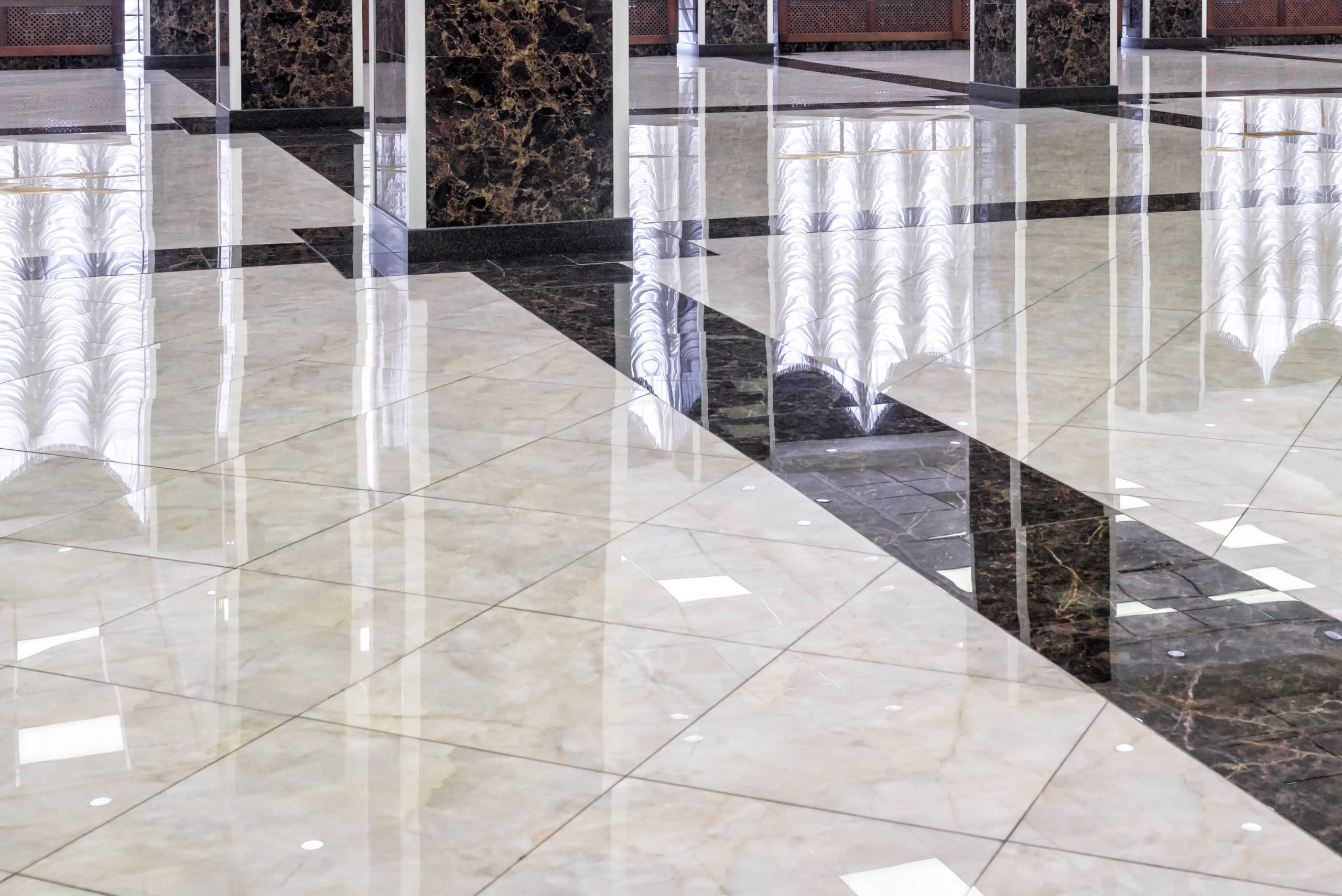
Summary:
If you’re a building manager or co-op board member in New York County, you already know that nothing about maintaining a pre-war building is simple. The floors in your lobby have probably seen eighty or more years of foot traffic, winter salt, and well-meaning but wrong cleaning products. They look dull, scratched, maybe stained — and someone at the last board meeting suggested it might be time to replace them.
Before you go down that road, there’s something worth understanding: in a landmark building, replacing original limestone isn’t just expensive. It may not be allowed without approval. Here’s what that actually means for you.
Limestone Restoration and NYC's Landmarks Preservation Commission
New York City’s Landmarks Preservation Commission — the LPC — is the largest municipal preservation agency in the country. It oversees more than 38,000 landmark properties across 157 historic districts and extensions, with the highest concentration of those properties right here in New York County. The Upper East Side, the Upper West Side, Carnegie Hill, Ladies’ Mile, Tribeca — if your building is in one of these neighborhoods, there’s a real chance it falls under LPC jurisdiction.
What most people don’t know is that the LPC’s reach isn’t limited to exteriors. The city also designates 125 interior landmarks, and even in buildings that aren’t individually landmarked, any work that touches the exterior of a structure in a historic district requires LPC approval — even if the Department of Buildings wouldn’t otherwise require a permit. That’s a distinction that catches building managers off guard more often than it should.
What Happens When You Try to Replace Limestone in a Landmark Building
Here’s where things get complicated. If your building is in a designated historic district or carries individual landmark status, replacing original limestone flooring — especially in a lobby or other publicly visible space — can trigger an LPC review. That review takes time. It requires documentation.
The LPC’s standard guidance for limestone work specifically calls for approaches like patching with compatible compounds, cleaning with mild chemical solutions and low-pressure water rinses, and repointing mortar joints rather than wholesale replacement of stone units. In other words, the LPC’s preferred approach is restoration — not because it’s cheaper (though it is), but because the original stone is part of what they’re protecting.
There’s also a sourcing problem. When replacement is approved, the new material typically has to match the original — and the Indiana limestone, also called Salem limestone, that was quarried and shipped to New York County during the Beaux Arts and Neo-Classical building boom between roughly 1880 and 1930 isn’t always easy to source in matching grades today. Getting it right adds time, adds cost, and still requires sign-off. Meanwhile, the original stone — the actual historic material — is sitting right there under decades of wear, often in far better structural condition than it looks.
Professional limestone restoration sidesteps all of that. There’s no replacement stone to source, no approval process for the stone itself, and no risk of a mismatch with the original material. The work preserves what’s already there, which is precisely what the LPC wants to see. For building managers trying to get a lobby floor project done without a six-month detour through the approval process, that’s not a small thing.
And the cost difference is real. Professional restoration typically runs $3.50 to $11 per square foot, while new stone installation can reach $10 to $100 per square foot depending on the material. For a 500-square-foot lobby, you’re potentially looking at a $5,000 restoration versus a $50,000 replacement — before you factor in the LPC process, sourcing delays, or the risk of a rejected application.
Why Pre-War New York County Buildings Have So Much Limestone
Walk through Midtown, the Upper West Side, or the Financial District in New York County and you’ll notice that the buildings from roughly 1880 to 1940 share a certain look — pale stone facades, carved detailing, grand lobby floors. That’s not a coincidence. The Beaux Arts and Neo-Classical architectural movements that dominated New York County’s construction boom during those decades specified limestone as the primary building material. It was durable, workable, and could be carved into the decorative details those styles demanded. Indiana limestone, in particular, was shipped to New York County by the trainload.
Inside those buildings, the same material carried through. Lobby floors, stairwells, wainscoting, vestibules — limestone was the standard. Paired with terrazzo, marble, and brass fixtures, it defined what a well-built New York County building looked and felt like. Many of those original installations are still in place today, which means they’re anywhere from 80 to 140 years old.
That age shows. Decades of foot traffic create wear patterns and low points where dirt collects. Cleaning products that weren’t pH-balanced have left etch marks across the surface — limestone is calcium carbonate, which means it reacts to acid the same way chalk reacts to vinegar. Winter salt tracked in from the street doesn’t help either; it’s mildly acidic and hygroscopic, meaning it draws moisture into the stone’s pores and accelerates deterioration from the inside. By the time a building manager is searching for options, the floor often looks like it’s beyond saving.
It usually isn’t. That’s the part that surprises people. Diamond honing — using abrasive diamond pads in progressively finer grits — removes the damaged surface layer and reveals the undamaged stone beneath. Etch marks, scratches, and staining that look permanent come off. The floor that looked like it needed to be torn out ends up looking like it was just installed. We’ve heard that from building managers who’ve watched the process firsthand, and the reaction is almost always the same: they didn’t think it was possible.
Slate Floor Refinishing in Pre-War New York County Buildings
Limestone gets most of the attention in pre-war New York County buildings, but it’s not the only stone that needs care. Slate shows up frequently in service areas, utility corridors, kitchens, and some secondary lobbies — particularly in buildings constructed before 1920. Like limestone, it’s a natural stone with specific maintenance requirements, and like limestone, it responds well to professional refinishing when it’s been neglected.
Slate is denser and less reactive to acid than limestone, which means it doesn’t etch the same way. But it does scratch, fade, and lose its surface sheen over time. Professional slate floor refinishing restores the color and protective finish without replacing the stone — keeping the original material intact, which matters in landmark buildings for the same reasons it matters with limestone.

How Slate Floor Refinishing Works and When It's the Right Call
The refinishing process for slate starts with a thorough cleaning to remove accumulated grime, old sealant residue, and any surface contamination that would interfere with the new finish. From there, the approach depends on the condition of the stone. Lightly worn slate may only need a fresh seal and polish. More significant damage — deep scratches, uneven surfaces, or lippage where individual tiles have shifted slightly — may require honing before sealing.
One thing worth knowing about slate: it’s a layered stone, which means it can flake or delaminate if the wrong products or techniques are used. Over-the-counter finishes and lacquers are a particular problem. They can create the appearance of a restored floor initially, but they sit on top of the stone rather than penetrating it — and as they break down under foot traffic, they flake away and leave the surface more vulnerable than before. They can also block the stone’s pores, which traps moisture and accelerates deterioration from underneath.
Professional refinishing uses penetrating sealants designed specifically for natural stone. These products protect from within rather than coating the surface, which means they hold up under real-world use without the flaking and degradation that surface coatings produce. For a building with heavy daily foot traffic — which describes most occupied New York County buildings — that distinction matters a great deal over the long run.
For building managers dealing with both limestone and slate in the same building, the practical advantage is being able to address both in a single project. Pre-war New York County buildings often have multiple stone types across different areas, and coordinating one restoration rather than two separate contractors saves time and reduces the disruption to residents and tenants.
Stone Floor Restoration FAQs for New York County Building Owners
**How long does stone floor restoration take in a building lobby?**
Most projects complete within one to two days, depending on the scope and the condition of the stone. For a standard New York County lobby floor, that typically means residents experience minimal disruption — no extended closures, no weeks of construction noise. We work around your building’s schedule and coordinate with management to keep the process as smooth as possible.
**Do I need LPC approval before restoring limestone floors in a New York County landmark building?**
It depends on the specific designation of your building and the scope of the work. In general, professional restoration of existing stone — honing, polishing, sealing, and repair using compatible compounds — is far less likely to trigger an LPC review than replacement work. The LPC’s own guidelines for limestone maintenance call for exactly these kinds of interventions. That said, if your New York County building is an individually designated landmark or located in a historic district, it’s worth confirming the scope with your managing agent or a preservation consultant before starting any project. What we can tell you is that restoration preserves the original material, which is always the LPC’s preferred outcome.
**Can limestone floors that look completely ruined actually be restored?**
More often than not, yes. The most common reaction from building managers after a restoration is that the floor looks better than they expected it could. Etch marks, deep scratches, staining, and decades of wear are exactly what diamond honing is designed to address. The process removes a thin layer of the damaged surface to reveal the undamaged stone beneath — and because the original stone in pre-war New York County buildings is genuinely high-quality material, what’s underneath is usually worth uncovering.
**How often does limestone need to be professionally maintained after restoration?**
Limestone benefits from professional sealing every six to twelve months, depending on foot traffic volume. In a high-traffic New York County lobby, annual maintenance keeps the floor in good condition and prevents the kind of cumulative damage that makes a full restoration necessary. Spot repairs — addressing isolated chips, cracks, or staining — typically cost between $100 and $400 and can be handled as part of a maintenance visit.
**What about terrazzo floors in the same lobby?**
Terrazzo is common in pre-war New York County buildings, often appearing alongside limestone in the same lobby space. We handle both in a single project, using grinding and sealing techniques specific to terrazzo to address cracks, chips, and surface dullness. If your lobby has both materials, there’s no need to coordinate separate contractors.
The Case for Limestone Floor Restoration in New York County Landmark Buildings
New York County’s pre-war buildings were built to last — and the limestone floors inside them are proof of that. Eighty or a hundred years of use hasn’t destroyed them. It’s just made them look like they need more help than they actually do.
Professional limestone restoration costs a fraction of replacement, sidesteps the LPC approval complications that come with removing original stone, and consistently delivers results that surprise the people who thought the floor was beyond saving. In a county with more than 38,000 landmark properties, that’s not a niche service — it’s the practical solution for a very large number of buildings.
If you’re managing a pre-war building in New York County and the lobby floor has been on your list for longer than you’d like to admit, we’re a good place to start. Reach out to Diamond Stone Restorations Corp for a free quote and find out what the floor actually needs before assuming the worst.

