Summary:
If you manage a building in New York County, NY — or you’re on a co-op board trying to figure out what to do with a lobby floor that looks permanently grimy — you’ve probably already tried the obvious things. More cleaning. Better products. Maybe a fresh coat of wax. And the floor still looks dull, yellowed, or just tired.
That’s not a cleaning problem. That’s a restoration problem. In New York County, where pre-war buildings are the norm and terrazzo floors are everywhere, it’s one of the most common situations we see. This page walks through exactly what terrazzo floor restoration involves, what separates a real restoration from a surface treatment, and what the process looks like from start to finish.
For co-op and condo common areas, see our condominium floor maintenance service.
Why Terrazzo Floor Polish Alone Won't Fix a Damaged New York County Floor
Here’s something that surprises a lot of building managers: waxing terrazzo doesn’t restore it. It hides it. Every coat of wax adds another layer that yellows over time, traps dirt, and creates a surface that looks worse with each passing year — not better.
This is a particularly common issue in New York County’s older residential buildings, where supers have been applying liquid wax to lobby floors for decades as a quick-shine fix. The result is floors that feel sticky, look cloudy, and resist every cleaning product you throw at them. The wax is the problem, not the solution.
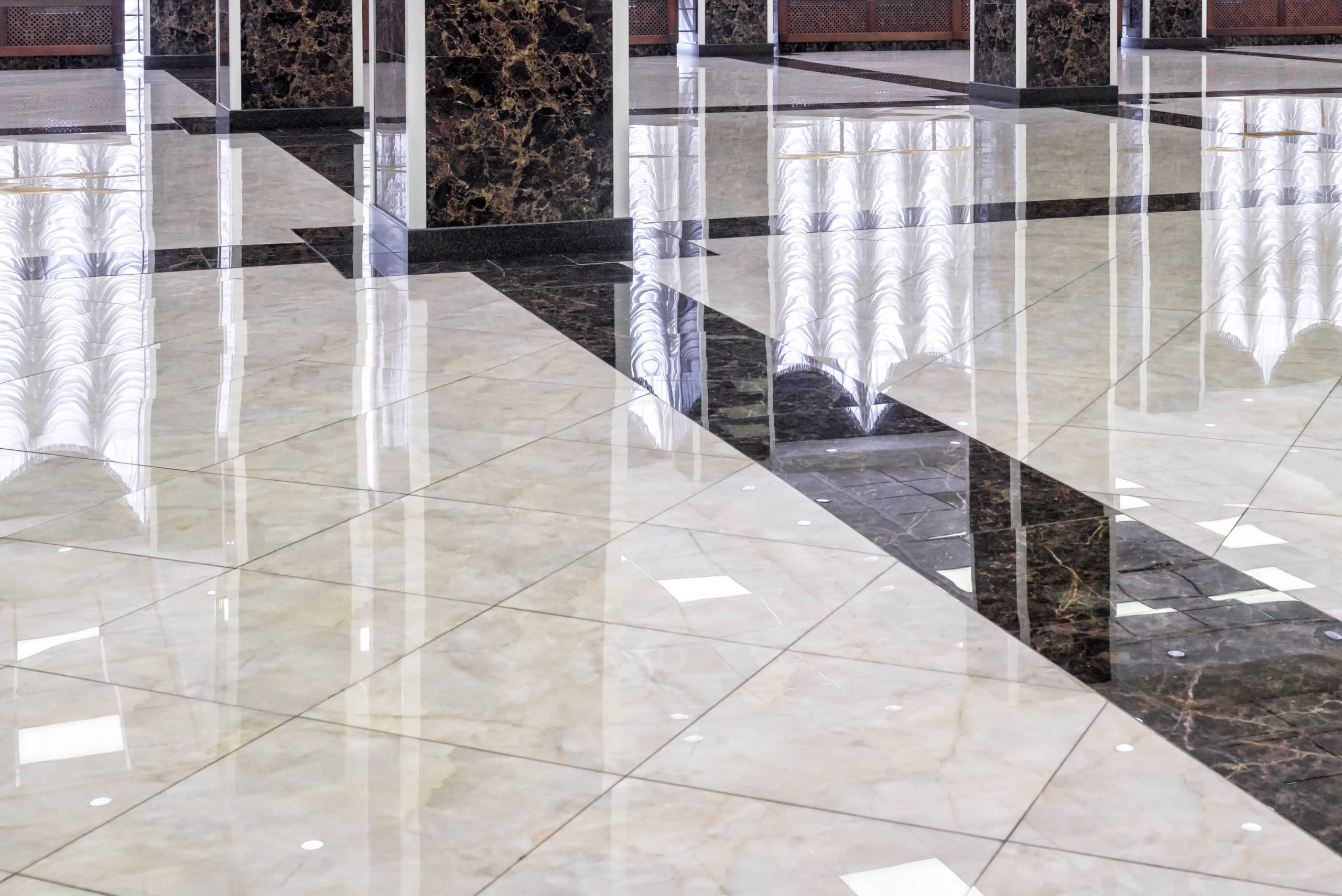
Real terrazzo floor polish — the professional kind — happens at the end of a multi-stage diamond grinding and honing process. It’s not a product you apply. It’s a finish you earn by removing everything that’s built up over the years and working the surface itself back to a reflective state.
What Happens When You Strip Wax from Terrazzo
When wax is stripped from a terrazzo floor that hasn’t been properly maintained, what’s underneath is usually not pretty. You’ll find scratches, etching from acidic cleaners, dull patches, and sometimes staining that goes deeper than the surface. That’s the real condition of the floor — and it’s what professional restoration actually addresses.
The good news is that most terrazzo floors, even badly neglected ones, are structurally sound. Terrazzo is typically installed at least an inch thick. That means we can grind away a thin surface layer — removing damage, old coatings, and discoloration — and reveal completely fresh material underneath without touching the structural integrity of the floor. It’s one of the reasons terrazzo is worth restoring rather than replacing.
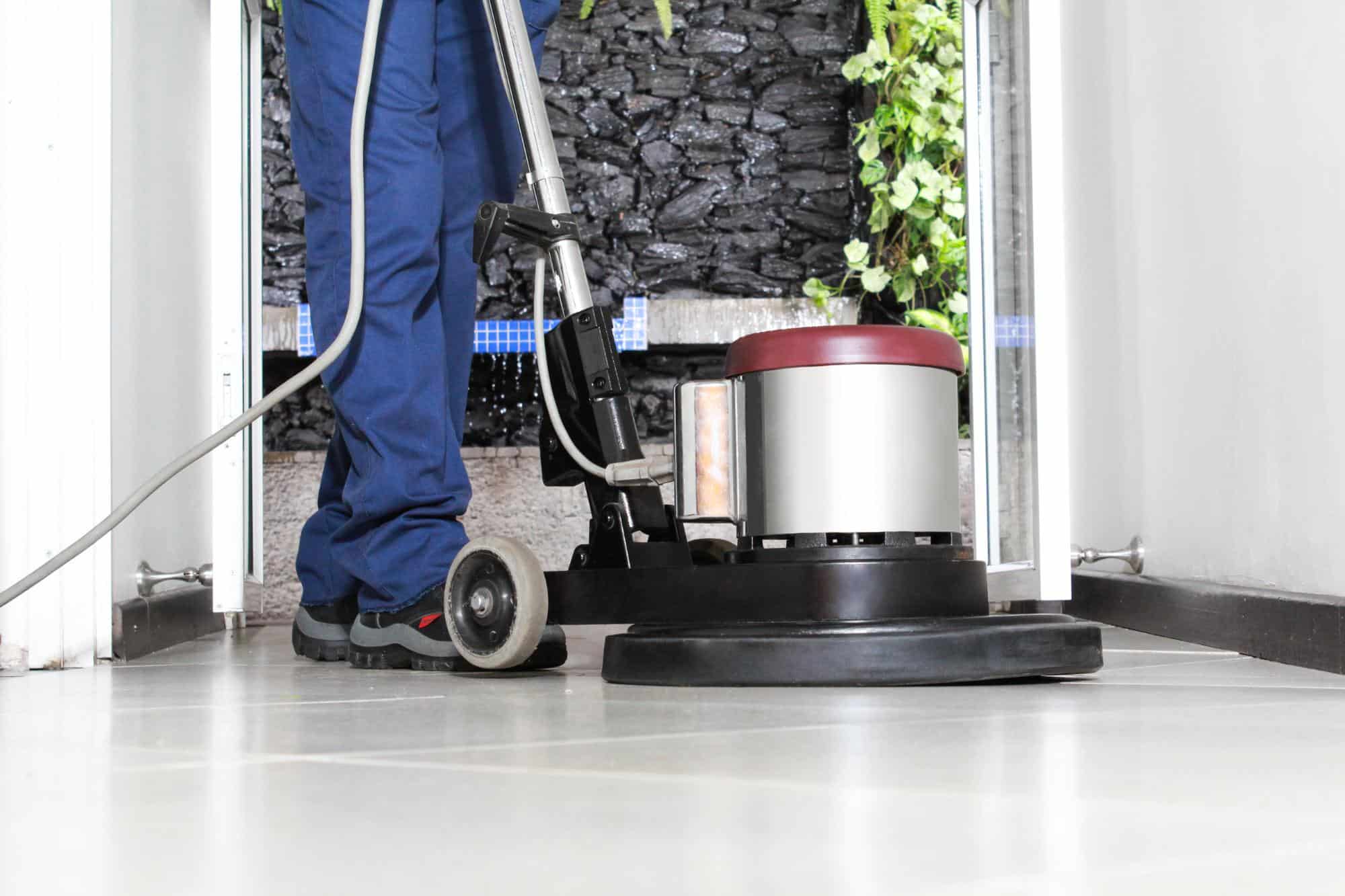
Our diamond grinding process starts with coarser grits — in the 30 to 60 range — to remove material and level the surface. From there, the process moves through progressively finer grits, each pass refining the surface further until the final polishing stages, which can reach 1,500 to 3,500 grit or higher. That’s what creates the mirror-like finish. Not a product. Not a coating. The surface itself, mechanically refined to the point where it reflects light cleanly.
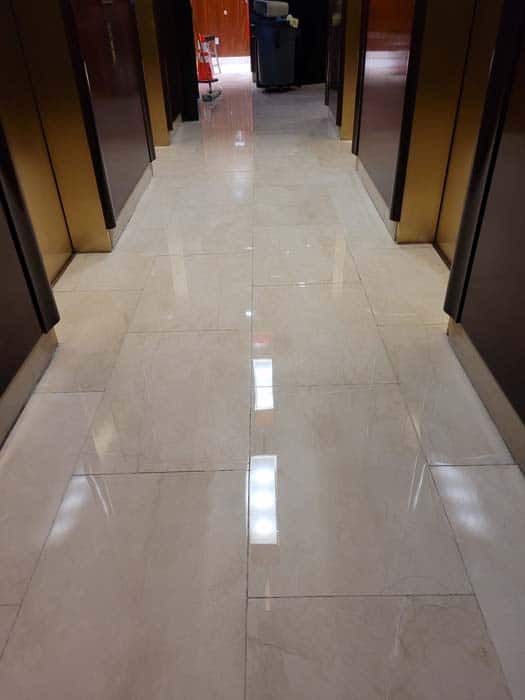
This distinction matters because it determines how long the result lasts. A wax coating might look decent for a few weeks before it starts to yellow and scratch again. A diamond-polished terrazzo surface, properly sealed, holds its finish for years — typically 8 to 10 years under normal use. For a Manhattan lobby seeing hundreds of residents a day, that’s a meaningful difference.
One more thing worth knowing: not all terrazzo is the same. Older buildings — most of New York County’s pre-war residential stock — typically have cement-based terrazzo, which is porous and requires specific abrasive approaches and penetrating sealers. Newer installations may use epoxy-based terrazzo, which is less porous and responds differently to grinding. A contractor who doesn’t distinguish between the two is going to get different results than one who does.
The Wax Cycle Problem in New York County Co-Op Buildings
New York County co-op buildings have a specific version of this problem that’s worth naming directly. In many buildings, the wax-over-terrazzo habit started in the 1960s and 1970s and was never really stopped. Supers changed, management companies turned over, and each new team inherited a floor they didn’t fully understand — so they kept doing what the last person did. Wax it. Strip it. Wax it again.
By the time a co-op board starts asking questions, the floor may have 40 or 50 years of accumulated wax history. Stripping it reveals damage underneath. More wax just continues the cycle. And the board is stuck: they know the floor looks bad, but they’re not sure if restoration is even possible at this point.
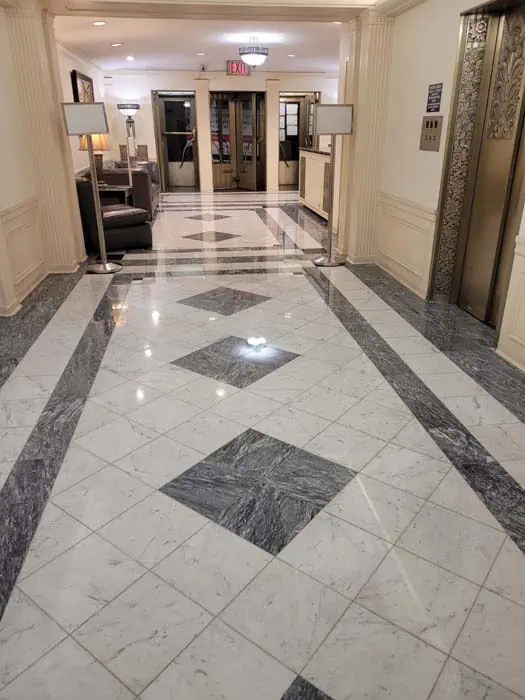
It almost always is. We’ve worked on floors in New York County buildings where the original terrazzo hadn’t seen daylight in decades — covered first by wax, then by carpet, then by vinyl. When the carpet came up during a renovation and the original terrazzo appeared underneath, the instinct was to assume it was ruined. In most cases, it wasn’t. Our diamond grinding process removes the accumulated damage and reveals a surface that, once polished and sealed, looks genuinely better than what was there before the wax ever started.
For co-op boards specifically, the practical argument is straightforward. Restoration is typically completed in days, not weeks. Residents experience minimal disruption — the lobby may be closed for a short window during active grinding, but the timeline is nothing like a full floor replacement. And the cost difference is significant: restoration generally runs 60 to 80 percent less than complete floor replacement. In a building where a capital expenditure requires a board vote and shareholder approval, that’s not a small consideration.
There’s also a landmark preservation angle that applies to many New York County buildings. The NYC Landmarks Preservation Commission requires that historic building materials be preserved in designated landmark buildings and districts — and terrazzo floors in pre-war lobbies often qualify. In those cases, restoration isn’t just the economical choice. It may be the only compliant one.
Terrazzo Floor Cleaning: What the Process Actually Looks Like
Before any grinding or polishing begins, the floor needs to be thoroughly cleaned. This isn’t a mop-and-go step — it’s a deep cleaning that removes surface debris, cleaning product residue, and anything else that would interfere with the abrasive process. Getting this right at the start affects every step that follows.
After restoration is complete, cleaning terrazzo is genuinely simple — simpler than most people expect. A regular sweep and damp mop with a pH-neutral cleaner is all it takes to maintain a diamond-polished surface. No wax. No specialty products. No stripping cycles. Avoiding acidic substances — vinegar, citrus-based cleaners, anything that can etch the surface — is the main thing to watch for.
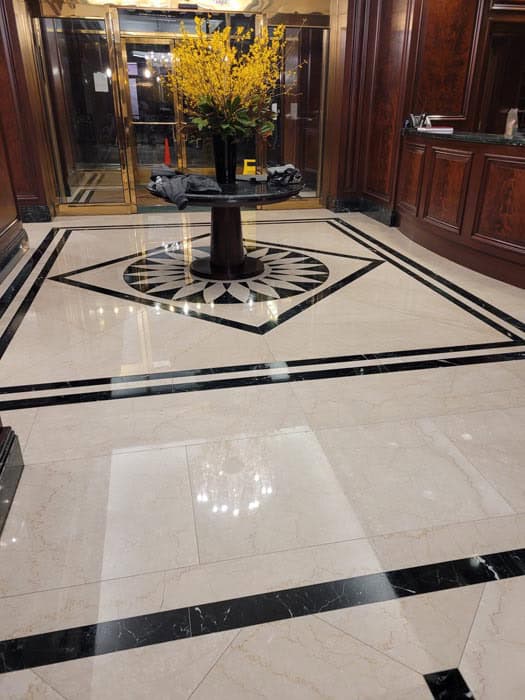
Step-by-Step: What Professional Terrazzo Restoration Involves
The full terrazzo restoration process has several distinct phases, and understanding them helps you evaluate whether a contractor is actually doing the job properly or cutting corners.
It starts with an assessment. Before any equipment comes out, our technicians identify the type of terrazzo — cement-based or epoxy — and evaluate the extent of the damage. Cracks, chips, deep stains, and areas where the aggregate has been worn away all require different handling. This step isn’t optional; it determines the entire approach.
Deep cleaning comes next. We clean the floor thoroughly to remove surface contamination before grinding begins. Then the diamond grinding phase starts — coarse grits first to remove material, old coatings, and surface damage, followed by progressively finer grits that smooth and refine the surface. Floor edges are typically hand-ground to reach areas that machines can’t access cleanly. This matters more than it sounds: edges that are left rough or unpolished are immediately visible and signal a job that wasn’t finished properly.
Crack and chip repair happens mid-process, after the initial grinding has revealed the full extent of the damage. This is where real expertise shows up. Filling cracks and chips requires color-matched materials that blend with the existing aggregate — the marble chips and pigments that give terrazzo its distinctive look. Done well, repairs are virtually invisible once the polishing is complete. Most people genuinely cannot identify where the repairs were made after the job is done.
The final stages are progressive polishing — working through increasingly fine grits until the surface reaches the desired reflectivity — followed by sealing. The sealer is penetrating, not surface-coating, which means it protects the terrazzo without adding a film that can yellow or peel. After that, the floor is done. No curing time with restricted access for weeks. No smell. No residue.
How to Evaluate a Terrazzo Restoration Contractor in New York County
New York County has no shortage of contractors who will tell you they restore terrazzo. The gap between a genuine restoration and a surface treatment is large, and it’s not always obvious from a proposal. Here’s what to actually look for.
Ask specifically about their process. A contractor who describes a multi-stage diamond grinding and polishing sequence — with progressive grits, edge grinding, crack repair, and penetrating sealer — is describing a real restoration. A contractor who talks about “polishing” without mentioning material removal is probably describing a buffing or wax application, which is not the same thing and will not produce the same results.
Ask whether they distinguish between cement-based and epoxy terrazzo. If they don’t know the difference or wave it off as unimportant, that’s a meaningful red flag. The two materials respond differently to abrasives and sealers, and treating them identically produces inferior results.
Ask about crack and chip repair specifically. How do they match the aggregate? What materials do they use? Can they show you examples of repaired floors? These questions separate specialists from generalists quickly.
Verify that the contractor is licensed and insured. In New York City, home improvement contractors are required to be licensed through the NYC Department of Consumer and Worker Protection. For co-op boards and property managers who carry fiduciary responsibility for their buildings, this isn’t a formality — it’s a basic requirement. Ask for proof before signing anything.
Finally, look at reviews carefully. Not just the star rating, but the specifics. Do reviewers mention the finish lasting? Do they describe the process in detail? Are there named technicians with consistent praise across multiple reviews? That level of specificity in customer feedback is harder to fake and more meaningful than an aggregate score.
New York County’s terrazzo restoration market has contractors at every level of quality and price. The lowest quote is rarely the best value when the result needs to hold up in a high-traffic lobby for the next decade.
Is Terrazzo Floor Restoration Worth It for New York County Buildings?
For most New York County buildings, the answer is yes — by a wide margin. The floors are already there, already structurally sound in most cases, and already part of the building’s character. Restoring them costs a fraction of replacement, produces results that last years, and in landmark buildings may be the only option that satisfies preservation requirements.
The wax cycle is a solvable problem. Discovered terrazzo under old carpet is almost always worth restoring. Cracked and chipped floors that look beyond saving usually aren’t. The process is more thorough than most people expect, and the results tend to exceed what they thought was possible.
If you’re managing a building in New York County, NY and you’re ready to stop guessing and start with a real assessment, we’re available Monday through Friday, 9am to 7pm. Diamond Stone Restorations Corp. offers free estimates with no hidden fees. Reach us at 929-335-0190 or request a callback through the website.