Summary:
You pull back a corner of carpet during a renovation and find terrazzo underneath — original, intact, probably 60 or 70 years old. Or maybe your lobby floor has looked dull and yellowed for years despite regular cleaning, and you’re finally ready to do something about it. Either way, you’ve got questions: Can this be saved? What will it actually cost? And how do you find someone in New York County who knows what they’re doing?
This guide answers all of that. By the time you’re done reading, you’ll know exactly what terrazzo restoration involves, what separates a real restoration from a surface treatment that won’t last, and what to look for when hiring a stone restoration company in New York County.
Refurbishing Terrazzo Floors: What the Process Actually Involves
Terrazzo is a composite material — marble chips, granite, glass, or other aggregates set into a cement or epoxy binder, then ground and polished to a smooth finish. That composition is what makes it so durable. It’s also what makes it worth restoring instead of replacing.
When a terrazzo floor loses its shine, the damage is almost always in the surface layer — scratches, etching from road salt or cleaning chemicals, and years of wax buildup that’s trapped dirt and dulled the finish. Refurbishing terrazzo floors means removing that damaged layer entirely and revealing the clean, intact material underneath. It’s not a coating. It’s not a topical treatment. It’s grinding down to fresh terrazzo and rebuilding the finish from there.
Terrazzo Refinishing vs. Polishing: Why the Difference Matters
This is the single biggest source of confusion when New York County property owners start getting quotes. One contractor says “polishing,” another says “restoration,” a third says “refinishing” — and the prices are completely different. That’s not because contractors are being deceptive. It’s because those words describe genuinely different scopes of work.
Polishing is a surface treatment. It adds shine to a floor that’s already in reasonably good condition. Think of it as maintenance, not repair. If your terrazzo is structurally sound and just needs its gloss refreshed, polishing might be appropriate. But if the floor has deep scratches, etching, staining, or years of wax buildup, polishing won’t fix any of that — it’ll just sit on top of the problem and wear off within months.
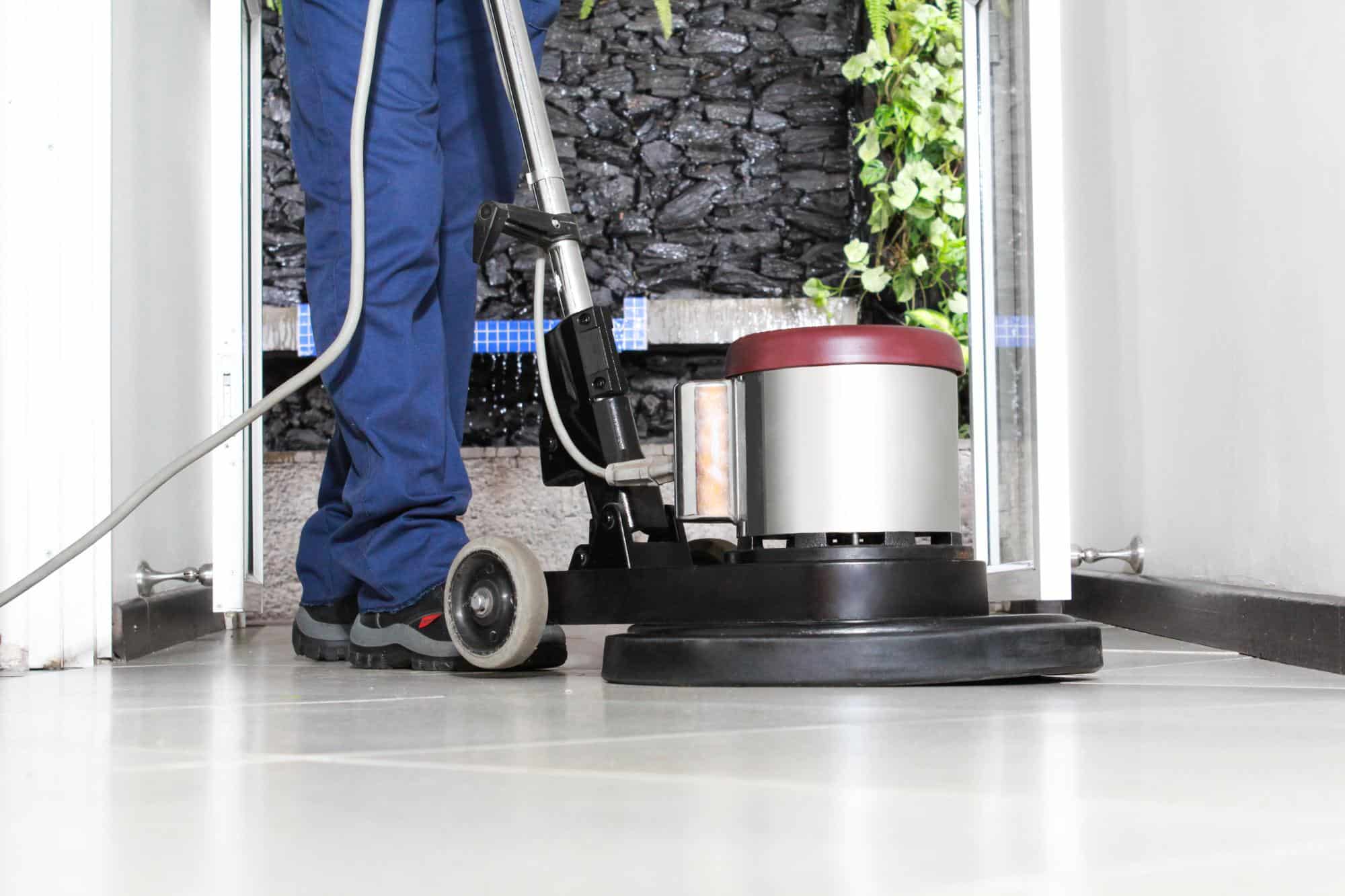
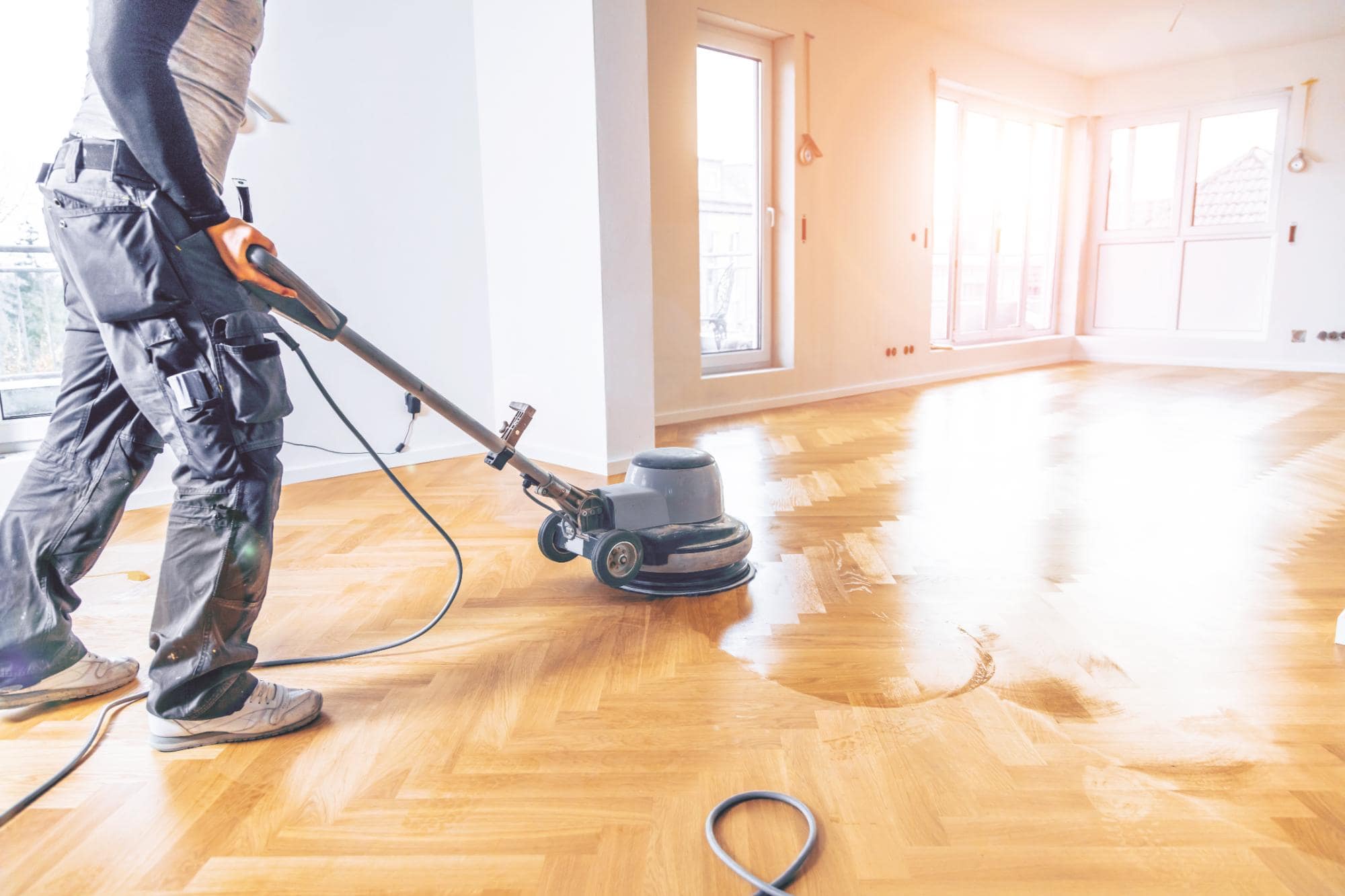
Terrazzo refinishing and full restoration involve diamond grinding. A professional-grade machine works through multiple stages — starting at a coarse grit to remove the damaged surface layer, then progressing through finer and finer stages until the floor reaches the finish you want. A complete restoration can run through anywhere from three to twelve grinding and polishing stages depending on the floor’s condition and the desired result. The finish that comes out of that process is hard, glass-like, and doesn’t need wax. Ever.
Here’s why that matters for New York County buildings specifically: a huge percentage of Manhattan’s pre-war lobbies have been maintained with wax coatings for decades. That wax has yellowed, hardened, and trapped decades of foot traffic grime. Before any real restoration can begin, that buildup has to be stripped completely. Skipping that step — which some operators do to save time — means the new finish won’t bond properly and the results won’t hold.
The short version: if someone quotes you polishing for a floor that has visible scratches, etching, or wax buildup, they’re either underselling the scope or underqualifying the problem. A proper assessment should tell you exactly what the floor needs before any work starts.
Natural Stone Floor Care After Restoration: How to Keep It Looking This Way
One of the most common questions after a professional terrazzo restoration is: now what? The good news is that a properly diamond-polished terrazzo floor is genuinely low-maintenance. No wax. No stripping cycles. No specialty products required for day-to-day upkeep.
For routine care, a dry dust mop or microfiber pad picks up the surface debris that would otherwise act as fine-grit sandpaper underfoot over time. For deeper cleaning, a damp mop with a neutral pH cleaner is all you need. The key word is neutral — acidic cleaners (including many common household products) will etch the surface over time, and alkaline cleaners can dull the finish. If you’re not sure whether a product is safe, the label will usually say. If it doesn’t, assume it isn’t.
For New York County lobbies and high-traffic commercial floors, the maintenance calculus shifts a little. Heavy foot traffic — especially during winter months when road salt gets tracked in from the sidewalk — accelerates surface wear. Sodium chloride is mildly acidic and will etch marble-aggregate terrazzo with repeated exposure. Entry mats at building doors make a real difference. So does scheduling a professional maintenance polish every few years to keep the finish at its best, rather than waiting until the floor needs a full restoration again.
One thing worth knowing: a penetrating sealer applied after restoration adds a layer of protection against staining without changing the floor’s appearance or texture. It doesn’t make the floor bulletproof, but it gives you a window to clean up spills before they become permanent. For residential terrazzo in kitchens or bathrooms — or any floor that sees food, drink, or moisture regularly — sealing after restoration is worth doing.
Natural stone floor care isn’t complicated once the floor is in good condition. The goal is to protect what you’ve invested in, not to maintain a coating that degrades over time.
Polish Terrazzo the Right Way: What Professional Results Actually Look Like
The benchmark for a professionally restored terrazzo floor is a glass-like finish you can see yourself in. Not a wax sheen that hazes over in a few months — a hard, reflective surface that holds up under real use and looks better with age than with neglect.
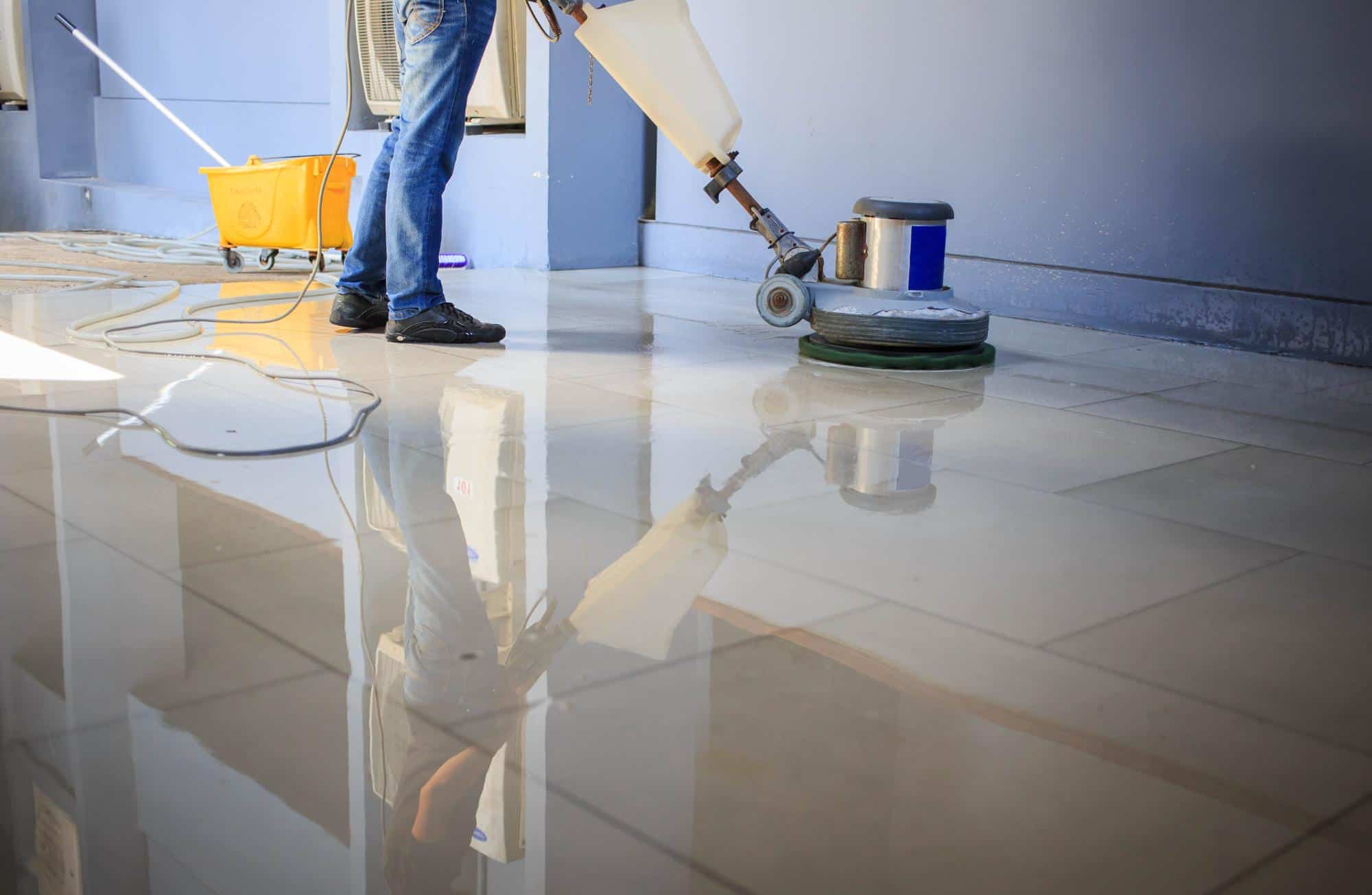
Getting there requires the right equipment and the right progression. Professional planetary grinders apply significant tool pressure across the floor surface, working through diamond-abrasive tooling at each grit stage. The edges — along walls, around columns, in corners — are hand-ground separately to ensure the finish is consistent across the entire floor. That detail matters more than it sounds. Uneven edges are one of the most common signs of rushed work.
Terrazzo Patch: Repairing Cracks, Chips, and Carpet Tack Holes
A floor that’s been covered by carpet for decades almost always has tack strip holes running along its perimeter. Floors in older buildings often have hairline cracks from decades of thermal expansion and contraction. Both are repairable — and when done correctly, the repairs are genuinely undetectable.
Proper terrazzo patch work uses color-matched marble aggregate chips and a compatible binder to fill the damaged area. The patch is then ground and polished through the same stages as the surrounding floor, so the texture and sheen are consistent. The skill is in the color match. Terrazzo floors aren’t uniform — they have variation in chip size, color, and distribution — and a patch that doesn’t account for that variation will stand out even after polishing. It’s one of the areas where experience makes the biggest visible difference.
For New York County buildings with original pre-war terrazzo, this kind of repair work is especially common. Floors that have been under carpet since the 1960s or 1970s often have significant tack hole damage around the perimeter, and occasionally cracking in areas where the building has settled over time. None of that is a reason to replace the floor. In most cases, even floors with substantial damage can be fully restored — the grinding process removes surface damage by cutting below it, and patching addresses anything structural.
The one scenario where restoration has real limits is if the terrazzo layer itself has been compromised — ground down too thin by previous restoration attempts, or physically broken through to the substrate. That’s rare in Manhattan’s older building stock, where original terrazzo installations are typically at least an inch thick. But it’s worth having a professional assess the floor before committing to a scope of work, especially if the floor has been worked on before.
Cost is where the confusion between polishing and restoration becomes a real financial issue. If you’re comparing quotes that use different terminology, you may be comparing completely different scopes of work — which makes it nearly impossible to evaluate them on price alone.
For reference: professional terrazzo floor restoration typically runs $3 to $20 per square foot depending on the floor’s condition, the method required, and the market. New terrazzo installation — if you were replacing the floor entirely — runs $20 to $70 or more per square foot for poured-in-place work. That’s the math behind the claim that restoration costs 60 to 80 percent less than replacement. For a 500 square foot New York County lobby, the difference between restoring and replacing can easily be $10,000 versus $35,000 or more.
Terrazzo floor restoration cost in New York County specifically is influenced by a few factors beyond just square footage. Building access matters — a lobby in a high-rise co-op with elevator restrictions and loading dock requirements adds logistical complexity that a ground-floor suburban home doesn’t have. The condition of the floor matters — a floor that’s been professionally maintained and just needs a refresh requires less work than one that’s been under carpet for 40 years. And the type of terrazzo matters — cement-based terrazzo (common in pre-war and mid-century Manhattan buildings) and epoxy-based terrazzo (more common in post-1970s commercial installations) require different approaches, and a company that treats them the same way is cutting corners.
One thing that’s consistent across projects: a free, in-person assessment is the only reliable way to get an accurate quote. Any number you get over the phone or based on square footage alone is an estimate at best. The floor’s actual condition, the presence of wax buildup, the extent of cracking or staining, and the access situation all affect the scope — and the price.
Finding the Right Stone Restoration Company in New York County
New York County has no shortage of contractors who will polish your terrazzo floor. Finding one who will actually restore it — correctly, with the right equipment, the right process, and the material-specific knowledge to handle both cement and epoxy terrazzo — is a different search.
What to look for: verified reviews that mention specific projects and specific technicians, not just generic praise. Before-and-after photos of New York County lobbies or pre-war apartment floors, not stock images. A company that asks questions about your floor before quoting a price. And if you’re managing a co-op or condo building, a company that’s prepared to provide the insurance certificates and compliance documentation your board requires before work begins — because that’s a real requirement in this market, and not every operator is set up for it.
We’ve been doing this work in New York County since 2007. If you’re ready to find out what your floor actually needs — and what it would cost to get it there — reach out for a free quote.