Summary:
You noticed the damage. Maybe it was a cast iron pan dropped at the wrong angle, or a chip that appeared along the edge of your granite near the sink. Maybe your marble has developed those dull, hazy spots that no amount of cleaning seems to fix. Whatever it is, you’re now in that familiar holding pattern — wondering whether it can be fixed, whether it’s worth fixing, and whether you can trust someone to come into your New York County kitchen and actually make it look right again.
This page is for that moment. We’ll walk you through the entire process — from the first call through the day of service and beyond — so there are no surprises.
How to Repair a Chip in a Granite Countertop the Right Way
Granite is tough — it sits at 6 to 7 on the Mohs hardness scale, which means it resists scratches from most everyday kitchen activity. But tough doesn’t mean indestructible. A sharp impact at the right angle, especially along an edge or near a seam, can produce a chip that’s impossible to ignore.
The good news is that a chipped granite countertop is one of the most reliably fixable problems in stone restoration. The key word there is “reliably” — because the outcome depends almost entirely on how the repair is done, not just whether it’s done.

What Professional Granite Countertop Chip Repair Actually Involves
The process starts before any product is applied. Our technicians examine the chip closely — its depth, its location, the specific pattern and tone variations in your stone — because granite isn’t a uniform material. Two slabs of the same variety can look noticeably different from each other, and a repair that ignores that will stand out.
Color-matching is where professional repair separates itself from anything you can do with a kit from the hardware store. We work with customizable, professional-grade epoxy compounds that can be mixed to closely match the unique character of your specific slab. Consumer kits come in a handful of generic colors. On a solid surface like laminate, that might be fine. On natural stone with its veining, flecks, and tonal variation, a generic color match almost always leaves a visible patch — and sometimes makes the damage look worse than it did before.
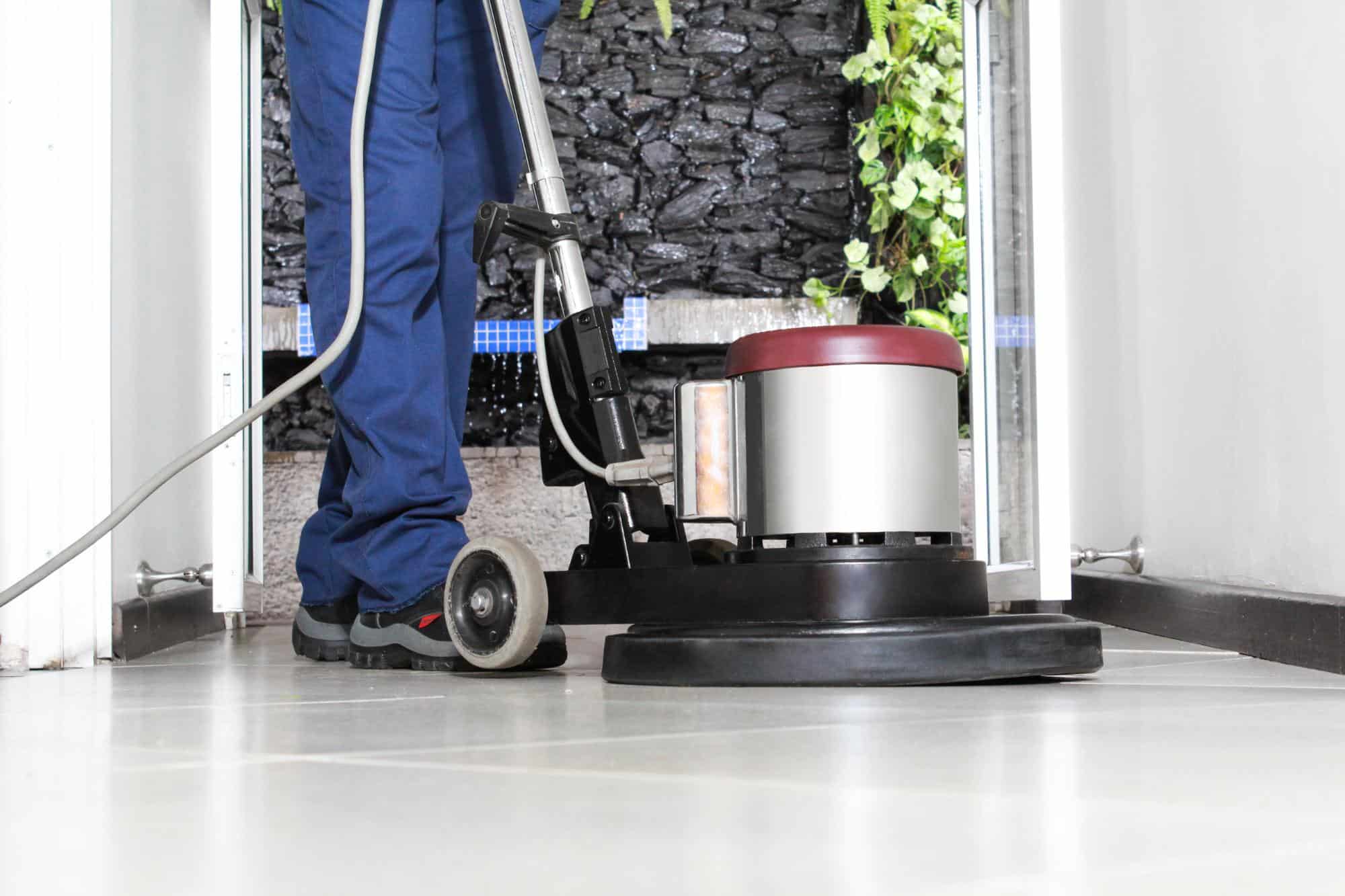
Once the color-matched compound is applied and cured, we grind it flush with the surrounding surface using diamond abrasives, progressing through progressively finer grits until the repair blends into the stone. This step requires both the right equipment and a practiced hand. Too aggressive, and you risk damaging the surrounding finish. Too light, and the repair remains slightly raised or dull.
The final step is polishing the repaired area to restore the sheen of the surrounding stone, followed by sealing to protect the surface going forward. For most chip repairs on granite countertops, the entire process is completed in a single visit. Depending on the size and location of the damage, you’re typically looking at a few hours of work — not a full day, and certainly not the weeks of lead time that come with a full countertop replacement.
One thing worth knowing: not every mark on a granite countertop actually requires repair. Surface blemishes — light scuffs that haven’t penetrated the stone — can sometimes be buffed out without any epoxy work at all. We’ll tell you that upfront rather than bill you for a repair you don’t need.
Granite Countertop Restoration: When It's More Than a Single Chip
Sometimes the issue isn’t one chip — it’s a countertop that has gradually lost its luster. Dull patches, fine surface scratches, a finish that looks flat compared to how it looked when the kitchen was first renovated. This is where granite countertop restoration comes in, and it’s a different scope of work than a targeted chip repair.
Restoration typically involves cleaning the surface thoroughly to remove any residue or buildup, then honing the stone to remove surface-level scratches and inconsistencies, and finally polishing it back to its original finish using diamond abrasives. The process is methodical — each stage of abrasive work prepares the surface for the next — and when it’s done well, the result is a countertop that looks the way it did when it was first installed, sometimes better.
If damage covers a significant portion of the countertop surface — more than roughly a third of it — restoration often makes more financial sense than addressing each problem area individually. You end up with a consistent result across the entire surface rather than a patchwork of spot repairs, and the cost is still a fraction of what full replacement would run.
In New York County kitchens specifically, granite restoration comes up frequently in the context of pre-sale preparation. When someone is getting ready to list a co-op or condo, the kitchen is one of the first things a buyer notices. A countertop that looks worn or damaged can undercut an otherwise well-maintained apartment. Restoration brings it back without the cost, the board approval process, or the multi-week timeline that a full replacement would require.
After any restoration work, sealing the surface is standard practice. The right sealer for your specific stone type protects against future staining, moisture infiltration, and the kind of gradual surface degradation that leads to another restoration job sooner than necessary. It’s a straightforward step that significantly extends how long the results last — our professional repairs on natural stone, properly maintained, can hold up for five to fifteen years.
What Kitchen Countertop Repair Looks Like in a New York County Apartment
Countertop repair in a New York County apartment isn’t quite the same as doing the same job in a suburban house with a driveway and an open floor plan. New York County has its own logistics, and we know how to work within them.
Building access is the first thing to think through. Many co-op and condo buildings in neighborhoods like the Upper West Side, Upper East Side, and Tribeca require advance notice before any contractor work, elevator reservations for moving equipment, and sometimes specific time windows — no work before 8am, nothing after 5pm. We have experience with these constraints and arrive prepared so you don’t run into problems with building management.
Do You Need Board Approval for Countertop Repair in a New York County Co-op or Condo?
This is one of the most common questions New York County homeowners ask before scheduling any work, and it’s worth addressing directly because the answer actually matters for your timeline.
In most cases, professional countertop repair and restoration is classified as maintenance rather than renovation. That distinction is significant in the co-op and condo context, because maintenance work typically does not require board approval — whereas renovation work does. Full countertop replacement involves demolition, disposal of heavy stone slabs, and installation of new material, all of which tend to trigger the renovation approval process. Repair and restoration, by contrast, involves our technician arriving with professional equipment, working within the existing kitchen, and leaving the same day with the surface restored. No structural changes, no disposal of materials, no extended construction timeline.
That said, building rules vary. Some buildings require written notice for any contractor work regardless of scope. Others have specific requirements around proof of insurance before allowing a vendor access to the building. It’s always worth checking with your building management or reviewing your proprietary lease before scheduling, just so you’re not caught off guard on the day of service.
From a practical standpoint, the repair-over-replacement path is almost always the simpler one in a New York County apartment building — not just because of cost, but because of the logistical friction that replacement introduces. A restoration that can be completed in a single day, without triggering a board review or a weeks-long construction timeline, is genuinely the easier path for most homeowners in this market.
Pre-war buildings on the Upper West Side and in Harlem often have original marble surfaces — in kitchens, bathrooms, and building lobbies — that are decades old and have developed the kind of etching, staining, and surface wear that accumulates over time. These aren’t surfaces that need to be replaced. They need to be restored, and when they are, they can look extraordinary. That’s exactly the kind of work we do.
What Should You Ask a Countertop Repair Contractor Before You Hire Them?
The contractor you hire matters more than almost any other variable in whether the repair looks right. Here’s what’s worth asking before you commit to anyone.
Ask whether they have experience with your specific stone type. Marble and granite require different techniques — marble is softer (rating 3 to 5 on the Mohs scale compared to granite’s 6 to 7) and is significantly more susceptible to etching from acidic substances like lemon juice, vinegar, or wine. A technician who primarily works with granite may not have the lighter touch that marble demands. Ask directly: have you worked with this material before, and can you show me examples?
Ask how they handle color-matching. This is the single most technically demanding part of any natural stone chip repair, and the answer will tell you a lot. A confident, experienced technician will explain their process — how they assess the stone, how they mix the compound, and what the result will look like. Vague answers here are a warning sign.
Ask about the timeline, both for scheduling and for the day itself. A reputable provider should be able to give you a realistic window for when they can come out and how long the work will take. For most chip repairs, you’re looking at a single visit of a few hours. For broader restoration work, it may be one to two days. Either way, you should know before they arrive.
Ask whether they carry liability insurance and whether they can provide documentation. This matters for building access in most New York County co-ops and condos — management will often require proof of insurance before allowing a contractor in. A professional operation will have this ready without hesitation.
And finally, ask what happens after. We’ll leave you with guidance on how to care for the surface going forward — what cleaners to avoid, whether and when to reseal, and what to watch for. That conversation after the job is done is part of what you’re paying for.
We offer free estimates with a callback within 24 to 48 hours, and our team will give you straight answers to all of these questions before any work begins. You can reach us at 929-335-0190, Monday through Friday, 9am to 7pm.
Finding Reliable Kitchen Countertop Repair in New York County
If there’s one thing to take away from all of this, it’s that most countertop damage — chips, cracks, etching, surface wear — is fixable without replacing anything. The repair process is faster than most people expect, less disruptive than renovation, and in a market like New York County, where replacement costs run high and building logistics add friction, it’s usually the smarter path by a significant margin.
What makes the difference is who does the work. The right provider will assess your stone honestly, match the repair to your specific slab, and leave you with a surface that holds up. The wrong one will leave you with a visible patch and a problem that’s harder to fix the second time around.
Diamond Stone Restorations Corp is based in Astoria — right across the East River from New York County — and we work throughout New York County and the broader NYC area. If you’ve got damage you’re not sure about, reach out. We’ll take a look, give you a straight answer, and go from there.