Summary:
If you manage a building in New York County, NY, you’ve probably scheduled a floor waxing service without thinking too hard about what that actually means. Wax it, buff it, make it shine — that’s the idea. But floor waxing, buffing, and stripping are three distinct processes that do very different things. Using one when you need another doesn’t just waste money. It can leave you with floors that look worse than before, or create buildup problems that compound over time.
Here’s a clear breakdown of what each process does, how they work together, and — critically — when waxing isn’t the right answer at all.
Floor Stripping and Waxing: The Full Reset Your Floor Actually Needs
Stripping and waxing is the most involved of the three processes — and the most misunderstood. It’s not just “a deep clean.” It’s a full removal of the existing finish layer, followed by a fresh application of protective coating from scratch. The two steps are inseparable. Doing one without the other is where things go wrong.
Most commercial floors in New York County rely on a protective finish layer to shield the material underneath. That layer takes the abuse so the tile doesn’t have to. Over time, it accumulates scratches, embedded grit, and uneven buildup, especially in high-traffic corridors and lobbies. When that layer is compromised, layering new wax on top doesn’t fix it. It just adds to the problem.
What Happens When You Skip the Strip — and Why It Matters in High-Traffic New York County Buildings
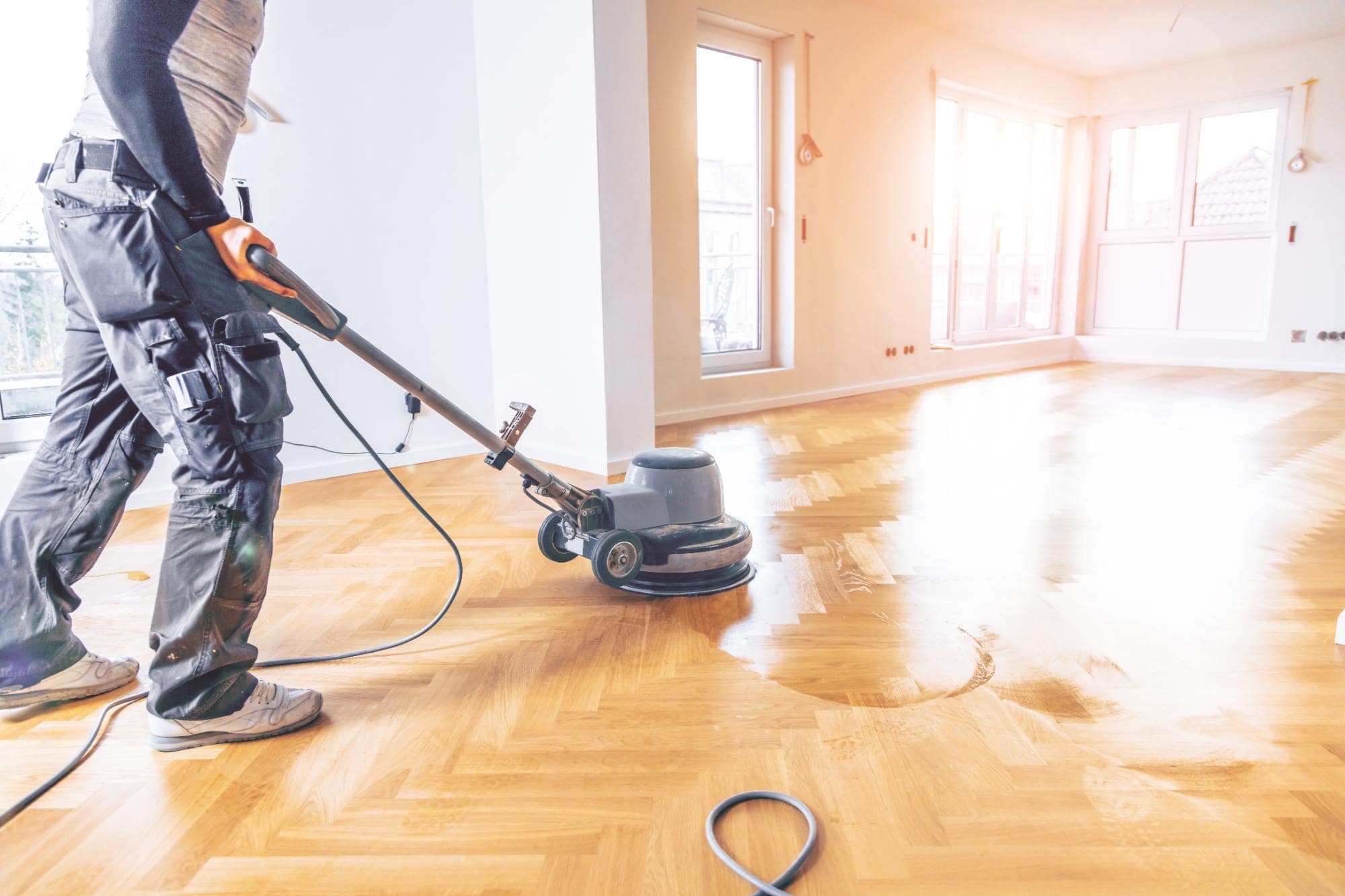
The stripping step is where most shortcuts happen. A chemical stripping agent is applied to the floor and left to dwell — typically around fifteen minutes — to break down the old finish and the dirt embedded in it. After scrubbing, the floor has to be fully rinsed and neutralized before anything new goes on.
That neutralization step is critical. Skip it, and the new wax won’t bond to the surface properly. You’ll end up with a finish that peels, yellows, or fails within weeks.
Once the floor is clean and neutralized, the waxing process begins. Our standard is three to five thin coats of floor finish, with each coat allowed to dry fully before the next is applied. Rushing this step — applying coats too thick or too fast — produces a cloudy, uneven finish that wears unevenly and traps dirt along the edges and in corners.
In New York County, this process carries extra weight. Building lobbies here see thousands of foot-traffic events per day in some cases. Add in the grit and deicing residue that gets tracked in from the sidewalks every winter, and a finish that wasn’t applied correctly will fail faster than it would almost anywhere else. The density of the county accelerates everything — including floor wear. That’s why a strip-and-wax done right, with proper neutralization and multiple coats, isn’t a luxury. It’s the baseline.
For most commercial spaces, a full strip-and-wax cycle makes sense once or twice a year. High-traffic facilities — retail floors, lobby corridors in large residential towers, office building entrances — may need it every three to six months. The right schedule depends on your foot traffic, your floor type, and how well the maintenance between cycles is being managed.
Floor Buffing: The Maintenance Step That Keeps Waxed Floors Looking Sharp Between Cycles
Buffing is not a substitute for stripping and waxing. It’s what you do in between. Once a fresh wax coat is applied and cured, regular buffing is what keeps it looking the way it did on day one — or close to it.
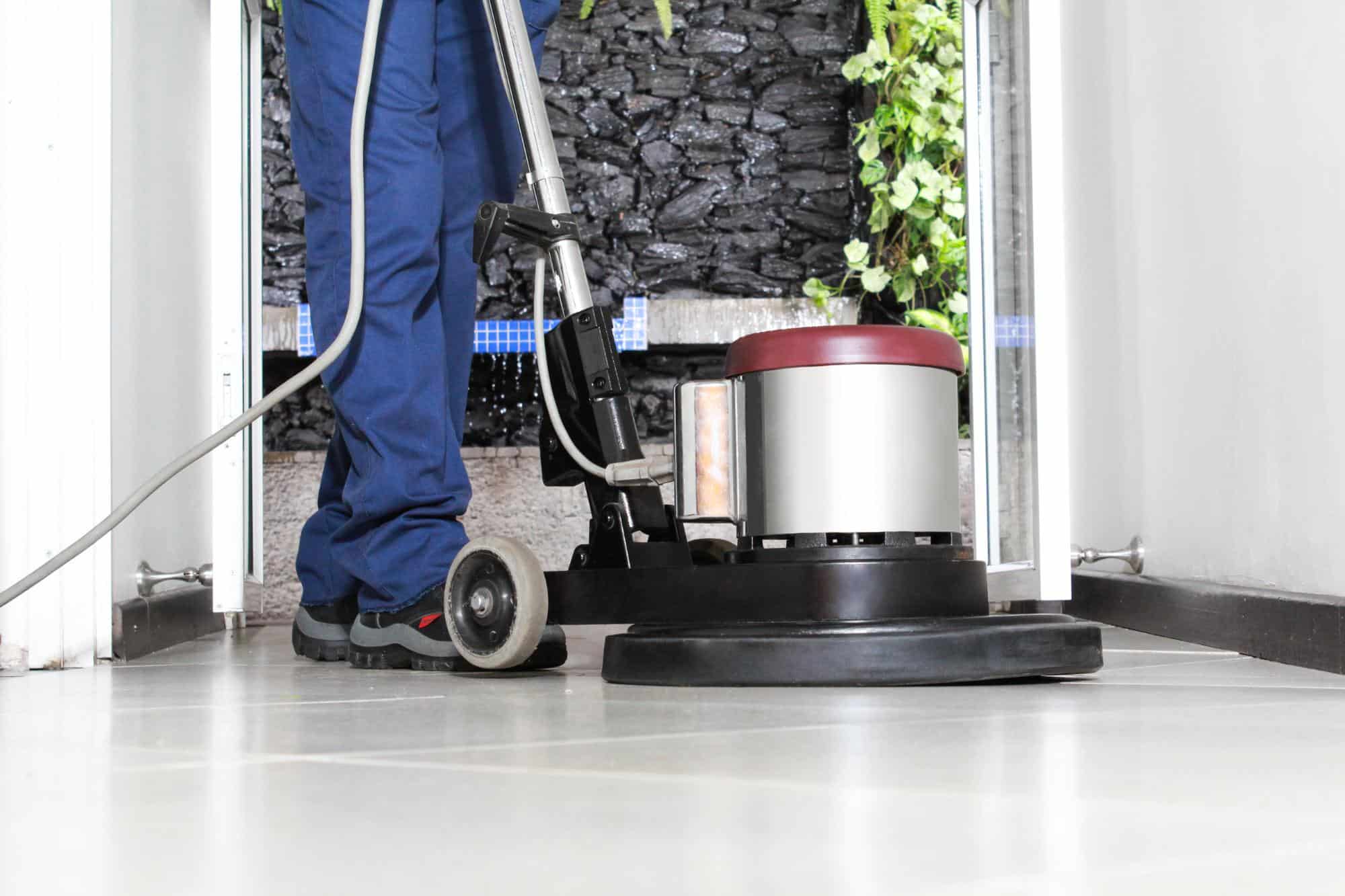
The process uses a rotary machine with a soft pad that polishes the existing finish at high speed. Done correctly, it smooths out fine scratches left by foot traffic, restores the gloss that daily use dulls, and extends the life of the finish so you’re not stripping and rewaxing as frequently. Think of it as maintenance on the maintenance — a weekly or monthly task that protects the investment you made in the full service.
Floor buffing also comes in two forms worth knowing. Dry buffing uses a high-speed buffer rotating above 1,000 RPM to polish the existing finish and remove light scuffs. Spray buffing adds a small amount of liquid polish to the process, which helps with slightly heavier surface wear. Neither one removes the underlying finish or adds a new layer — they work with what’s already there.
Where building managers in New York County often go wrong is treating buffing as a fix for floors that actually need stripping. If your floor looks dull a few days after buffing, or if the shine is uneven and patchy, that’s not a buffing problem — it’s a sign the finish underneath is compromised. No amount of buffing will correct a finish that has yellowed buildup, embedded grit, or layers of old wax that were never properly removed. At that point, the floor needs a full strip-and-wax, not another pass with the buffer.
The sequence matters: strip, then wax, then buff to maintain. That’s the order. Skipping steps or reversing them doesn’t save time — it creates problems that cost more to fix later.
Industrial Floor Cleaning: When the Problem Goes Deeper Than the Finish
Standard floor maintenance — stripping, waxing, buffing — assumes the floor itself is in reasonable condition and just needs its finish managed. Industrial floor cleaning addresses what happens when that assumption breaks down. It’s the process for floors where embedded contamination, chemical residue, or deep-set grit has worked its way past the finish layer and into the material itself.
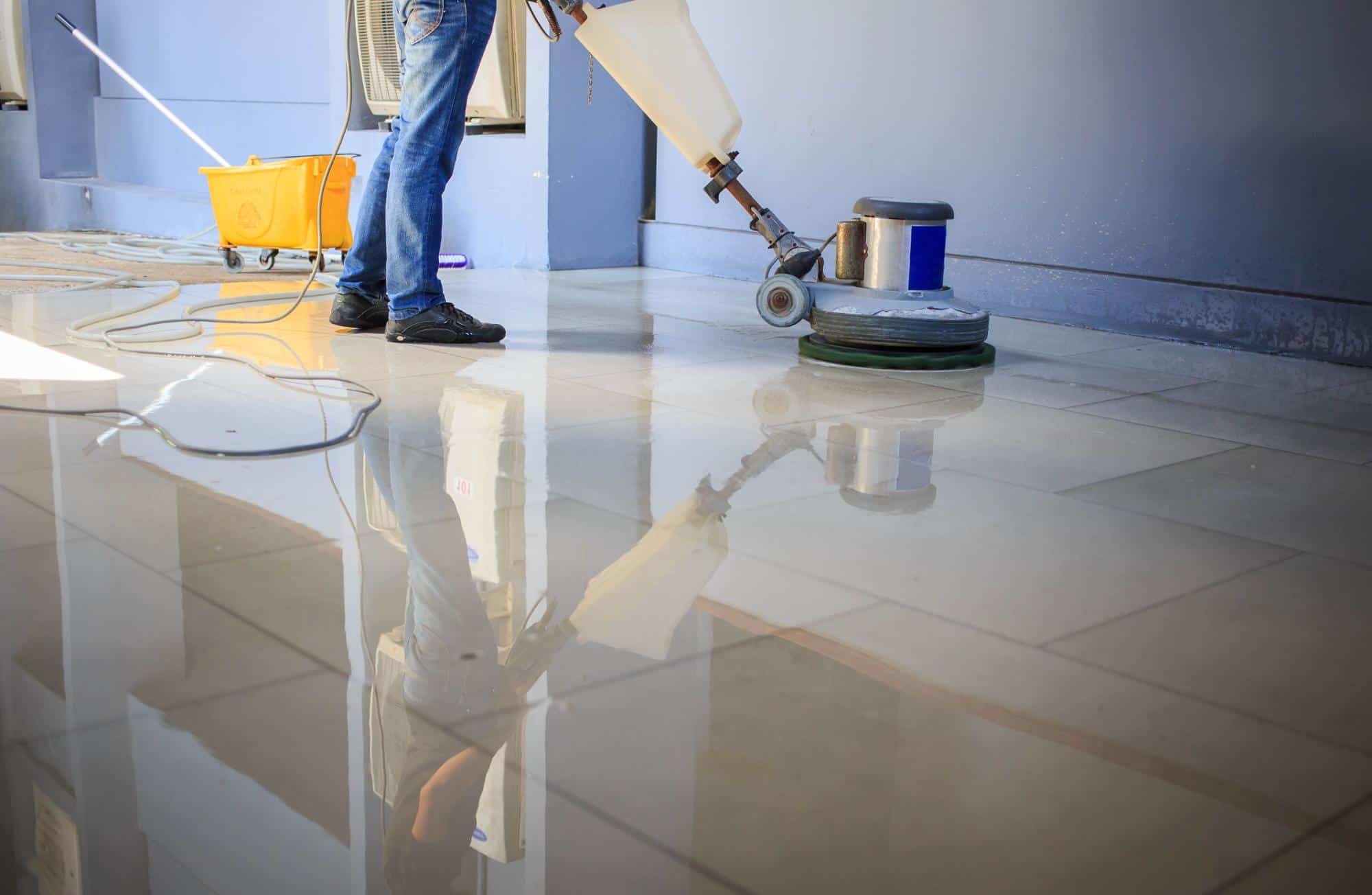
This isn’t heavy-duty mopping. We use rotary scrubbers, wet vacuums, and surface-specific chemistry matched to the actual floor material. The wrong cleaning agent on the wrong surface causes damage that’s expensive to reverse — and in New York County’s older building stock, where marble, terrazzo, and other natural stone are common in lobbies and hallways, the stakes are higher than they are with vinyl composition tile.
Floor Polishing vs. Waxing: Why New York County's Stone and Terrazzo Floors Need a Different Approach
Here’s where the terminology confusion causes real financial damage. Polishing and waxing are not the same process, and they’re not interchangeable — especially when you’re dealing with natural stone.
Waxing applies a topical coating over the surface of the floor. It protects the material underneath and creates a glossy appearance, but it sits on top of the stone rather than working with it. For vinyl composition tile and vinyl floors, that’s exactly what you want. For marble, terrazzo, granite, and limestone — materials that New York County’s pre-war and mid-century buildings are full of — waxing is often the wrong call entirely.
Floor polishing, by contrast, works on the surface itself. It’s a mechanical process — using progressively finer diamond abrasives — that removes scratches, etching, and surface damage by grinding away a thin layer of the material and rebuilding its natural gloss from within. The result isn’t a coating that sits on top and wears off. It’s the stone itself, restored. That’s a fundamentally different outcome.
The practical difference for a property manager is significant. A waxed marble lobby floor needs to be stripped and rewaxed every one to two years. The wax yellows, traps dirt, and eventually requires emergency removal when it builds up in corners and along baseboards. A properly diamond-polished marble or terrazzo floor, done correctly, can maintain its finish for eight to ten years under normal use — with nothing more than routine sweeping and damp mopping in between.
The math on that is straightforward. A typical commercial space spends $2 to $4 per square foot annually on stripping, waxing, and buffing. For a 1,000 square foot lobby, that’s $2,000 to $4,000 every year. Over ten years, you’re looking at $20,000 to $40,000 in maintenance costs — without ever actually fixing the underlying etching, staining, or surface damage that waxing can’t address. For stone floors, professional restoration isn’t a premium option. It’s often the more cost-effective one.
How to Know Which Process Your Floor Actually Needs
This is the question most property managers are actually trying to answer when they search for floor waxing services. The honest answer is: it depends on what’s underneath, how long the current finish has been in place, and what the floor is made of.
If your floor is vinyl composition tile or vinyl and the finish looks dull but is otherwise intact — no peeling, no heavy yellowing, no visible buildup in the corners — buffing may be all you need. It’s a faster, less disruptive service, and it extends the life of the existing finish without the downtime of a full strip-and-wax.
If the finish is peeling, yellowing, or has visible buildup that buffing hasn’t resolved, it’s time for a full strip-and-wax. Applying new wax over a compromised finish doesn’t restore it — it just adds another layer to the problem. The floor needs to be stripped back to bare material, neutralized, and refinished from scratch.
If your floor is marble, terrazzo, granite, or another natural stone — common throughout New York County’s older residential towers, Financial District office buildings, and mixed-use properties — the question isn’t which waxing service you need. It’s whether waxing is the right process at all. Stone floors that are etched, stained, or deeply scratched can’t be fixed with a topical coating. They need professional restoration: diamond honing to remove the damaged surface layer, followed by polishing to rebuild the natural finish from within.
A proper floor assessment before any work begins is the step that separates providers who know what they’re doing from those who don’t. The floor type, the current condition of the finish, the depth of any damage, and the traffic patterns in the space all factor into what the right process actually is.
The Right Floor Care Process Starts With Knowing What You're Working With
Floor waxing, buffing, stripping, and polishing each have a role — but only when they’re matched to the right floor type, applied in the right sequence, and done with the right equipment and chemistry. In New York County, where buildings range from pre-war marble-lobby towers to modern commercial office spaces with vinyl composition tile corridors, there’s no single answer that works for every floor.
What matters most is starting with an honest assessment of what the floor is, what condition it’s in, and what outcome you’re actually trying to achieve. For some floors, a regular strip-and-wax cycle is the right long-term strategy. For others — especially natural stone and terrazzo — professional restoration is a more durable and cost-effective path than perpetuating a wax cycle that never fully solves the problem.
If you’re not sure which category your floors fall into, we’re happy to take a look and give you a straight answer. No pressure, no upsell — just a clear picture of what your floors need and what it would take to get them there.