Summary:
You probably already know you have terrazzo. What you might not know is whether it’s worth saving — or what it would actually take to bring it back. That question comes up constantly in New York County buildings, from pre-war apartment lobbies on the Upper West Side to mid-century commercial corridors in Midtown. The floors look rough. There are scratches, maybe some chips, and a dullness that no amount of mopping seems to fix. Before you start pricing out replacement, it’s worth understanding what professional terrazzo refinishing actually involves — because the answer often changes the math entirely.
What Terrazzo Refinishing Actually Involves
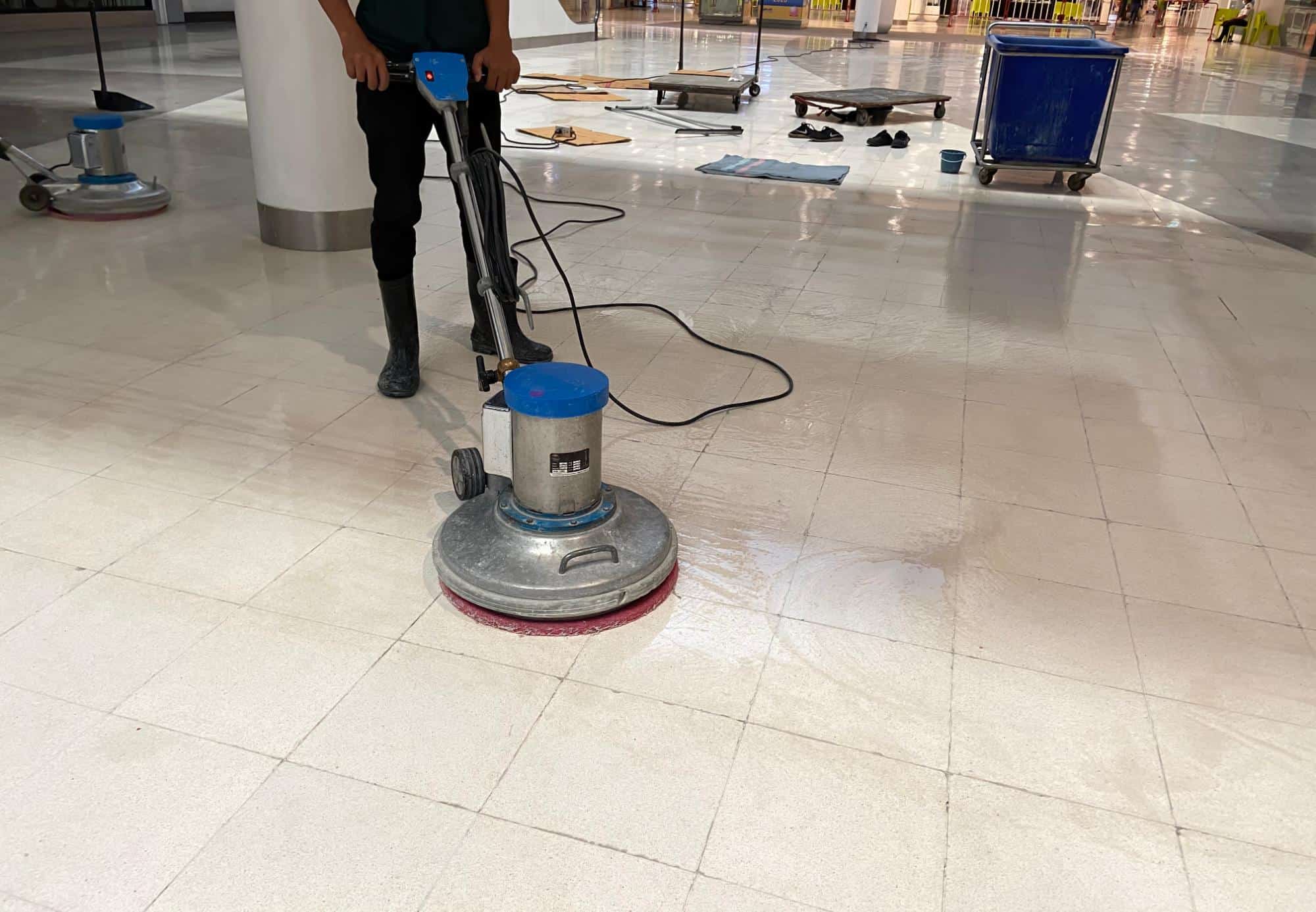
Refinishing terrazzo is not a cleaning service. It’s not buffing, and it’s definitely not applying a fresh coat of wax. The process involves mechanically reworking the surface of the floor itself using diamond abrasive equipment — removing old coatings, surface damage, and oxidation layer by layer until the original aggregate is exposed and ready to be brought back to a true polish.
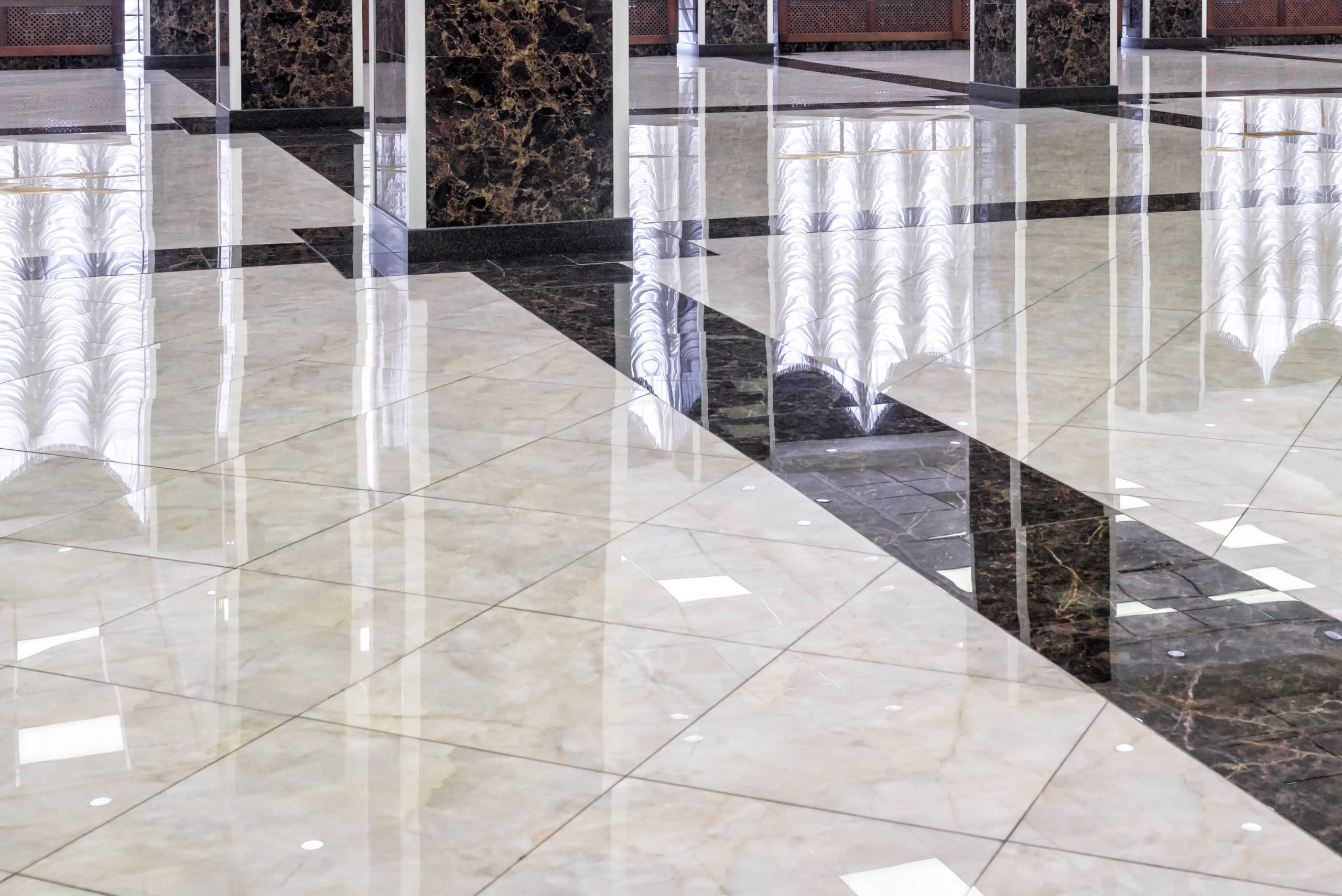
The result looks nothing like what a mop and a bottle of floor wax can produce. It’s a deep, reflective shine that comes from the stone itself, not from a coating sitting on top of it. Because the surface has been mechanically refined rather than coated, it holds up far longer — typically eight to ten years or more before the process needs to be repeated.
The Step-by-Step Terrazzo Refinishing Process
The process follows a specific sequence, and skipping steps is exactly how you end up with results that fade within a year. Here’s how professional terrazzo refinishing works from start to finish.
It begins with a thorough cleaning to remove surface debris, old wax, and any topical coatings that have built up over time. This step matters more than most people expect — wax that has been applied for years can trap dirt and create a cloudy film that makes the floor look worse than the stone underneath actually is. Stripping that layer cleanly is the foundation everything else builds on.
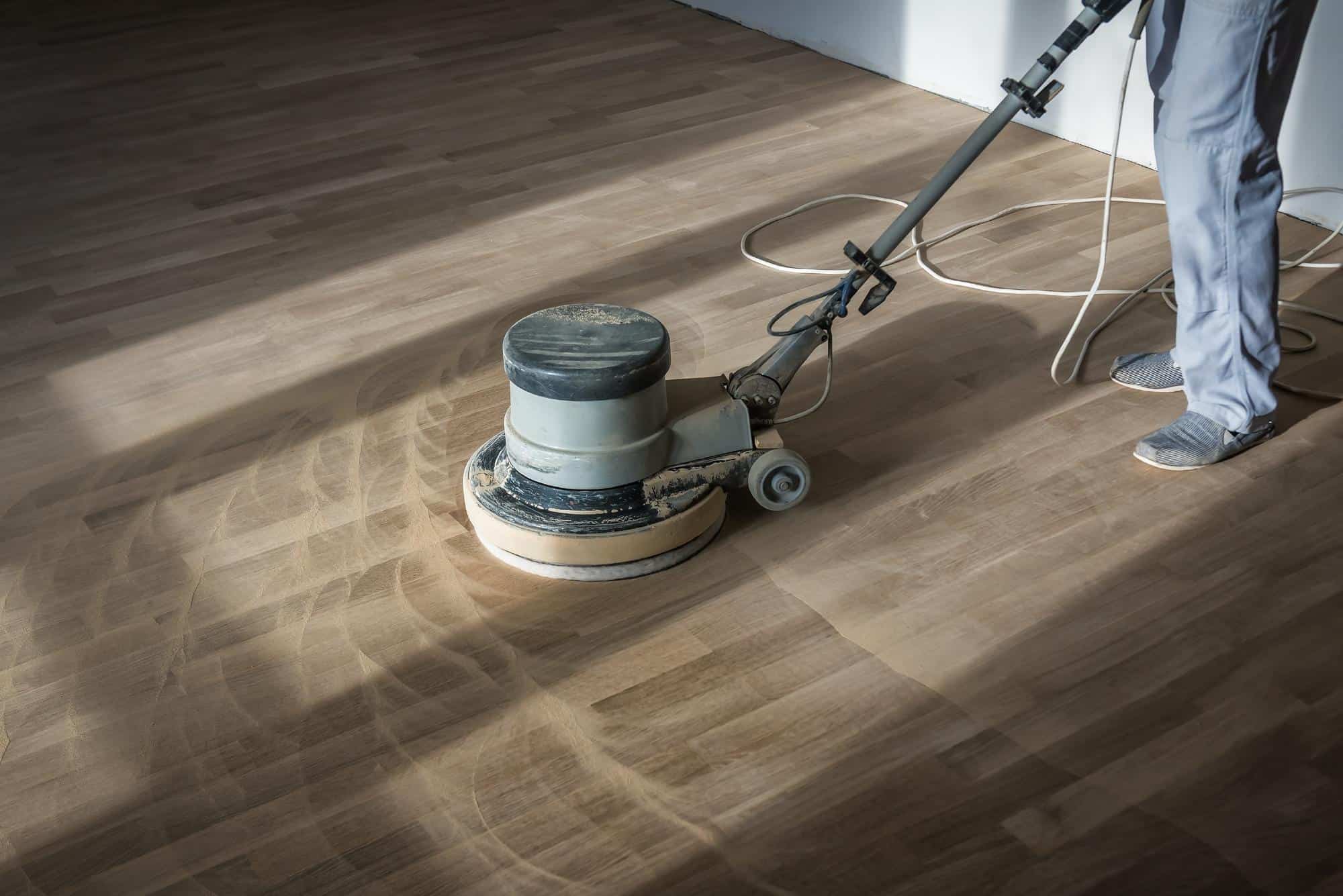
From there, diamond grinding begins. This is where professional-grade equipment makes all the difference. The floor is worked with diamond abrasive pads in a specific grit progression — starting coarse to remove scratches, etching, and surface irregularities, then moving through progressively finer grits to refine the surface. Each pass works in a different direction to ensure even coverage across the entire floor. Consumer-grade polishers don’t use diamond abrasives, can’t achieve this grit sequence, and simply cannot replicate what this step produces.
Once the grinding and honing phases are complete, any cracks, chips, or areas of missing aggregate are addressed. Tinted fillers are matched to the existing stone color and aggregate composition so repairs blend into the surrounding floor rather than standing out as patches. This is one of the areas where experience matters most — a poor color match is immediately visible, while a skilled repair becomes essentially invisible.
After repairs, a densification treatment is applied to harden the surface, followed by the final polishing passes that bring out the deep, glass-like shine terrazzo is known for. We finish the process with a professional-grade penetrating sealer — we use Miracle Sealants and StoneTech products — applied in two coats rather than one. That second coat makes a measurable difference in how long the surface resists staining and how easy it is to maintain going forward.
Post-restoration maintenance is genuinely simple: a quick sweep and a damp mop. No stripping products. No wax reapplication. No maintenance cycle to manage.
Travertine Refinishing: A Related Process Worth Knowing About
Travertine and terrazzo often appear in the same buildings — especially in New York County’s pre-war and mid-century stock — and they’re frequently confused with each other. They’re not the same material, and they don’t respond identically to the same restoration techniques, but the refinishing process shares meaningful overlap.
Travertine is a natural limestone-based stone with a characteristically porous surface and a pattern of small voids or “holes” that form as the stone develops. Terrazzo, by contrast, is a composite material — stone chips of marble, quartz, granite, or glass set into a cement or epoxy binder. The visual difference is usually clear once you know what to look for, but the distinction matters beyond aesthetics because each material requires specific tooling, filler compounds, and sealing approaches.
For travertine, refinishing typically involves filling those natural voids with a color-matched grout or epoxy compound before grinding and polishing begins. If the voids are left unfilled, the polishing process can create an uneven surface or allow the voids to collect dirt more aggressively over time. The grinding and polishing sequence itself is similar to terrazzo — diamond abrasives, progressive grit stages, final sealing — but the prep work and filler selection require material-specific knowledge.
The reason this matters for New York County property owners and building managers is practical: if you’re dealing with one type of stone in your lobby or common areas, there’s a reasonable chance you have the other somewhere in the same building. Knowing that both materials can be professionally restored — rather than replaced — changes how you approach a renovation or maintenance budget. We work with both regularly throughout New York County, and the process for each is well within what our skilled restoration team handles as standard work.
Terrazzo Refinishing Cost vs. Replacement in New York County
This is where the conversation usually shifts for property managers and co-op boards. Professional terrazzo refinishing typically runs $3 to $8 per square foot. New terrazzo installation — depending on type — ranges from $15 to over $100 per square foot, and that’s before you factor in demolition, subfloor preparation, and the disruption of a full replacement project. For a 1,000 square foot lobby, the difference between restoration and replacement isn’t a rounding error. It’s the difference between a $5,000–$8,000 service call and a six-figure capital project.
The restoration-over-replacement case is especially clear in New York County, where building density is high, labor costs are significant, and the operational disruption of a full floor replacement in an occupied building is a serious logistical problem. Restoration is faster, less invasive, and in most cases produces results that are indistinguishable from — or better than — what a replacement would deliver.
Why New York County's Building Stock Makes Restoration the Default Answer
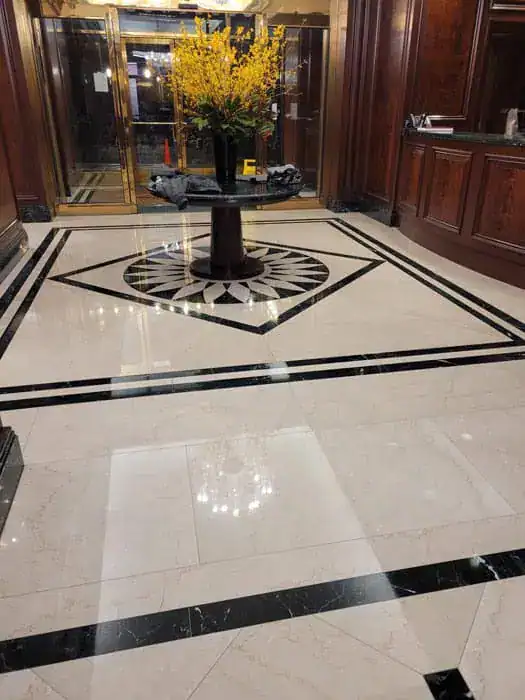
New York County has one of the most concentrated inventories of original terrazzo flooring in the country. Buildings constructed between roughly 1920 and 1970 — and there are thousands of them across the county — used terrazzo as a standard material in lobbies, stairwells, hallways, and apartment interiors. It was durable, sanitary, and well-suited to the high-traffic environments of dense urban buildings. It still is.
The challenge is that decades of improper maintenance — specifically, the repeated application and stripping of wax-based products — have left many of these floors looking far worse than the underlying stone actually is. Wax builds up over time, traps dirt, and eventually yellows and peels. The floor looks dull or damaged, and the assumption is that it’s beyond saving. In most cases, that assumption is wrong.
We work in New York County buildings regularly, and the pattern is consistent: a floor that looks hopeless under fluorescent light, coated in years of yellowed wax and surface scratches, comes back to a reflective, clean polish once the diamond grinding process removes what’s been sitting on top of it. The stone was there the whole time. It just needed the coating stripped away and the surface properly refined.
There’s another scenario that comes up frequently in New York County renovations: terrazzo discovered under carpet. Pre-war apartment owners and building managers pulling up old flooring often find original terrazzo underneath — sometimes in surprisingly good condition, since the carpet protected it from direct foot traffic wear. If you’ve found terrazzo under carpet in a New York County building, it’s almost certainly restorable. The tack holes and adhesive residue left behind by the carpet installation are repairable, and the underlying stone is usually in better shape than exposed floors that have been walked on and waxed for decades.
For buildings under NYC Landmarks Preservation Commission designation, restoration isn’t just the cost-effective option — it may be the only compliant one. Replacing original flooring materials in a landmark-designated building can require LPC approval or be restricted entirely. If your building falls under that designation, professional restoration is worth understanding as a practical requirement, not just a preference.
Refurbishing Terrazzo Floors: Frequently Asked Questions
**How long does terrazzo refinishing last?** With professional diamond polishing and a quality two-coat sealer application, results typically hold for eight to ten years or more. The key word is “professional” — wax-based treatments applied over the surface degrade much faster, often requiring attention annually or more. Once a floor has been properly refinished and sealed, day-to-day maintenance is minimal: sweep regularly, damp mop as needed, and avoid harsh chemical cleaners that can break down the sealer over time.
**Can cracked or chipped terrazzo actually be repaired?** Yes, in most cases. Cracks and chips are addressed using tinted fillers that are color-matched to the existing aggregate and binder. A skilled technician can make repairs that are effectively invisible once the polishing process is complete. We’ve seen New York County floors that looked severely damaged — to the point where owners assumed replacement was the only option — come back fully restorable and looking better than anyone expected.
**Is terrazzo refinishing disruptive for a commercial building or apartment lobby in New York County?** Less disruptive than most people assume, and far less disruptive than replacement. The restoration process is typically completed in one to a few days depending on the square footage involved, and we work around your schedule to minimize impact on building operations. For New York County lobbies and common areas where foot traffic can’t stop entirely, we can often phase the work to keep portions of the space accessible. The equipment involved is professional-grade but not construction-scale — there’s no demolition, no subfloor work, and no extended closure required.
**What’s the difference between refurbishing terrazzo floors and just having them cleaned?** Cleaning removes surface dirt. Refurbishing — or refinishing — removes the surface damage itself. That means grinding away scratches, stripping old coatings, repairing physical damage, and mechanically polishing the stone to a true reflective finish. The results are in a completely different category. If your terrazzo looks dull even after a thorough cleaning, that’s a sign the surface itself has been compromised and cleaning alone won’t fix it.
**How much does terrazzo refinishing cost in New York County?** Professional terrazzo refinishing typically runs $3 to $8 per square foot, depending on the condition of the floor, the scope of repairs needed, and the size of the area. We offer free on-site estimates with no obligation, which is the most accurate way to get a number specific to your floor and building.
Is Refinishing Your Terrazzo Floors Worth It in New York County?
For most New York County property owners and building managers, the answer is straightforwardly yes — once the process and the cost comparison are clear. Terrazzo is one of the most durable flooring materials ever used in urban construction. The floors in your building were built to last, and in most cases they still can, with the right restoration work.
The wax cycle ends. The dullness goes away. The cracks and chips get repaired. And the result holds for years without requiring the ongoing maintenance cost that’s been eating into your budget. That’s what professional diamond refinishing delivers — not a temporary shine, but a genuinely restored surface.
If you’re managing a building in New York County or dealing with terrazzo that’s been neglected, damaged, or just looks like it’s seen better days, Diamond Stone Restorations Corp is worth a conversation. We work across New York County and the surrounding area, we offer free estimates, and we’ll tell you honestly what your floor needs — and what it doesn’t.