Summary:
January has a way of arriving before you’re ready. Budgets are being finalized, building boards want numbers, and somewhere on your list is the lobby floor that’s looked a little worse every month since last winter. You keep meaning to deal with it, but it never quite makes it to the top of the pile.
Here’s the thing: the property managers who get ahead of floor restoration every year aren’t doing anything complicated. They’re just making the decision in January instead of March, when every decent contractor already has a full schedule. This guide is for you if you manage a commercial building in New York County and you’re ready to stop guessing at what floor maintenance should actually cost and look like.
What Commercial Floor Cleaning Actually Covers in New York County Buildings
When most property managers think about floor cleaning, they picture what their janitorial crew does every night — mopping, sweeping, maybe a periodic scrub. That kind of maintenance is essential, but it’s not what we’re talking about here. Commercial floor cleaning at the restoration level is a different category of work entirely, and understanding the difference is the first step to budgeting for it correctly.
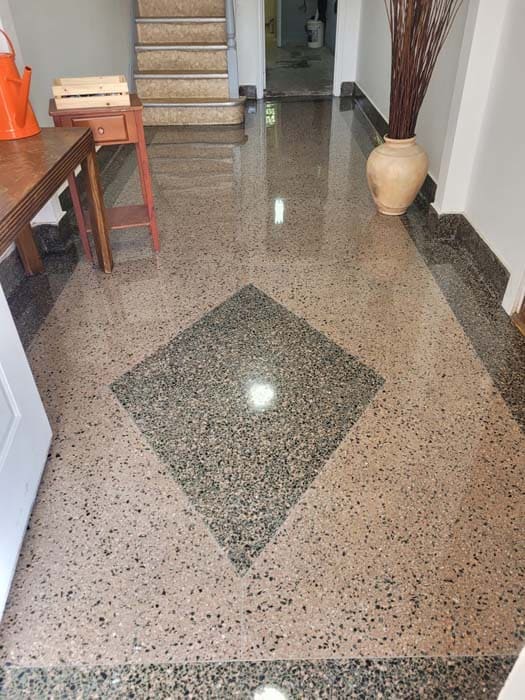
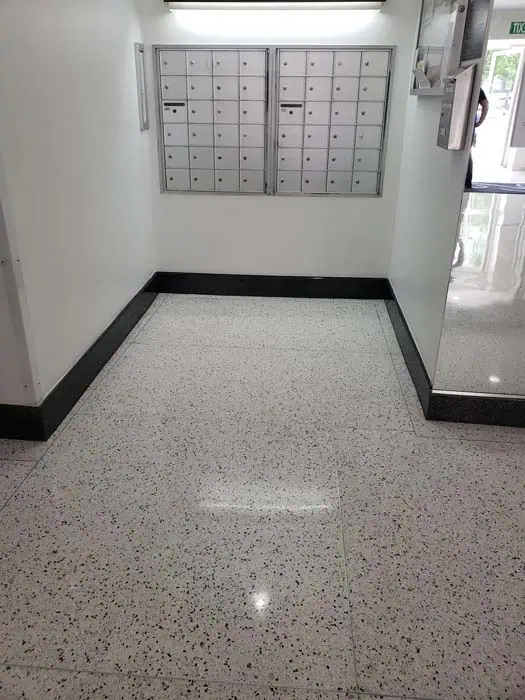
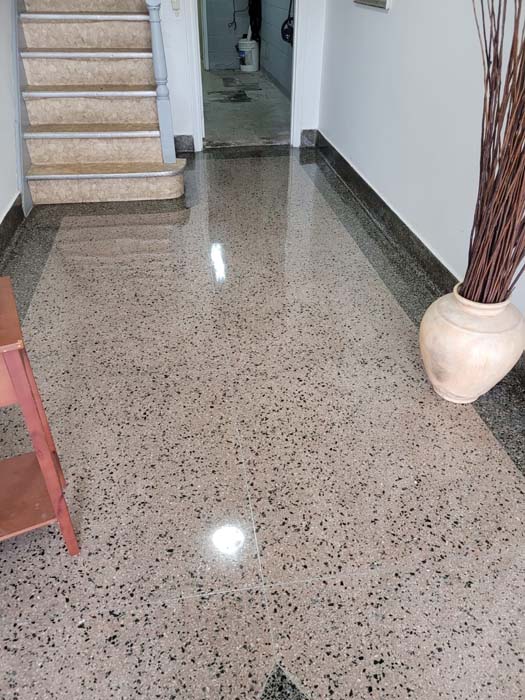
New York County buildings — especially pre-war and mid-century structures — are full of marble, terrazzo, and natural stone surfaces in lobbies, elevator banks, and common corridors. These materials are beautiful, durable, and irreplaceable. They’re also vulnerable to damage that routine cleaning simply cannot address.
Etch marks, surface scratches, and the gradual dulling of a high-traffic finish are physical changes to the stone itself. No mop and no off-the-shelf cleaner will reverse them.
What's the Difference Between Floor Cleaning and Floor Restoration?
This is probably the most common point of confusion for property managers who haven’t worked with a stone restoration specialist before. Cleaning removes what’s on the surface — dirt, buildup, residue. Restoration addresses what’s happened to the surface itself.
When marble gets etched, it’s because an acidic substance — even something as ordinary as a cleaning product that isn’t pH-neutral — has chemically reacted with the stone and eaten into it. That damage is structural. The same goes for scratches left by abrasive grit tracked in from the street, or the dull, worn appearance that develops in high-traffic zones over years of foot traffic. These aren’t dirt problems. They’re damage problems, and they require a fundamentally different approach.
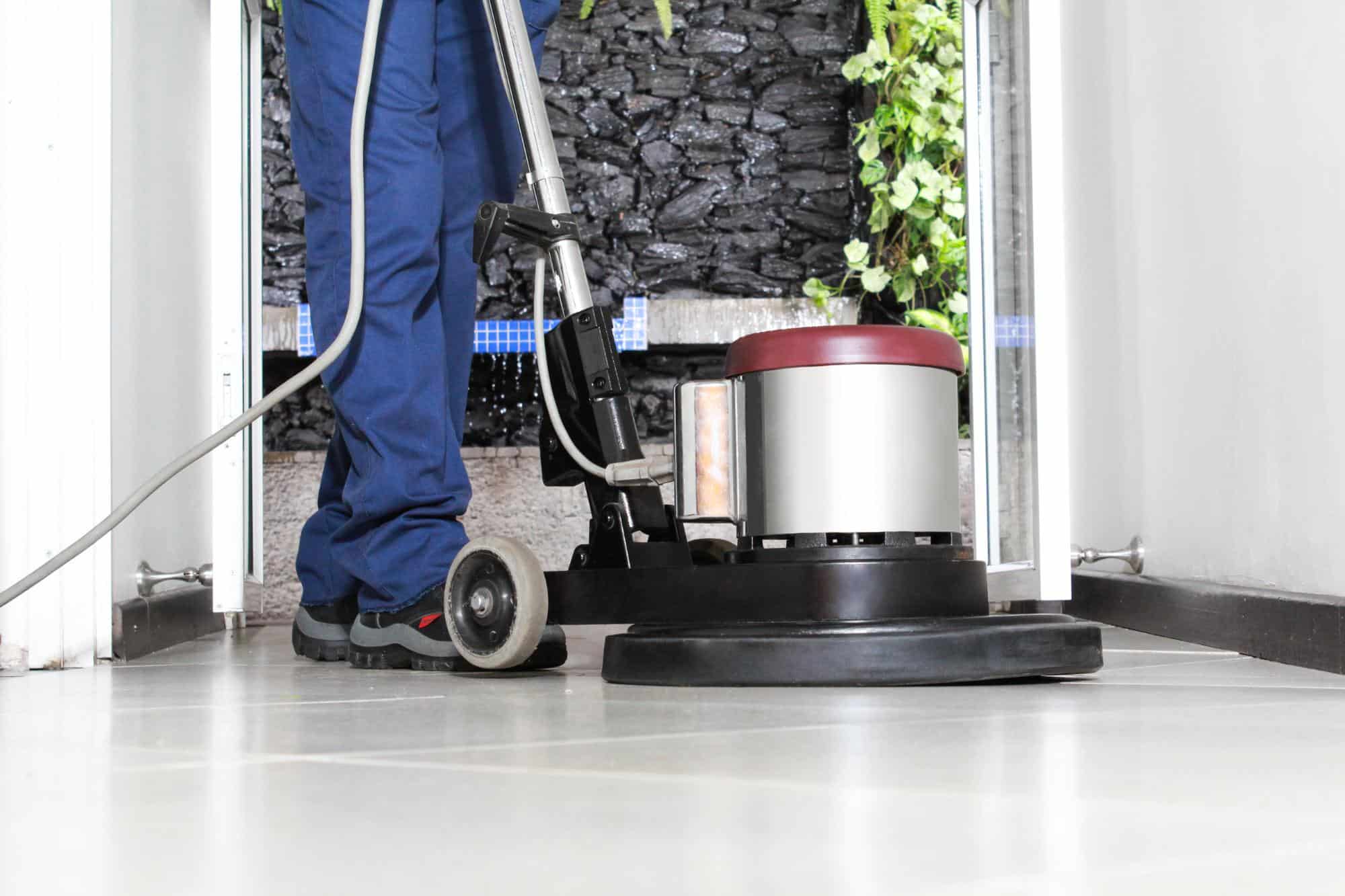
Professional stone restoration uses diamond abrasive tools in a progressive sequence — starting with a coarser grit to remove the damaged surface layer, then moving through progressively finer grits until the stone’s original finish is recovered. After that, an impregnating sealant is applied to protect the surface and extend the time before the next restoration cycle is needed.
The entire process requires knowing the specific stone type you’re working with, because marble, terrazzo, granite, and limestone each respond differently to abrasion and chemical treatment. Applying the wrong approach to the wrong material can cause damage that’s far worse than what you started with.
This is why it matters who you hire. A general cleaning contractor who offers “floor polishing” as one service among dozens is not the same as a company whose entire operation is built around natural stone. In a New York County building where the lobby terrazzo dates to 1940 and can’t be replicated, that distinction is not a minor one.
Marble Floor Maintenance: What a Realistic Annual Schedule Looks Like
One of the most useful things you can do in January is establish a realistic maintenance cadence for your building’s stone surfaces — not a vague plan to “get it cleaned when it looks bad,” but an actual schedule tied to your building’s traffic patterns and surface types.
For a high-traffic New York County lobby with marble or terrazzo floors, professional restoration work is typically needed on an annual basis if daily maintenance protocols are being followed consistently. That means pH-neutral cleaning products used by your janitorial team, walk-off mats at every entry point to capture the salt, grit, and abrasive debris that New York winters push through your doors, and prompt attention to spills before they etch the stone.
When those protocols are in place, a professional restoration visit once a year — or once every 18 months for lower-traffic areas — is usually enough to keep the surface in excellent condition. When those protocols aren’t in place, or when a building has gone several years without professional restoration, the work required is more intensive and more expensive. That’s not a sales pitch — it’s just the math of deferred maintenance.
A floor that’s been neglected for three years needs more diamond honing passes to get back to a clean surface, and the risk of needing crack or chip repair increases the longer structural issues go unaddressed. For buildings with mixed surface types — marble in the lobby, terrazzo in the corridors, granite at the reception desk — the smart approach is a single assessment visit where every surface gets evaluated and a maintenance schedule is built around the actual condition of each material. That assessment gives you real numbers to put in your budget, not estimates based on square footage alone.
Industrial Floor Cleaning Needs in New York County Commercial Buildings
Not every surface in a commercial building is marble. Many New York County properties — particularly in mixed-use buildings, retail spaces, and service corridors — have concrete, tile, or other hard surfaces that take a different kind of punishment and require a different maintenance approach.
Industrial floor cleaning in a New York County context means accounting for the specific abuse these surfaces take: heavy equipment movement, chemical exposure, and the relentless particulate matter that New York City’s environment generates. The subway system alone pushes fine abrasive dust into every ground-level space in Manhattan, and that dust acts like sandpaper under foot traffic day after day.
How to Budget for Multiple Floor Types in One Building
The challenge for most property managers isn’t budgeting for one floor type — it’s accounting for all of them without letting any surface fall through the cracks. A New York County commercial building might have marble in the lobby, terrazzo in the elevator vestibule, tile in the service areas, and concrete in the basement corridors. Each of those surfaces has a different maintenance cycle, a different restoration process, and a different cost profile.
The most practical approach is to treat your floor maintenance budget as a tiered line item rather than a single number. Surfaces that see the highest foot traffic and carry the most reputational weight — the lobby, the main elevator bank, the reception area — deserve the most frequent professional attention and should be budgeted accordingly. Back-of-house surfaces with lower visibility can often run on a longer cycle without meaningful impact on building presentation.
What makes this easier is working with a restoration provider who handles multiple surface types. When one company can assess and maintain your marble, terrazzo, tile, and metal surfaces under a single annual agreement, you get consistent chemical standards across all surfaces, a single point of contact for scheduling and documentation, and the kind of institutional knowledge about your building’s specific quirks that only comes from working in the same space year after year.
For a property manager juggling multiple vendor relationships, that consolidation has real operational value. It’s also worth noting that restoration extends the life of every surface it touches. Floors that are professionally maintained don’t just look better — they last longer, which defers the capital expense of replacement. In a New York County building where a full lobby floor replacement involves permits, demolition, sourcing materials that may no longer be manufactured, and weeks of building disruption, the case for annual restoration spending writes itself.
Why January Is the Right Month to Lock In Your Floor Restoration Contract
There’s a practical reason to make this decision in January rather than waiting until you can actually see the damage from winter. By March, when the salt and slush season has done its work and the lobby floor is visibly suffering, every stone restoration contractor worth hiring is already booked. The property managers who planned in January get first priority on scheduling, locked-in pricing for the year, and the peace of mind of knowing the work is accounted for before the budget is closed.
This isn’t manufactured urgency. It’s the actual rhythm of the market in New York County. Winter in New York County is aggressive on stone floors. Salt tracked through lobby doors is chemically reactive with marble and limestone — the chloride compounds accelerate etching and surface degradation. The fine abrasive grit from sidewalks and streets compounds the damage with every person who walks through.
By the time spring arrives, the evidence is visible, and so is the demand for qualified restoration contractors. Securing an annual maintenance contract in January also gives you something useful for building board presentations and ownership conversations: a documented maintenance plan with a fixed cost. That’s a very different conversation than explaining an emergency restoration bill in April because the lobby floor deteriorated faster than expected.
Building boards in New York County co-ops and condominiums respond well to proactive asset management — it signals that the building is being run professionally, which matters for property values and tenant retention in a competitive leasing market. One more thing worth knowing: restoration costs 30–50% less than replacement. For a New York County building with original terrazzo or marble that can’t be replicated with modern materials, that gap isn’t just a budget consideration — it’s an argument for preservation.
The floors in many of New York County’s landmark and pre-war buildings were installed in the 1920s through the 1960s. Most of them can be fully restored even when they look like they can’t. Getting a professional assessment in January tells you exactly where you stand before you make any decisions about what comes next.
How to Start Planning Your Building's Floor Maintenance Budget
The most important thing you can do right now is get eyes on your floors before your budget is finalized. Not a quote based on square footage — an actual assessment that identifies the stone types, evaluates the current condition of each surface, and gives you a realistic picture of what annual maintenance looks like for your specific building.
That assessment changes the conversation. Instead of guessing at a number or defaulting to whatever your janitorial contract covers, you have a documented baseline and a maintenance plan you can stand behind in front of building ownership or a board.
If you manage a commercial building in New York County and you’re working through your January budget, we at Diamond Stone Restorations Corp. offer free estimates and work with property managers across New York County to build annual stone restoration programs that fit the building, the surfaces, and the budget. Reach out and get the assessment done before the spring rush makes scheduling harder than it needs to be.