Summary:
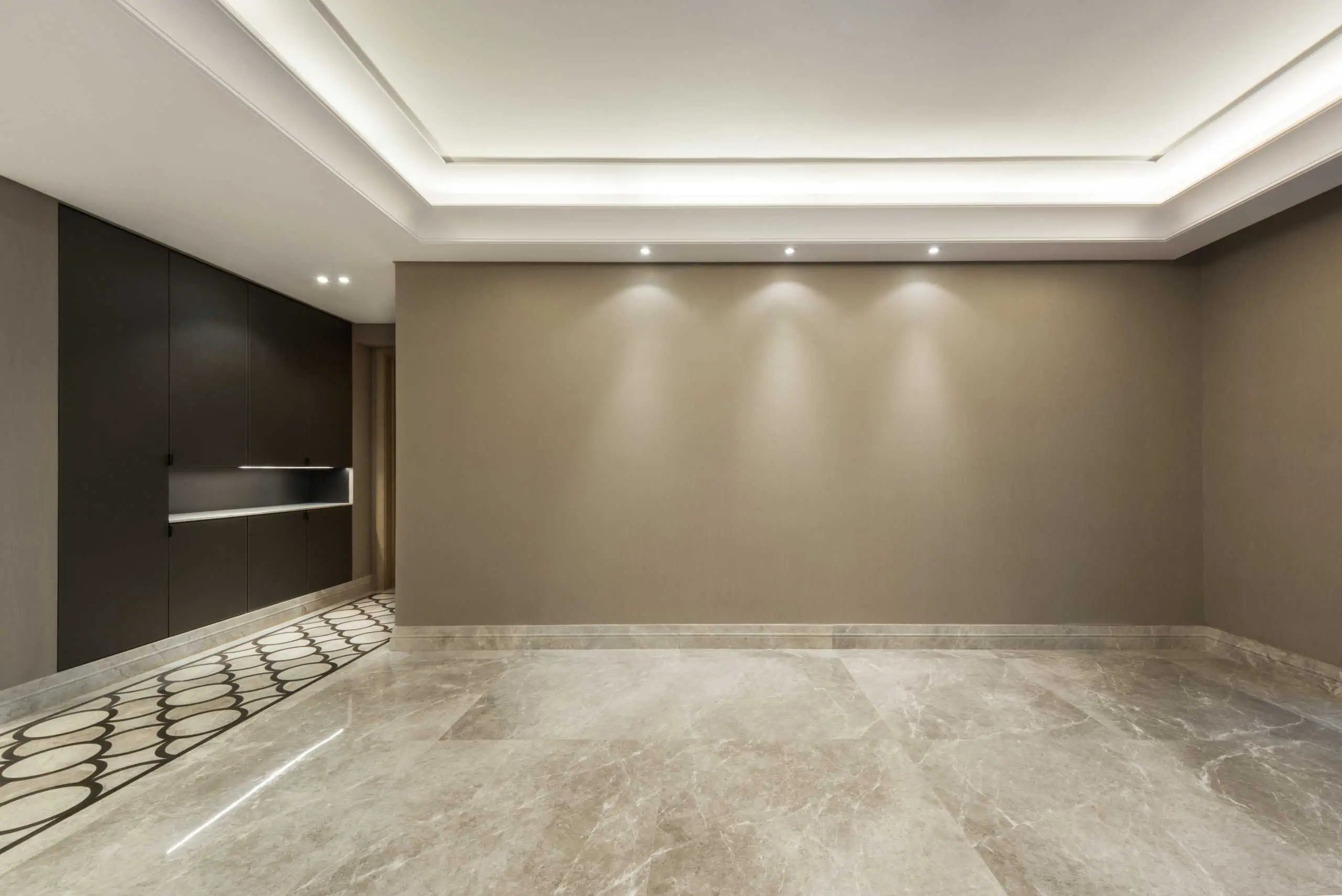
If you manage a co-op, condo, or commercial building in New York County, you already know that the lobby floor takes more abuse than almost any other surface in the building. Thousands of crossings a day, winter grit tracked in from November through March, hard water deposits, and years of deferred attention — it adds up fast. When the marble starts looking dull, scratched, or stained, the instinct is often to assume the worst. But in most cases, the damage is surface-level, and professional marble floor restoration can bring those floors back without the cost or disruption of replacement. Here’s what you actually need to know.
For co-op and condo common areas, see our condominium floor maintenance service.
What Professional Marble Restoration Services Actually Do
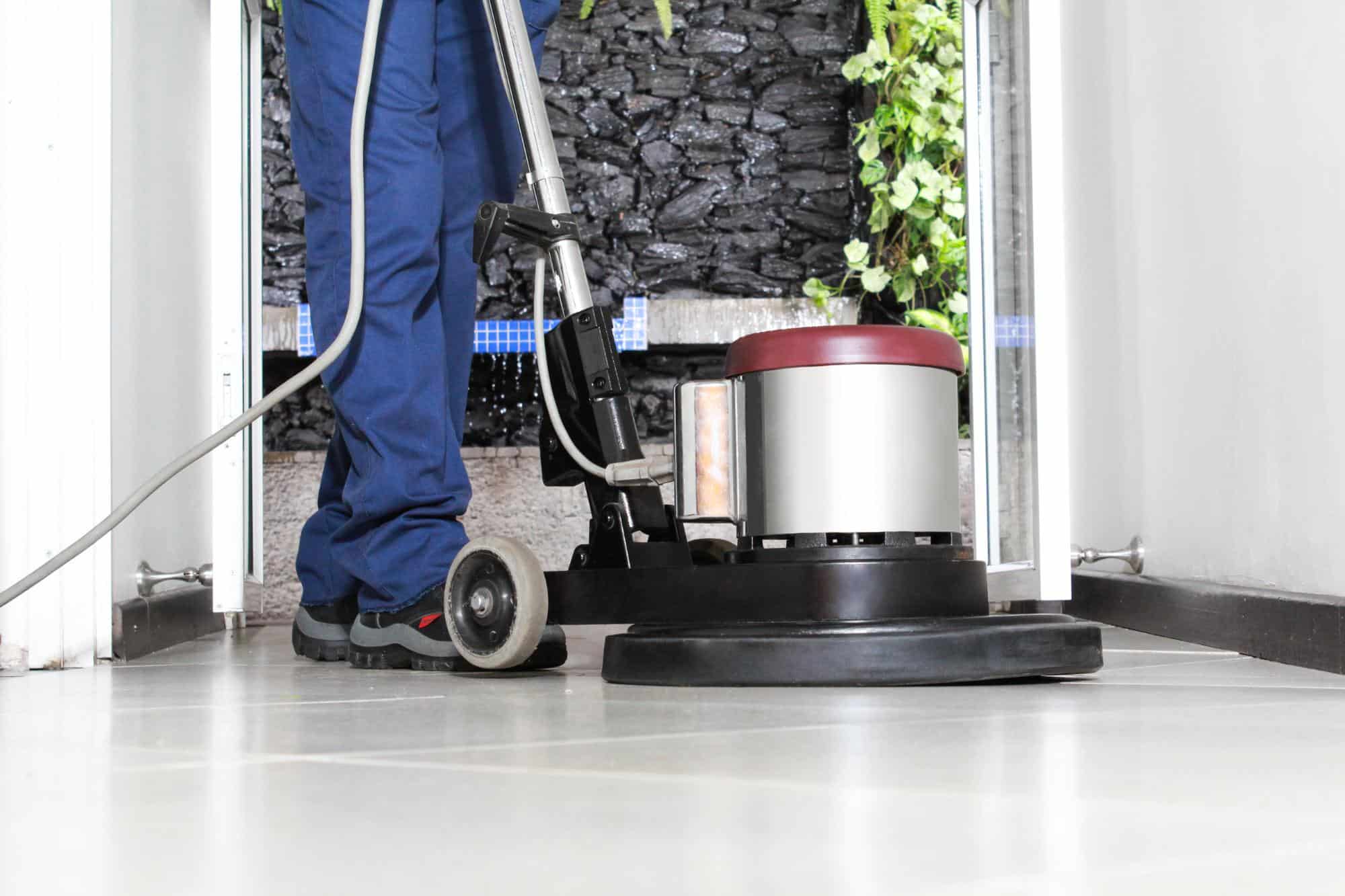
Marble restoration is not cleaning. That distinction matters more than most people realize. Professional restoration involves a multi-stage process — diamond grinding to remove the damaged surface layer, progressive honing to smooth the stone, polishing to rebuild the finish, and sealing to protect it going forward. Each stage is calibrated to the specific marble type and the degree of damage present.
What this means in practice is that scratches, etching, staining, and severe dulling — the things that make a lobby floor look like it’s past saving — are almost always surface-level. The stone itself is typically fine. A trained technician removes the compromised layer and works back to clean, undamaged material underneath. The result looks like new because, structurally, it is new — just the original stone, revealed again.

Why New York County Buildings Face Marble Damage Faster Than Most
New York County is a uniquely demanding environment for marble floors, and the reasons are specific enough that they’re worth understanding if you’re making decisions about restoration timing and frequency.
Start with foot traffic. In a mid-size residential building in Manhattan or the Upper East Side, the lobby entrance and elevator bank can see thousands of crossings on a busy day. That traffic concentrates in the same zones — the path from the door to the elevator, the area in front of the front desk — which means wear patterns develop unevenly and visibly.
Then there’s the winter cycle. From November through March, residents track road salt, sand, and grit through the lobby every time they come in from outside. That material is abrasive. It acts like sandpaper on the marble surface with every footstep, accelerating the dulling and micro-scratching that makes floors look tired. By the time spring arrives, the damage from a single winter is often significant enough to be visible from across the lobby.
New York County’s hard water adds another layer. Mineral deposits build up on marble surfaces over time, contributing to staining and surface degradation that ordinary mopping doesn’t address. And in pre-war buildings — which make up a substantial portion of New York County’s residential stock — the marble is often original, irreplaceable Carrara or Bardiglio stone imported during the early twentieth century building boom. You cannot match that material with anything available today. Restoration preserves it in a way that replacement simply cannot.
All of this means that New York County marble floors degrade faster than floors in lower-traffic, lower-stress environments — and that proactive maintenance scheduling makes a meaningful difference in both appearance and long-term cost.
How a Floor Buffing Service Fits Into a Long-Term Maintenance Plan
One of the most useful distinctions for property managers to understand is the difference between a full marble restoration and a floor buffing service. They are not the same thing, and they serve different purposes in a building’s maintenance program.
Full restoration — the diamond grinding, honing, polishing, and sealing process described above — is what you need when floors have accumulated visible damage: deep scratches, etching, staining, or a finish that’s gone completely flat. It’s a more intensive process, and it’s typically needed every one to three years depending on traffic levels and how well the floors are maintained in between.
Floor buffing is a lighter-touch maintenance service. It refreshes and maintains an existing finish without removing a significant layer of stone. Think of it as the equivalent of a regular oil change rather than an engine rebuild. Done on a consistent schedule, buffing keeps marble looking polished between full restorations and extends the interval before a full restoration is needed again. For property managers overseeing high-traffic lobbies in New York County, a regular buffing program is one of the most practical ways to control long-term maintenance costs while keeping common areas consistently presentable.
The key point is that these two services work together. A building that receives a full professional restoration and then maintains that finish with periodic buffing will spend less over time — and look better throughout — than one that defers all attention until the floors are visibly degraded and require more intensive work to bring back. If you’re currently doing nothing between restorations, adding a buffing program is the single most cost-effective change you can make to your floor maintenance approach.
Making the Case for Marble Restoration to a New York County Co-op or Condo Board
Getting board approval for a marble restoration project is often the harder part of the job. The floors might be visibly worn to anyone who looks closely, but boards don’t always see what property managers see — and “the lobby looks embarrassing” is not a budget line item.
The financial argument is where this conversation usually needs to start. Marble floor restoration in New York County typically costs $3–$15 per square foot. Full replacement — once you factor in demolition, fabrication, and installation in a Manhattan building — runs significantly higher. The cost differential is substantial, and framing restoration as the fiscally responsible choice, rather than a discretionary expense, tends to land better with boards managing tight reserve funds.

How to Frame Marble Restoration as a Budget Decision, Not a Cosmetic One
The most common mistake property managers make when presenting restoration projects to boards is leading with appearance. Boards that are focused on budgets and fiduciary responsibility respond better to a different frame: deferred maintenance costs more.
When marble floors are left to degrade beyond a certain point, the damage becomes harder and more expensive to reverse. Surface-level etching and scratching that could be addressed in a single restoration visit becomes compounded damage that requires more intensive work — or eventually, actual replacement. A board that votes down a $3–$8 per square foot restoration today may be voting for a far more expensive problem in three to five years. That’s a concrete financial argument, and it’s one that resonates with boards that have seen what deferred maintenance looks like in other parts of a building.
There’s also a property value dimension worth raising. In a market where New York County apartments trade at a premium and buyers form impressions quickly, a worn lobby floor sends a signal that affects perceived building quality. A well-maintained common area supports unit values — and a lobby that looks like it’s been neglected does the opposite. For boards in competitive buildings, that’s not a cosmetic consideration. It’s a financial one.
When you’re preparing a restoration proposal for board review, a few things help: a written scope of work with clear pricing, before/after documentation from comparable projects, and a vendor who can confirm they carry the appropriate insurance and licensing. Boards in New York County co-ops and condos are accustomed to vetting vendors carefully, and having those materials ready shortens the approval process considerably.
Can Marble Restoration Be Done in an Occupied Building Without Disrupting Residents?
This is one of the first questions property managers ask, and it’s the right one to ask. In a New York County residential building, the lobby is not a space you can close for three days. Residents need to get in and out. Packages arrive. Staff are moving through constantly. Any restoration work that requires extended closure or creates significant dust and noise is a non-starter.
Professional marble restoration in occupied buildings is done in sections. A qualified restoration team works through the space in phases — completing one zone, allowing residents to move through, then advancing to the next. Dust containment systems are standard practice for quality providers working in residential and commercial settings. The work happens around building operations, not instead of them.
Scheduling matters too. Most property managers find it easier to plan restoration work during lower-activity periods — spring and fall tend to work well, partly because those seasons align with post-winter assessment (when salt and grit damage from the previous months becomes fully visible) and pre-winter preparation. Work can also be scheduled around building events, move-in and move-out windows, and board meeting cycles.
One practical note for buildings with mixed materials in common areas: if your lobby has marble floors alongside terrazzo corridors, a granite reception desk, or metal fixtures, look for a restoration provider who can work across all of those surfaces. Coordinating multiple specialty vendors for a single building is a logistical headache that most property managers would rather avoid. A team with genuine expertise across stone, terrazzo, and metal can handle the full scope in a single engagement — which simplifies scheduling, accountability, and the vendor approval process with your board.
What to Do Next If Your Building's Marble Floors Need Attention
If you’re managing a building in New York County and the marble in your common areas is showing its age, the most useful first step is a professional assessment. Not a quote based on square footage alone — an actual evaluation of the stone, the damage type, and what it will realistically take to bring the floors back. That assessment is what gives you the information you need to make a sound decision and build a credible case for your board.
The difference between a building whose lobby looks consistently well-maintained and one that’s always playing catch-up usually comes down to a maintenance program, not a single restoration project. A restoration that’s followed by a regular buffing schedule, with full restoration scheduled on a predictable cycle, is what keeps floors looking right year after year without budget surprises.
We at Diamond Stone Restorations Corp work with property managers and building owners throughout New York County and the broader NYC area. If you want a straight assessment of what your floors need and what it will cost, reach out for a free estimate — no pressure, no hidden fees, just an honest look at what’s there and what’s possible.