Summary:
You’ve cleaned the floor three times this week. It still looks dull. There’s a cloudy ring near the kitchen sink that won’t budge, and a scuff near the entryway that somehow gets more visible every time the light hits it just right. You’re not imagining it — and it’s not a cleaning problem.
Marble floors in New York County take a specific kind of abuse that most cleaning products aren’t designed to address. Understanding what you’re actually looking at — and what’s causing it — is the first step toward knowing whether your floor can be saved. Spoiler: it almost certainly can.
What Worn Marble Floors Actually Look Like — Stage by Stage
Most people describe their marble floor damage in vague terms: “it looks old,” “it’s lost its shine,” “there are some marks I can’t get out.” That’s because marble damage doesn’t announce itself all at once. It builds gradually, and by the time it’s obvious, it’s usually been happening for a while.
Knowing what stage your floor is at helps you understand what kind of work it actually needs — and whether you’re dealing with something that can be addressed with a maintenance polish or something that calls for full refinishing.
Early-Stage Marble Damage: The Dullness That Won't Clean Off
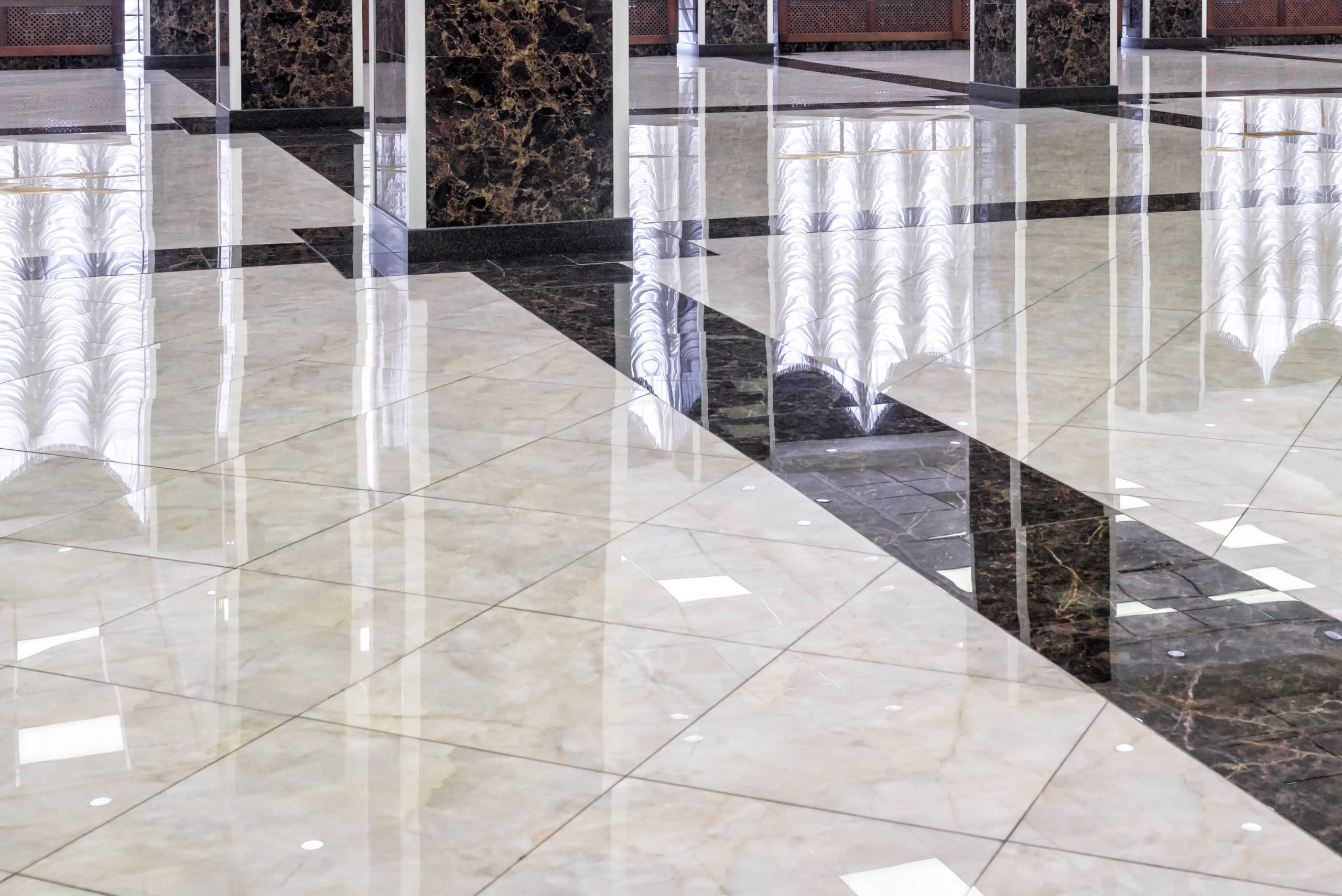
The first sign most people notice is a general loss of shine. The floor that once had a reflective, almost mirror-like surface now looks flat and hazy, especially under direct light. You might assume it just needs a better mop or a different product. So you try a few. Nothing changes.
This is almost always the result of micro-abrasion — thousands of tiny scratches accumulating on the surface from foot traffic, grit tracked in from outside, and the small particles that end up on the floor of any New York County apartment. Marble is softer than most people realize. It ranks around a 3 on the Mohs hardness scale, which means everyday grit can scratch it.
Those individual scratches are invisible to the naked eye, but collectively they scatter light instead of reflecting it, which is what creates that dull, flat appearance. In New York County, this process is accelerated by the sheer volume of material tracked in from the street. Subway grit, sidewalk particulate, and the general density of foot traffic in an urban environment means your floor is being abraded on a daily basis at a rate that simply doesn’t happen in suburban settings.
A pre-war apartment on the Upper West Side with original marble in the foyer is dealing with decades of this — and it shows. At this stage, the damage is entirely surface-level. Our professional refinishing process — working through progressively finer diamond abrasives to rebuild the surface — restores the reflective quality completely. No replacement needed. No drama. Just a floor that looks the way it’s supposed to again.
Moderate Damage: Etch Marks, Cloudy Rings, and Visible Scratches
This is the stage where most people finally start searching for help. The floor has moved past general dullness into something more specific: defined cloudy patches, dull rings that appeared after spills, and scratches that are visible even in normal lighting.
What you’re looking at are etch marks. Marble is calcium carbonate, which means it reacts chemically with acids. Lemon juice, wine, vinegar, tomato sauce, and — critically — many common household cleaning products are acidic enough to cause this reaction. When an acidic substance contacts marble, it dissolves a microscopic layer of the stone’s surface. The result is a permanently dull patch that has a slightly different texture than the surrounding marble. It’s not a stain. It’s not dirt. It’s physical damage to the stone itself, which is why cleaning it harder or longer does absolutely nothing.
In New York County bathrooms, hard water is another major contributor. The city’s municipal water supply, while safe to drink, contains minerals that bond with marble surfaces over time, leaving a hazy, chalky deposit that eventually etches into the surface if left untreated. If your bathroom marble has a persistent dull film that no cleaner touches, this is likely part of what you’re seeing.
From November through March, road salt and de-icing chemicals tracked in on shoes add another layer of chemical aggression — particularly on entryway and lobby marble. Building cleaning crews using whatever products are on hand, often without knowing what’s safe for stone, compound the problem further.
At this stage, refinishing is still highly effective. Our process involves mechanically removing the damaged surface layer through diamond abrasive grinding, then progressing through finer grits to restore the finish. The etch marks disappear because the damaged layer is physically removed, not masked. A penetrating sealer applied at the end protects the restored surface going forward.
Natural Stone Restoration: What the Process Actually Involves
A lot of people assume marble floor refinishing is a quick buff — someone shows up, runs a machine over the floor for an hour, and leaves. The reality is more involved, and that’s a good thing. The difference between a result that lasts and one that fades in a few months comes down entirely to the process.
Our professional natural stone restoration starts with an assessment of the stone type, the damage level, and the finish you want. From there, it moves through a structured sequence of steps that address the damage at its source rather than covering it up.
How Professional Marble Refinishing Actually Works
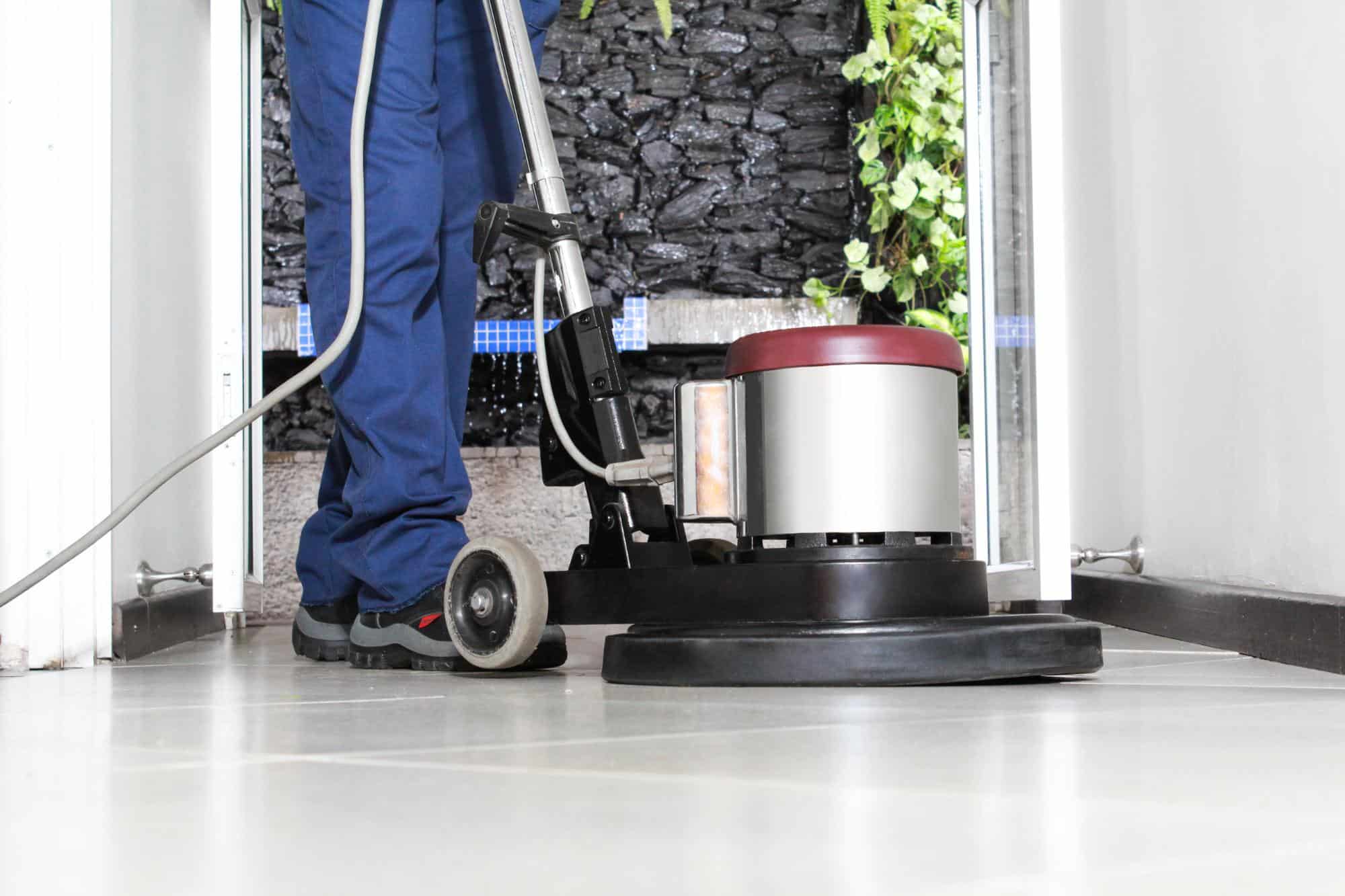
The process begins with coarser diamond abrasive pads that remove the damaged surface layer — the scratches, etch marks, and worn areas that have accumulated over time. This is the step that does the real work. It’s not aggressive in a destructive sense; it’s precise. The goal is to remove only what needs to go while leaving the healthy stone intact.
From there, progressively finer grits are used in sequence, each one refining the surface further until the desired finish is achieved. If you want a high-gloss, mirror-like polish, the process continues through the finest grits. If you prefer a honed or matte finish — which is actually easier to maintain in high-traffic areas — the process stops at an earlier stage. The choice is yours, and we’ll explain the maintenance implications of each before you decide.
The final step is sealing. A penetrating sealer is applied to the restored surface, bonding with the stone at a molecular level to create a barrier against future staining and chemical damage. This is not a surface coating — it doesn’t change the look of the marble. It protects it from the inside. Sealers should be reapplied every 12 to 18 months depending on traffic and use.
For New York County apartments and commercial spaces, the dustless systems we use during this process matter as much as the process itself. Vacuum-assisted grinding equipment contains dust at the source, which means no contamination of adjacent rooms, no issues with building management, and no mess left behind. In a co-op or condo building with strict contractor rules and neighbors on the other side of the wall, this isn’t a luxury — it’s a requirement.
Floor Buffing Service vs. Full Refinishing: What's the Difference?
These two terms get used interchangeably, but they’re not the same thing — and understanding the difference helps you ask the right questions when you’re getting quotes.
A floor buffing service typically refers to a maintenance-level treatment: cleaning the surface, applying a polish or crystallization compound, and buffing to a shine. It’s appropriate for floors that are in generally good condition and just need a refresh. It doesn’t remove scratches or etch marks. It doesn’t address physical damage.
And if your floor has accumulated wax or consumer polish products over the years, a buff can actually make things look worse by uneven application over an already compromised surface. Full refinishing — what most people actually need when they’ve been living with a dull or damaged floor for any length of time — involves the diamond abrasive process described above. It removes the damage rather than working around it. The results are categorically different, and they last significantly longer.
Our professional restoration can extend the life of a marble floor by up to 15 years when paired with proper sealing and maintenance. The practical question is: what does your floor actually need? If the damage is purely surface-level and recent, a professional maintenance service might be sufficient. If you’re dealing with etch marks, visible scratches, uneven sheen, or years of accumulated wear, refinishing is the right call.
The honest answer usually becomes clear during an on-site assessment — which is why a free estimate from someone who will actually look at the floor is worth more than any amount of guessing from photos. For commercial properties in New York County — hotel lobbies, office building entrances, retail spaces — the calculus often includes the volume of foot traffic the floor handles daily. These surfaces typically need more frequent professional attention than residential floors, and the stone restoration services required are often more comprehensive. A lobby floor in a Midtown building sees more daily abuse than a residential bathroom sees in a year.
When to Call a Marble Floor Refinishing Professional in New York County
If your floor has lost its shine, developed etch marks, or accumulated visible scratches, the window for restoration hasn’t closed — it’s just open. The vast majority of marble floors, even those that have been neglected for years, can be brought back through professional refinishing. What looks like a floor that needs replacing usually just needs the right process.
New York County’s pre-war buildings, hard water, winter salt season, and general urban environment are hard on marble in ways that are specific to this region. Knowing that helps you stop blaming yourself for the damage and start thinking about what actually fixes it.
We’re ready to find out what your floor actually needs. Diamond Stone Restorations Corp offers free estimates with no hidden fees and scheduling that works around your availability. Call us at 929-335-0190 or reach out through our website — we’re available Monday through Friday, 9am to 7pm, and we’re happy to take a look.