
Summary:
You cleaned the marble. You tried the spray. Maybe you even ordered something from the hardware store that promised to bring back the shine. And yet the dull spots are still there, or the cloudy patches won’t budge, or there’s a scratch you can feel every time you run your hand across the surface.
Here’s what most people don’t realize: cleaning doesn’t fix marble damage. It never will. What you’re looking at isn’t dirt — it’s physical or chemical damage to the stone itself, and it requires a completely different approach.
This guide explains what marble floor polishing actually involves, what restoration and refinishing mean in practice, and how to figure out what your floor actually needs — especially if you’re managing or living in a New York County property, where the conditions that damage marble are relentless.
What Is Marble Floor Restoration and How Does It Actually Work?
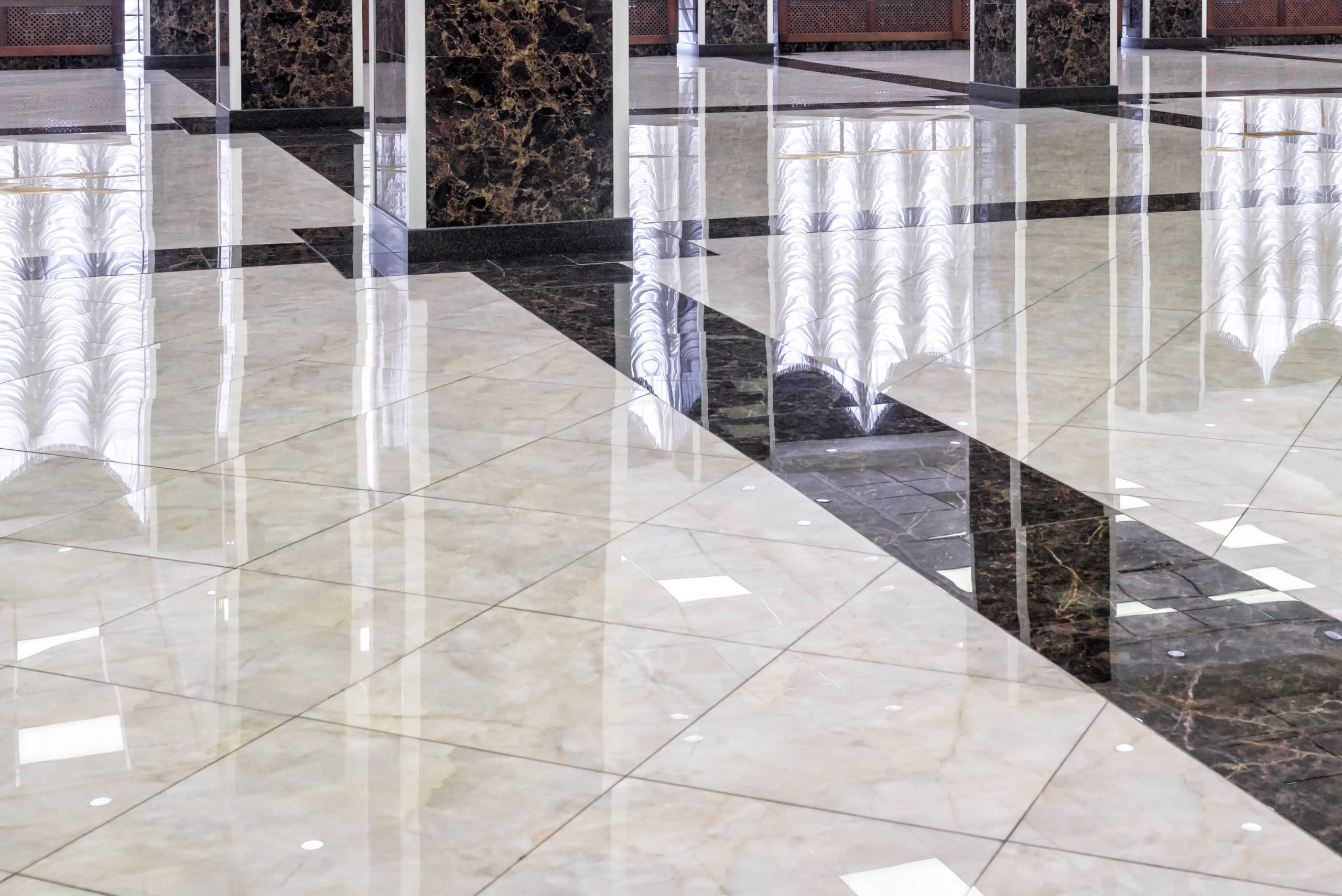
Marble floor restoration is a multi-step process that physically removes the damaged surface layer of the stone and replaces it with a clean, polished finish. It’s not a coating. It’s not a cover-up. The process uses diamond abrasive pads — progressing from coarser to finer grits — to grind away scratches, etch marks, and dullness until fresh, undamaged stone is exposed. Then the surface is polished to the desired finish and sealed to protect it going forward.
The terms polishing, restoration, and refinishing get used interchangeably, but they’re not quite the same thing. Polishing typically refers to the final buffing stage that creates shine. Restoration implies a more complete process — cleaning, honing, polishing, and sealing — usually for marble that’s in rougher shape. Refinishing is often used to describe the full treatment when a floor needs to be brought back from significant wear or neglect.
In practice, what matters isn’t the label — it’s understanding what condition your marble is in and what level of work it actually needs.

What Causes Marble Etching — and Can It Be Repaired?
Etching is one of the most misunderstood problems in marble care, and it’s also one of the most common. Those white, hazy, or dull patches that appear on marble countertops and floors — especially after spilling lemon juice, wine, vinegar, coffee, or even certain cleaning products — are not stains. They’re the result of a chemical reaction. Acids dissolve the calcium carbonate in marble, leaving a physically altered surface that no amount of cleaning will restore.
This is why people scrub and scrub and the cloudy spots never go away. The damage isn’t on top of the marble — it’s in the marble. The only way to fix it is to remove the affected surface layer through diamond abrasive honing, which exposes the undamaged stone beneath.
In Manhattan apartments and New York County co-op kitchens, etching is almost inevitable. Marble countertops are exposed to citrus, wine, and acidic cleaners daily. Bathroom marble gets hit with soap, shampoo, and hard water. Lobby floors in pre-war buildings accumulate decades of wear from foot traffic, cleaning chemicals, and in the winter months, salt and grit tracked in from the street.
NYC road salt is mildly acidic — and when it’s ground into a marble lobby floor by hundreds of daily crossings, the micro-etching adds up fast. The good news is that etching — even significant etching — is almost always repairable. Moderate etching requires diamond honing starting at a relatively fine grit, typically in the 400 to 800 range, to remove the damaged layer before polishing. Deeper or more widespread etching may require starting at a coarser grit. Either way, it’s a surface issue, not a structural one. The marble isn’t ruined. It just needs the right process.
We use biodegradable compounds throughout our polishing process — which matters in New York County apartments where we’re working in enclosed living spaces, often with families and pets present. The chemistry we use is effective without being harsh, and the workspace stays clean throughout.
Can Deep Scratches in Marble Be Removed?
Yes — and the process is essentially the same as etching repair, just starting at a coarser grit. Scratches that you can feel with your fingernail, or that catch light at an angle, are confined to the surface layer of the stone. Diamond abrasive honing removes that layer progressively until the scratch disappears, then works back up through finer grits to restore the polish.
The depth of the scratch determines where in the grit progression you start. Surface-level dullness might only need fine polishing. Visible scratches typically require starting around 200 grit or coarser before working up through the sequence.
This is why professional-grade equipment matters — a single-disc floor polishing machine running the right diamond pads at the right speed produces a fundamentally different result than anything available to a consumer. Using the wrong tool or the wrong compound on marble doesn’t just fail to fix the problem — it can make it worse, creating uneven surfaces that are more expensive to correct later.
If you’ve already tried a DIY marble polish and felt like it made things look more uneven or patchy, that’s a common outcome. Consumer polishing products aren’t designed for the grit-progression work that actual scratch or etch removal requires. They’re closer to a surface wax — they add temporary shine but don’t address the underlying damage. If anything, they can obscure the surface in a way that makes professional assessment harder.
For floors in Manhattan high-rises, pre-war co-ops, or commercial lobbies in New York County that haven’t been touched in years, the damage is often layered — scratches on top of etching on top of general wear. A full marble floor restoration process addresses all of it in sequence, which is why most results look dramatically better than the homeowner or building manager expected going in. We’ve had clients tell us the floors looked better after restoration than they remembered them looking when they first moved in.
Marble Floor Refinishing in New York County: Why Restoration Almost Always Beats Replacement
In most markets, the case for restoration over replacement is straightforward: it costs significantly less and the results are comparable. In New York County, the case is even stronger — because marble replacement in Manhattan isn’t just expensive, it’s logistically complicated in a way that pushes the true cost far beyond what most people expect.
Replacing marble flooring in a New York County apartment or co-op involves board approval, building logistics fees, elevator scheduling and protection, material delivery coordination, premium NYC labor rates, and disposal. When you add all of that up, replacement can easily reach $30 to $60 or more per square foot installed.
Professional restoration typically ranges from $3 to $18 per square foot depending on the condition and scope of work. That’s not a modest saving — it’s a fundamentally different financial decision. And professional restoration, done properly, extends the life of your marble by 10 to 15 years.

When Should You Restore Marble Instead of Replacing It?
The honest answer is: almost always. Marble that looks genuinely ruined — deeply etched, heavily scratched, worn dull across an entire floor — is almost always a restoration candidate, not a replacement candidate. The damage that looks catastrophic to a homeowner is usually surface-level from a professional’s perspective. It’s the kind of thing that gets resolved in a single day of work on most residential projects.
There are situations where replacement makes sense — when marble has been physically broken in large sections, when it’s structurally compromised, or when the stone has been so aggressively treated over decades that there isn’t enough surface left to work with. But these are genuinely rare.
The far more common scenario is marble that’s been neglected, cleaned with the wrong products, or subjected to years of normal New York County wear, and looks far worse than it actually is.
For buildings in Manhattan’s historic districts — Greenwich Village, Carnegie Hill, the Upper West Side — there’s an additional consideration. Many of these buildings are subject to Landmarks Preservation Commission oversight, which can restrict or complicate the replacement of original architectural stone. In those cases, restoration isn’t just the more economical choice — it may be the only compliant one.
Original 1920s and 1930s marble in pre-war lobby floors carries a character that simply can’t be replicated with new material, and preserving it is almost always the right call. From a practical standpoint, restoration also avoids the disruption that comes with a full replacement project. No extended construction timeline, no repeated elevator holds, no weeks of a kitchen or bathroom out of commission.
Most marble polishing and restoration work is completed in a single visit, and the space is usable again the same day. For New York County residents and building managers who are coordinating around tight schedules and building rules, that matters.
How Often Does Marble Need to Be Polished or Resealed?
This is one of the most common questions we hear, and the answer depends on how the marble is used and where it’s located. For residential floors with normal household traffic, professional polishing every one to two years is a reasonable maintenance cycle. Marble countertops and bathroom surfaces that see daily exposure to water, soap, and acidic products may benefit from sealing more frequently — roughly every six to twelve months — even if a full polishing isn’t needed every time.
In commercial settings — hotel lobbies, office reception areas, retail spaces — the timeline compresses significantly. High foot traffic in a Midtown Manhattan lobby or a Financial District office building creates wear that would take years to accumulate in a residential setting. Building managers in these New York County environments often schedule stone maintenance annually, typically in Q1 or Q3 when traffic is lower and the work causes less disruption.
The winter cycle is worth planning around specifically if you manage a building with marble lobby floors in New York County. Salt and grit tracked in from December through March causes more damage to marble lobbies than the rest of the year combined. Scheduling a restoration or deep polish in late winter or early spring — after the salt season but before the spring real estate rush — keeps the lobby looking its best during the months when prospective buyers and new residents are most active.
One thing that significantly extends the time between professional treatments is proper sealing after each restoration. A penetrating sealer doesn’t change the appearance of the marble — it fills the pores of the stone and creates a barrier against the acids, moisture, and abrasives that cause damage in the first place. Sealing is always the final step in our process, and it’s what separates a restoration that lasts from one that starts looking worn again within months.
Maintenance between professional visits matters too. Using a pH-neutral cleaner instead of vinegar, lemon-based products, or general-purpose sprays makes a real difference in how long the polished finish holds. It’s a small habit change that protects a significant investment.
What to Do If Your Marble Floors Need Professional Attention in New York County
Most marble that looks like it needs to be replaced just needs the right process applied by someone who knows what they’re doing. Etching, scratches, dullness, and years of accumulated wear are surface conditions — and surface conditions are fixable. The key is getting an accurate diagnosis before assuming the worst.
If you’re in New York County and you’re looking at marble floors, countertops, or lobby surfaces that haven’t been professionally restored in years — or ever — it’s worth getting a proper assessment before making any decisions. A free estimate gives you a clear picture of what the work actually involves, what it will cost, and what the realistic outcome looks like for your specific stone and its specific condition.
We at Diamond Stone Restorations Corp have been doing this work in New York County and the surrounding area for over a decade. We don’t subcontract, we use biodegradable compounds, and we work around building schedules, board requirements, and the real logistical constraints of Manhattan properties. If you’re ready to find out what your marble can actually look like, reach out to Diamond Stone Restorations Corp for a free estimate and we’ll take it from there.