
Summary:
If you’re looking at dull, scratched, or stained marble and wondering whether it can actually be saved — the answer is almost always yes. But who you hire matters more than most people expect, especially in New York County. Manhattan’s buildings are older, denser, and more regulated than almost anywhere in the country. The marble in your lobby, bathroom, or kitchen has likely been there for decades, and it deserves more than a generic treatment. Here’s what the restoration process actually requires, what you should know before hiring anyone, and why this work looks different in New York County than it does elsewhere.
What Marble Flooring Contractors Actually Do
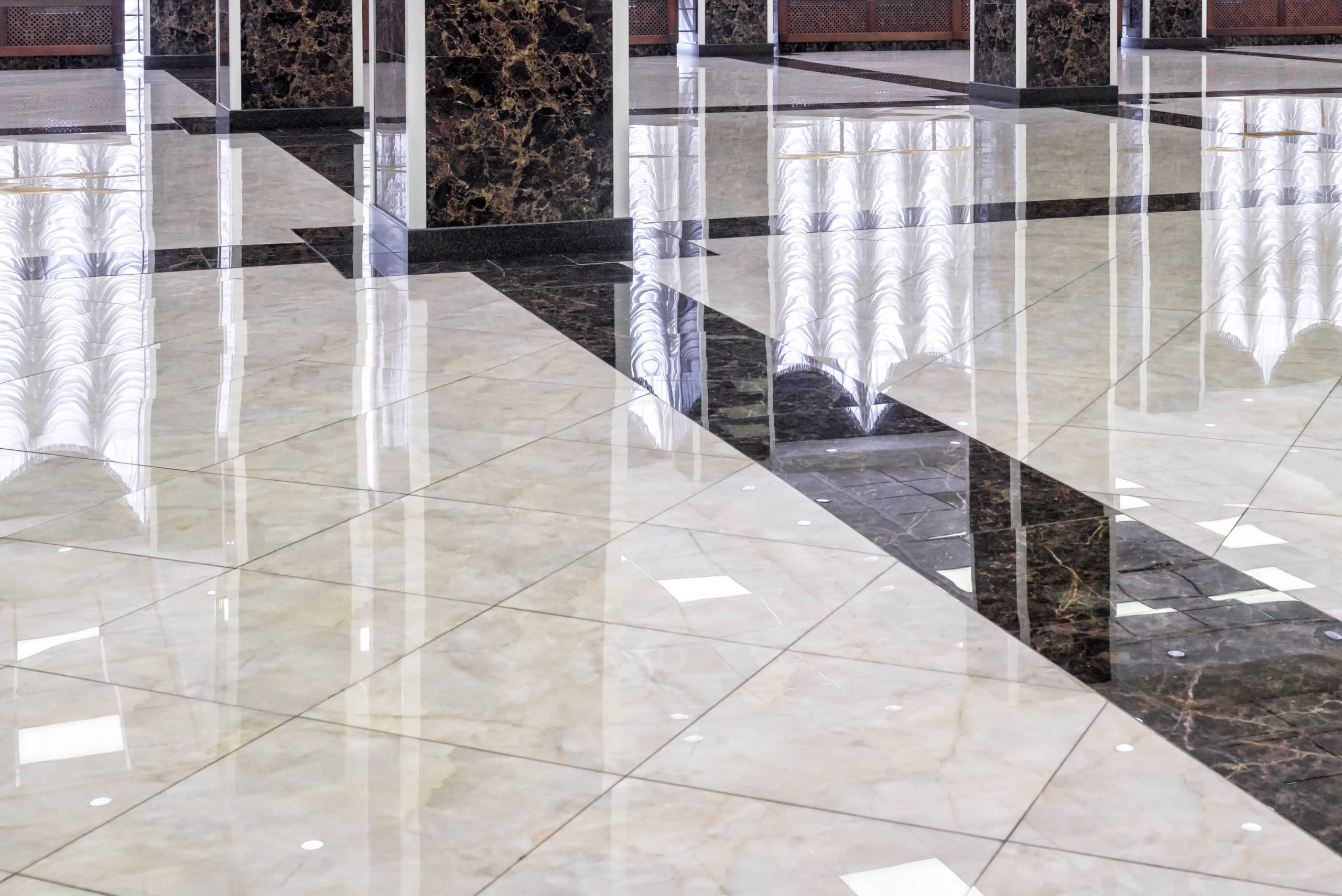
There’s a common assumption that marble restoration is basically cleaning — maybe with better equipment. It isn’t. Professional marble flooring contractors work through a multi-stage process that starts with assessing the stone itself: identifying the marble type, the nature of the damage, and what the surface needs before a single tool touches it.
From there, the work involves diamond abrasive polishing — progressing through increasingly fine grits to remove surface damage and restore clarity — followed by honing if a matte finish is preferred, and then a penetrating sealer applied to protect the surface going forward. Done correctly, the result isn’t just cleaner marble. It’s marble that looks the way it was meant to look, with a finish that holds up.
Flagstone Restoration: A Different Process, Often Overlooked
Marble gets most of the attention, but flagstone is all over Manhattan — in building entryways, interior courtyards, pre-war lobby floors, and ground-level commercial spaces. It’s a different material with different needs, and most contractors either don’t mention it or lump it in with general stone cleaning.
Flagstone restoration is its own process. The surface is rougher and more varied than polished marble, which means the approach to cleaning, grinding, and sealing has to account for texture and porosity differently. The goal isn’t a high-gloss finish — it’s removing years of embedded grime, evening out the surface where wear has been uneven, and applying a sealer that protects without changing the natural character of the stone.
In Manhattan buildings, flagstone often sits in high-traffic transition zones — the kind of space that gets walked on constantly but rarely maintained. By the time someone calls about it, the stone may look like it’s beyond help. Usually, it isn’t. Like marble, flagstone responds well to professional restoration when the right techniques are used for that specific material.
The broader point here is that stone refinishing isn’t a single method applied to everything. Marble, terrazzo, flagstone, limestone, travertine — each one has different hardness, porosity, and chemical sensitivity. A contractor who treats them all the same way isn’t doing the job correctly. The assessment phase exists precisely because the right approach depends on what you’re actually working with.
If you have flagstone in your building and you’ve been told it needs to be replaced, it’s worth getting a second opinion. The cost difference between restoration and replacement is significant, and in many cases the stone has more life left in it than it appears.
Polishing vs. Refinishing vs. Restoration — Why the Difference Matters
These three terms get used interchangeably, but they’re not the same thing, and the distinction matters when you’re evaluating what your marble actually needs.
Polishing is one step in a larger process. It refers specifically to buffing the surface to a high gloss using progressively finer abrasives. It’s effective for marble that has lost its shine but doesn’t have deep scratches, etching, or structural issues. If your marble is mildly dull, polishing may be all it needs.
Refinishing goes further. It involves resurfacing the stone with abrasives — essentially removing a thin layer of the marble to get below the damage. This is appropriate when there are visible scratches, etch marks from acidic substances, or surface irregularities that polishing alone won’t correct. In New York County apartments and commercial buildings where marble countertops and floors deal with daily wear, wine spills, citrus, and cleaning products that shouldn’t be used on marble, refinishing is often the more realistic scope of work.
Restoration is the full picture. It includes assessment, deep cleaning, refinishing or honing as needed, crack or chip repair if applicable, and protective sealing. It’s the comprehensive approach — the one that addresses not just how the marble looks today but how it will hold up over the next several years.
Understanding which of these your surface actually needs is something a qualified contractor should be able to tell you on the first visit. If someone quotes you for a full restoration without looking at the stone in person, that’s a red flag. The scope of work should follow the condition of the marble, not the other way around.
Marble is an alkaline-based stone, which means it reacts chemically with acids. Lemon juice, vinegar, wine, soft drinks, and many commercial cleaners will etch the surface — creating dull spots that look like stains but are actually surface damage. This is one of the most common issues we see, and it’s entirely reversible through professional refinishing.
Stone Refinishing in New York County: Why Manhattan Buildings Are a Different Category
New York County has more landmarked properties than any other borough — over 37,800 designated landmarks citywide, with a disproportionate share in Manhattan, spread across 141 historic districts. Greenwich Village, SoHo, Tribeca, Carnegie Hill, the Upper East Side, the Upper West Side — if your building sits within one of these districts, the rules around what you can do with original building materials are specific and enforceable.
The NYC Landmarks Preservation Commission requires that restoration work on designated buildings match original materials in terms of design, detail, profile, dimension, material, texture, and finish. That’s not a suggestion — it’s a regulatory standard. For many property owners in New York County, stone refinishing isn’t just the cost-effective choice. It may be the only compliant one.

Pre-War Marble in New York County: Why Replacement Often Isn't an Option
A significant portion of Manhattan’s residential and commercial building stock dates from roughly 1900 to 1940 — the Beaux-Arts, Art Deco, and Neoclassical periods when marble was standard in lobbies, stairwells, bathrooms, and public corridors. That marble is now between 80 and 120 years old.
Here’s the practical problem with replacing it: the original stone — specific Carrara marble patterns, period terrazzo layouts, custom tile dimensions — often no longer exists in matching form. You can’t order a replacement section that blends seamlessly with an original 1920s lobby floor. When a portion of that floor is damaged, restoration isn’t just preferable. It’s frequently the only way to preserve the visual integrity of the space.
Co-op boards in Manhattan understand this well. Building bylaws often require that common areas — lobbies, hallways, stairwells — be maintained to standards that reflect the original character of the building. A building manager who replaces a section of original marble with a non-matching material may face board pushback, LPC scrutiny if the building is landmarked, and a lobby that looks noticeably patched. Professional restoration sidesteps all of that.
The financial case is equally clear. Marble replacement in New York County — accounting for materials, removal, disposal, fabrication, and Manhattan labor rates — runs $15 to $50 per square foot for materials alone, before installation. Professional restoration typically runs $3 to $15 per square foot all-in. Most property owners who go through the math end up saving $5,000 to $15,000 by choosing restoration. In a market where median Manhattan condo prices exceed seven figures, that’s not a trivial consideration — but the savings are real regardless of property type.
Hard Water, Urban Grit, and Why Manhattan Marble Wears Faster
There are environmental factors specific to New York County that accelerate marble wear in ways that don’t apply to the same degree in other markets — and they’re worth understanding if you’re trying to figure out why your marble looks the way it does.
New York County’s water supply has measurable hardness. Over time, that hard water leaves mineral deposits on marble shower walls, countertops, and bathroom floors — the chalky, cloudy buildup that seems impossible to clean no matter what you use. That’s not dirt. It’s calcium and magnesium residue, and it requires professional treatment to remove without damaging the marble surface underneath.
Manhattan’s density creates a second problem: foot traffic. Lobby floors, hallway marble, and commercial stone surfaces in New York County absorb more daily wear than comparable surfaces in suburban or rural settings. Sand, grit, and particulate matter — tracked in from sidewalks and subways — act as fine abrasives on polished stone. The finish dulls faster. Scratches accumulate faster. The maintenance cycle is shorter.
This is why marble in a Manhattan building often looks significantly worse after five years than the same marble in a lower-traffic environment would after ten. It’s not a product quality issue or a care failure — it’s the reality of the environment. For most residential marble in New York County, professional polishing every one to two years keeps the surface in good condition. High-traffic commercial spaces may need attention more frequently.
Even marble that’s been neglected for years — dull, scratched, stained, etched — is usually restorable. The damage that looks permanent rarely is. A proper assessment by someone who knows what they’re looking at is the fastest way to find out what your marble actually needs.
How to Choose the Right Marble Floor Contractor in New York County
Find someone who assesses before they quote, knows the difference between marble types, and can explain what your surface actually needs rather than defaulting to a full restoration regardless of condition. In a market with as many contractors as New York County, the ones worth hiring are the ones who slow down on the first visit.
Ask about their experience with your specific stone type. Ask whether they use wet polishing techniques — dry sanding generates stone dust and is harder on both the marble and the space. Ask about warranties. A contractor who stands behind their work will put it in writing.
If you’re managing a building in a Manhattan historic district, ask whether they’re familiar with LPC material requirements. Most aren’t. That familiarity matters when the work has to meet a regulatory standard, not just a visual one. We work with both residential and commercial clients across New York County, and if you’re not sure what your marble needs, a free estimate is the lowest-risk way to find out.