Summary:
You’ve tried the store-bought cleaners. Maybe a grout pen. The grout still looks dark, stained, or cracked — and now you’re wondering whether you need a professional, and what that’s actually going to cost you in New York County. Most online cost guides cite national averages that have nothing to do with what contractors charge in Manhattan. The reality is that New York County has its own cost drivers: older buildings, stricter access requirements, higher labor rates. We walk you through what grout restoration actually costs here, broken down by service level, so you can go into a quote conversation knowing what’s reasonable.
Grout Restoration Cost in New York County: A Realistic Breakdown by Service Level
The national average for tile and grout cleaning sits around $480. In New York County, the average runs closer to $494 — but that single number doesn’t tell you much. The real story is in what you’re actually paying for, because “grout restoration” can mean four very different things depending on the condition of your surfaces.
At the most basic level, professional grout cleaning — steam cleaning with high-pressure rinsing and a quality sealer applied afterward — typically runs $0.75 to $3.50 per square foot in New York County. A step up from that is grout color sealing, where a color-matched or fresh-color sealant is applied over cleaned grout to both restore the appearance and protect the surface in one pass. That service generally runs $1 to $2.50 per square foot, or roughly $500 flat for a standard bathroom.
Full grout restoration — which involves deep cleaning, crack filling, and professional-grade sealing — runs $1.50 to $4.75 per square foot in the New York County market. And if the grout is structurally compromised and needs to come out entirely, full regrouting (mechanical removal, fresh grout installation, curing, and sealing) runs $5 to $25 per square foot depending on tile type, grout type, and the complexity of the job.

Why Grout Restoration Costs More in Manhattan Than the National Average
If you’ve looked at a national cost guide and then gotten a quote from a Manhattan contractor, the gap can be jarring. It’s not arbitrary. There are real, specific reasons why grout restoration work in New York County costs more than the same job in a suburban or rural market — and understanding them makes the numbers make sense.
Building access is the biggest factor most people don’t think about. In a prewar co-op on the Upper West Side or a high-rise condo in Midtown, we can’t just show up with a van and a mop. Freight elevator scheduling, certificate of insurance submission to building management, coordination with the super, and in some cases off-hours work requirements to avoid disrupting other residents — all of that adds time and therefore cost to every job. For commercial properties like hotel lobbies, restaurant kitchens, or office tower floors in the Financial District, off-hours labor premiums are standard, not exceptional.
Then there’s the building stock itself. A significant share of Manhattan’s residential buildings predate 1940. These buildings often have original mosaic tile floors, small-format subway tiles with narrow grout lines, and marble thresholds that require material-specific techniques and pH-neutral, stone-safe products. You can’t run a generic tile cleaning machine over a century-old marble mosaic floor and expect good results — and a contractor who knows that will charge accordingly for the expertise and appropriate products it takes to do the job right.
New York County’s water also plays a role that most people overlook. Mineral content in the water supply contributes to efflorescence — those white, chalky deposits that form in and around grout lines — and to soap scum buildup that bonds with porous grout over time. In buildings with older plumbing, this effect is even more pronounced. Addressing it properly takes more than a scrub brush.
Finally, labor rates in New York County run $60 to $110 per hour for tile and grout professionals, compared to significantly lower rates in most other markets. A standard job takes two to four hours at minimum. That alone accounts for a meaningful portion of the cost differential versus national averages.
Is Professional Grout Restoration Worth It, or Should You Just Replace the Tile?
This is the question most Manhattan homeowners and property managers are really asking when they start researching costs. And the honest answer, in most cases, is that restoration is not only worth it — it’s often the only practical option.
Full tile replacement in a Manhattan prewar apartment isn’t just expensive. It’s logistically complicated in a way that has no equivalent in other markets. Sourcing period-appropriate tile to match original patterns, managing building management approval for construction work, scheduling freight elevator access for debris removal, and dealing with the disruption to adjacent units — the real cost of replacement in a co-op or condo building can easily run $3,000 to $10,000 or more for a single bathroom. Professional grout restoration for the same space typically runs a few hundred dollars. The math isn’t close.
Even in newer construction — a luxury condo in SoHo or a recently renovated kitchen in TriBeCa — the case for restoration over replacement holds. Large-format porcelain tile is expensive to source, and the labor involved in tearing out and reinstalling it is significant. If the tile itself is in good condition and the problem is the grout, restoration addresses the actual problem without touching what doesn’t need to be touched.
There’s also a structural argument that often gets overlooked. Cracked or deteriorating grout isn’t just a cosmetic issue. Grout seals the joints between tiles and protects the substrate underneath from water intrusion. When grout fails, water gets behind the tile — and in Manhattan buildings where units are stacked on top of each other, a water intrusion problem in one unit can quickly become a problem for the units below. Addressing failing grout early, through professional restoration or regrouting, is genuinely cheaper than addressing the downstream consequences of ignoring it.
Professional grout restoration with a quality penetrating sealer can protect surfaces for three to five years before the next maintenance cycle is needed. That’s a meaningful return on a relatively modest investment, particularly in a market where the cost of deferred maintenance compounds quickly.
Granite Restoration in New York County: Polishing, Honing, and What the Process Involves
Grout rarely fails in isolation. If you’re dealing with deteriorating grout in a Manhattan kitchen or lobby, there’s a good chance the surrounding stone surfaces — granite countertops, marble floors, slate entryways — have their own maintenance needs that have been deferred alongside the grout. Addressing them together is more efficient and typically more cost-effective than treating each surface as a separate project.
At Diamond Stone Restorations Corp, we work across the full range of hard surfaces — marble, granite, limestone, travertine, slate, and terrazzo — which means we can assess and restore a space comprehensively rather than leaving you to coordinate multiple contractors for a single room.
Granite is one of the most durable natural stones used in residential and commercial interiors, but durability doesn’t mean maintenance-free. Granite floors in high-traffic areas — Midtown office lobbies, hotel corridors, commercial retail spaces — develop surface scratches, dulling, and loss of polish over time. Granite countertops in residential kitchens and bathrooms accumulate etching, staining, and surface wear that no amount of consumer-grade cleaning product can reverse.
Professional granite restoration involves a multi-step process: diamond grinding to remove surface scratches and damage, progressive polishing with increasingly fine abrasives to restore the original sheen, and application of a protective penetrating sealer to slow future deterioration. The result is a surface that looks substantially closer to its original condition — without the cost and disruption of replacement.
The process typically takes one to three days depending on the size of the area and the extent of the damage. For commercial properties in New York County, we can schedule work during off-hours to avoid disrupting tenants or customers — something that matters considerably in a market where business continuity is a real operational concern.
For building managers overseeing lobby granite or property owners with granite kitchen floors, the economics of professional restoration versus replacement are even more pronounced than they are for grout. Granite slab replacement in a Manhattan building involves sourcing matching material (not always possible with older installations), managing building access for heavy material delivery, and significant labor costs. Restoration is a fraction of that — and when done properly, extends the life of the existing stone by years.
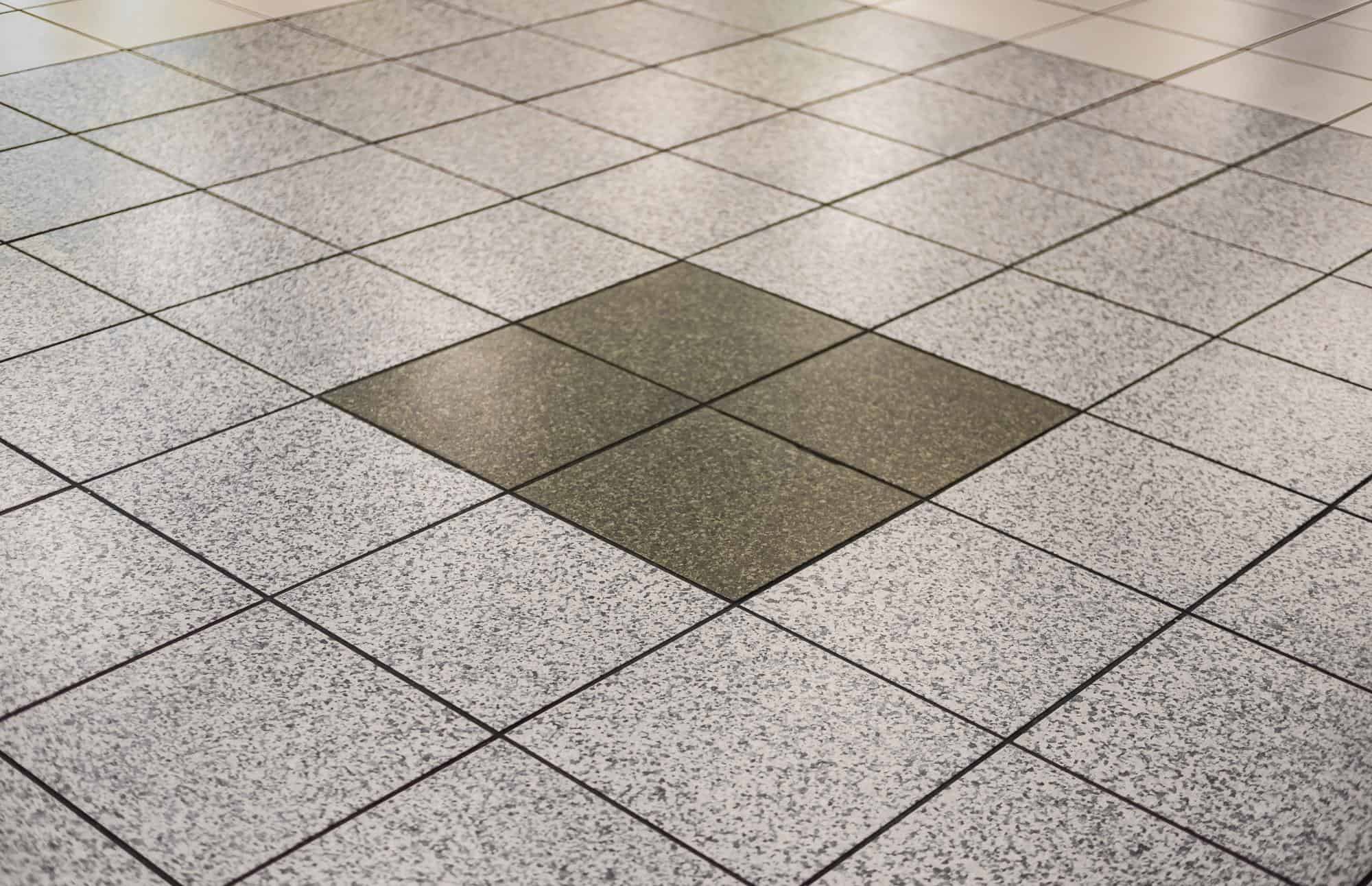
Slate is a distinctive material that shows up frequently in Manhattan entryways, foyers, and outdoor-adjacent interior spaces. It has a naturally textured, matte surface that hides wear well — until it doesn’t. Unsealed or poorly sealed slate absorbs moisture, develops white mineral deposits, and can begin to flake or delaminate over time. Professional slate cleaning and sealing removes built-up grime, addresses surface staining, and applies a penetrating sealer appropriate for slate’s specific porosity profile. It’s a straightforward service that makes a significant visual difference and protects the stone from accelerated deterioration.
One thing worth noting about slate specifically: it requires pH-neutral, stone-safe cleaning products. Acidic or alkaline cleaners — the kind commonly used for ceramic tile — can damage slate’s surface and accelerate flaking. If you’ve had a general cleaning service work on slate floors and noticed the surface looking worse afterward, that’s likely why.
Stone countertop refinishing is a related service that follows the same underlying logic as grout restoration: the surface is damaged, but the material itself is sound, and restoration is a fraction of the cost of replacement. Whether it’s a marble bathroom vanity that’s developed etching from acidic products, a granite kitchen countertop with surface scratches and dullness, or a limestone surface with staining, professional refinishing can restore the appearance and function of the stone without tearing anything out.
The process for countertop refinishing involves surface assessment, diamond honing to remove damage and level the surface, progressive polishing to restore the finish, chip repair where needed, and sealer application. For residential clients in New York County — particularly in prewar buildings where original stone countertops are irreplaceable — this service is often the difference between preserving a genuinely beautiful feature of the apartment and losing it to a generic replacement. For commercial clients, it’s a cost-effective way to keep high-visibility surfaces looking professional without the disruption and expense of full replacement.
The cost ranges in this guide give you a realistic starting point — but every job in New York County has its own variables. The age of the building, the type of tile and grout, the condition of the substrate, and the access requirements of your specific property all affect the final number. A professional assessment is the only way to get a figure you can actually budget from.
What you shouldn’t do is assume the lowest quote is the right one. In a market where building access is complicated, materials are specific, and the consequences of a poorly executed restoration can be expensive to fix, the contractor’s experience with New York County properties matters as much as the price.
If you’re in New York County and want a straightforward, honest assessment of what your grout — or granite, slate, or stone countertops — actually needs, Diamond Stone Restorations Corp offers free estimates. No pressure, no upsell. Just a clear picture of what the work involves and what it will cost.