
Summary:
You searched “marble floor restoration cost” because something’s off with your marble — it’s dull, scratched, etched, or just not what it used to be — and you want to know if fixing it is worth it before you pick up the phone. That’s a smart place to start. The problem is that most cost guides online were written for a national audience, and New York County is not a national market. Labor rates are different. Building rules are different. The marble itself is often different. This guide is written specifically for New York County — Manhattan apartments, pre-war co-ops, commercial lobbies, and everything in between. By the end, you’ll know what to expect, what affects the price, and how to avoid the most common mistakes people make before their first call.
What Does Marble Floor Restoration Cost in New York County?
The honest answer is that marble floor restoration in New York County typically runs between $3 and $15 per square foot, depending on the condition of the stone, the type of finish you want, and the scope of the project. For a bathroom floor, that often lands somewhere between $625 and $1,200. A kitchen countertop restoration generally falls between $400 and $800. Larger floors or more damaged surfaces can push higher, but the number that matters most is the comparison point.
Full marble replacement in New York County — demolition, disposal, new material, installation — runs $50 to $150 per square foot. Professional restoration costs 70 to 80 percent less. For most Manhattan homeowners, that math alone settles the question.

Marble Grinding and Polishing: What the Process Actually Involves
Most people picture a href=”https://dsr-corp.com/services/marble-polishing/”>marble polishing as something close to waxing a car — a product gets applied, it buffs out, and you’re done. The reality is more involved, and understanding it helps explain why professional restoration costs what it does and why DIY kits from the hardware store don’t come close to replicating the results.
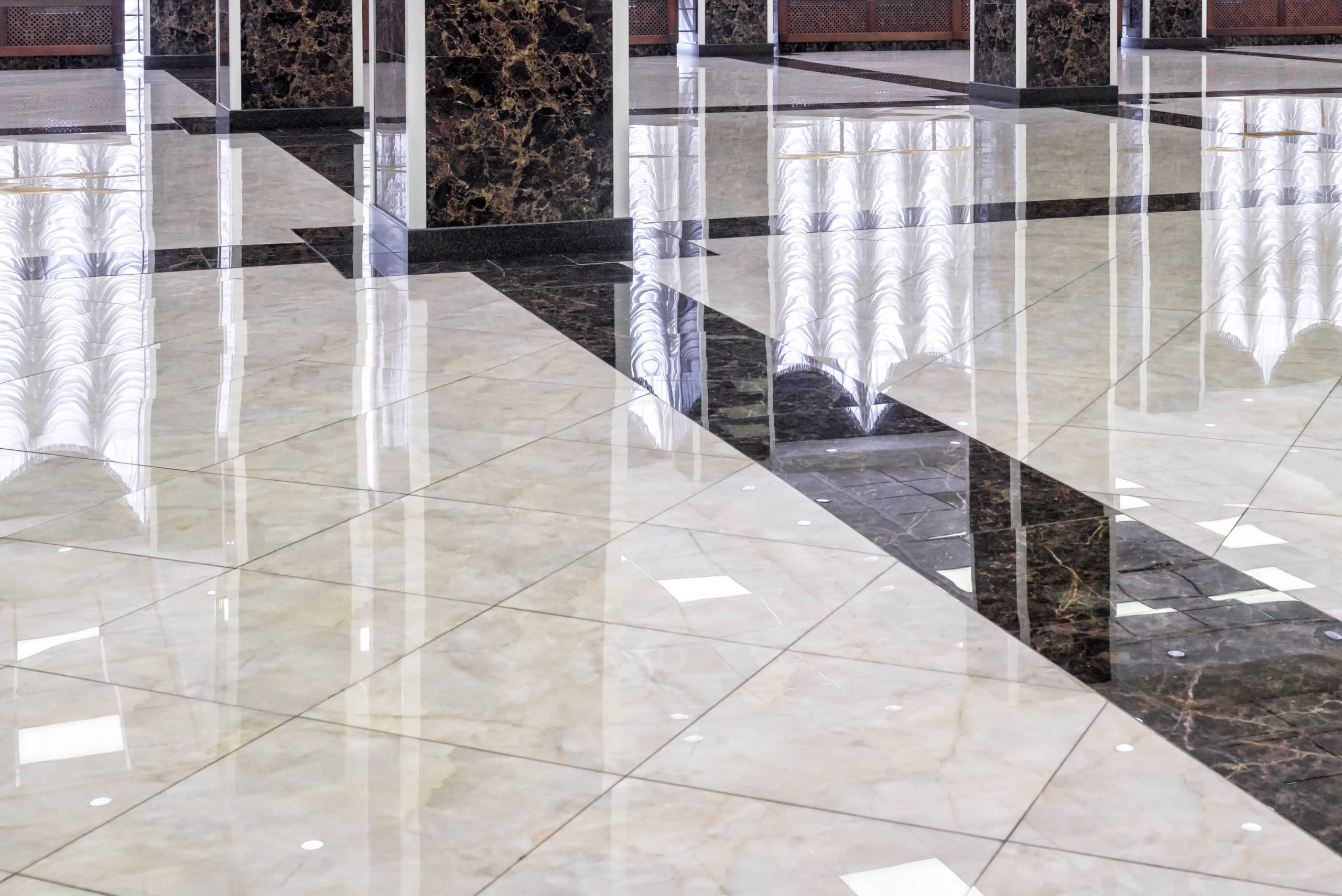
Professional marble grinding and polishing uses diamond abrasives — not compounds, not pads, not sprays. The process works in stages, starting with a coarser grit that removes scratches, acid etching, and surface damage at the stone level, then progressing through finer grits until the surface reaches the desired finish. Each grit stage removes what the previous one left behind. Skip a stage, and you get uneven results that look fine for a few weeks and then fail.
This is why the condition of your marble matters so much to the final price. Light surface dullness might only require the later stages of the process. Deep scratches, heavy etching from acidic cleaners, or years of wear require starting from a coarser grit — more passes, more time, more cost. A good contractor will assess the stone before quoting, not after.
The final step is always sealing. A professional-grade impregnating sealer is applied after polishing to protect the stone from moisture, staining, and future etching. This isn’t optional — it’s what makes the results last. We use biodegradable compounds throughout the process, which matters in New York County co-op and condo buildings where building boards often have strict requirements around the products contractors bring in.
Small jobs don’t always cost proportionally less. If you have a single countertop or a 30-square-foot bathroom floor, you may still encounter a minimum project fee. That’s not us being difficult — it’s the reality that travel, setup, equipment, and breakdown time doesn’t disappear just because the surface area is small. We’ll tell you this upfront.
Stone Polishing Services in New York County: Why the Building You're In Changes Everything
New York County is not a typical market for stone polishing services, and the building you live or work in shapes the project in ways that no national cost guide accounts for.
If you’re in a co-op or condo — which describes the majority of Manhattan residential units — your building board likely requires any contractor working in the building to carry general liability insurance and workers’ compensation, comply with specific work hours, reserve the freight elevator in advance, and contain dust during any grinding or polishing work. These aren’t suggestions. Buildings enforce them, and contractors who can’t meet them don’t get access. This is one of the most common reasons Manhattan residents end up frustrated after hiring a low-cost operator who quoted aggressively and then couldn’t actually get into the building.
Pre-war buildings add another layer. Many of the co-ops on Park Avenue, Riverside Drive, and West End Avenue have original marble floors and lobby surfaces that are decades old and architecturally irreplaceable. The veining patterns in that stone can’t be replicated with new material. Restoration isn’t just the cost-effective option in those buildings — it’s often the only option that preserves what makes the space worth having. In some cases, buildings in landmarked districts have restrictions that make replacement impossible regardless of cost.
Commercial properties in New York County — hotel lobbies, office building entryways, restaurant interiors — face a different version of the same challenge. High foot traffic means maintenance intervals are shorter than anywhere else in the country. A floor that might need professional attention every two to three years in a suburban home may need annual service in a busy Manhattan lobby. Scheduling often has to happen outside regular business hours, which can affect project cost.
Labor rates in New York County reflect all of this. Professional stone restoration labor in our market runs $70 to $110 per hour — meaningfully higher than national averages. That’s not a premium for its own sake. It reflects the cost of operating in a city where access is complicated, insurance requirements are real, and the margin for error in someone’s home or commercial space is essentially zero.
Restoration vs. Replacement: How to Make the Right Call for Your Marble
The question most people are really asking when they search for marble floor restoration cost isn’t just “how much does this cost?” — it’s “should I restore or replace?” Those are different questions, and the answer depends on factors that a price guide alone can’t settle.
Restoration makes sense for the vast majority of situations: dull surfaces, light to moderate scratching, acid etching from cleaning products or spills, surface stains, and general wear from foot traffic. These are all addressable with professional diamond polishing. The threshold for “too damaged to restore” is much higher than most people assume.
Replacement makes sense when the stone is cracked through its full depth, structurally compromised, or when a homeowner simply wants a different material. Those situations exist, but they’re less common than contractors who prefer replacement work might lead you to believe.
How Long Does Marble Floor Restoration Last?
This is one of the most common questions we hear, and it’s a fair one. Nobody wants to spend money on a service that looks great for two months and then fades. The honest answer depends on where the marble is and how much traffic it sees.
In a residential setting — a Manhattan apartment bathroom, a kitchen countertop, a foyer — professionally restored marble with proper sealing typically holds up for five to ten years with normal use. That’s not a guarantee, because no two surfaces are identical and maintenance habits vary. But it’s a realistic range based on real projects we’ve completed across New York County.
High-traffic areas — building lobbies, commercial entryways, restaurant floors — see more wear by definition, and professional polish on those surfaces realistically lasts six months to two years before the next service is warranted. That’s not a flaw in the process. It’s the nature of the material in a high-use environment, and property managers who factor it into their maintenance schedule are the ones whose buildings consistently look sharp.
What extends the life of a restoration is straightforward: use pH-neutral cleaners, avoid acidic products (vinegar, lemon-based cleaners, and many common bathroom sprays will etch marble on contact), wipe up spills quickly, and use felt pads under furniture. None of that is complicated, but it makes a measurable difference in how long the results hold.
Marble that has been properly restored and sealed is actually easier to maintain than marble that hasn’t been. A polished, sealed surface resists staining and etching far better than a dull, unprotected one. The restoration isn’t just cosmetic — it’s protective.
Common Questions New York County Homeowners Ask Before Booking a Marble Restoration
A few questions come up consistently, and they’re worth addressing directly.
Can badly damaged marble actually be restored? In most cases, yes. Deep scratches, heavy acid etching, and surface stains that have been there for years are all within the range of what professional diamond polishing can address. The stone would have to be physically broken or structurally compromised for restoration to be off the table. Most marble that homeowners assume is beyond saving is not.
What’s the difference between polishing and restoration? Polishing typically refers to the final stage of the process — bringing the surface to a high-gloss or honed finish. Restoration is the full process: assessment, grinding, progressive polishing through multiple diamond grit stages, and sealing. If someone quotes you “polishing” at a very low price, ask what’s included. Sometimes it’s the full process under a different name. Sometimes it’s genuinely just a surface treatment that won’t address underlying damage.
Will the contractor be able to work in my building? This is a real concern in New York County, and it’s worth asking directly before you book. We carry general liability insurance and workers’ compensation, comply with building work-hour rules, and know how to handle freight elevator reservations and dust containment. We’re based in Astoria and work in Manhattan buildings regularly — we understand what building management expects.
Does marble restoration increase property value? In a market where residential properties in New York County sell for thousands of dollars per square foot, the condition of your interior surfaces matters. Restored marble reads as well-maintained and cared-for, which is exactly what buyers and renters in Manhattan respond to. It’s not a renovation — it’s maintenance that shows.
How do I know if I need restoration or just a good cleaning? If cleaning your marble doesn’t change how it looks — if it’s still dull or scratched after a thorough wash — you’re likely dealing with damage that’s below the surface. Cleaning removes dirt. Restoration removes damage. They’re not interchangeable, and no cleaning product will fix etching or scratches that have penetrated the stone.
Ready to Get a Real Number for Your New York County Marble Project?
The most important thing to take away from this guide is that marble restoration in New York County is almost always worth it — financially, practically, and in terms of what it does for the space. The cost is a fraction of replacement, the timeline is measured in hours rather than weeks, and the results on well-executed projects are genuinely striking.
What varies is the scope, the condition of your stone, and the specifics of your building. That’s exactly why a free estimate exists — not to get you on the phone for a sales pitch, but to give you a real number based on what’s actually in front of us.
If your marble floors, countertops, or lobby surfaces in New York County need attention, Diamond Stone Restorations Corp is happy to take a look and tell you honestly what you’re dealing with. Reach out by phone or through the website to get started.