Summary:
If you’ve tried to find a straight answer on what marble floor polishing costs in New York County, NY, you already know how frustrating it is. Most companies say “call for a quote” and leave you with nothing. That’s not helpful when you’re trying to figure out whether this is a $300 job or a $3,000 one before you pick up the phone.
This guide gives you real pricing context — broken down by service type, scope, and the factors that actually move the number in New York County. By the end, you’ll know what to expect, what questions to ask, and how to tell a fair quote from an inflated one.
What Does Marble Floor Polishing Cost in New York County?
Nationally, professional marble floor polishing runs roughly $3 to $8 per square foot. In New York County, you should expect to land at or above the upper end of that range. Manhattan’s labor market is more expensive than the national average, and building logistics — service elevator scheduling, COI requirements, board approvals in co-ops and condos — add real time and cost to every job.
For a standard project, full-service marble polishing (which typically includes cleaning, honing, polishing, and sealing) on a powder room floor in New York County runs somewhere between $625 and $1,200. Larger spaces scale from there. A full marble floor polishing job — depending on condition, marble type, and finish — generally falls between $428 and $1,296 nationally, though New York County projects frequently exceed that range.
Marble Stone Polish, Honing, and Grinding: What's the Difference?
These three terms get used interchangeably, but they describe very different things — and they have very different price implications. Understanding the distinction is one of the most useful things you can do before you request a quote.
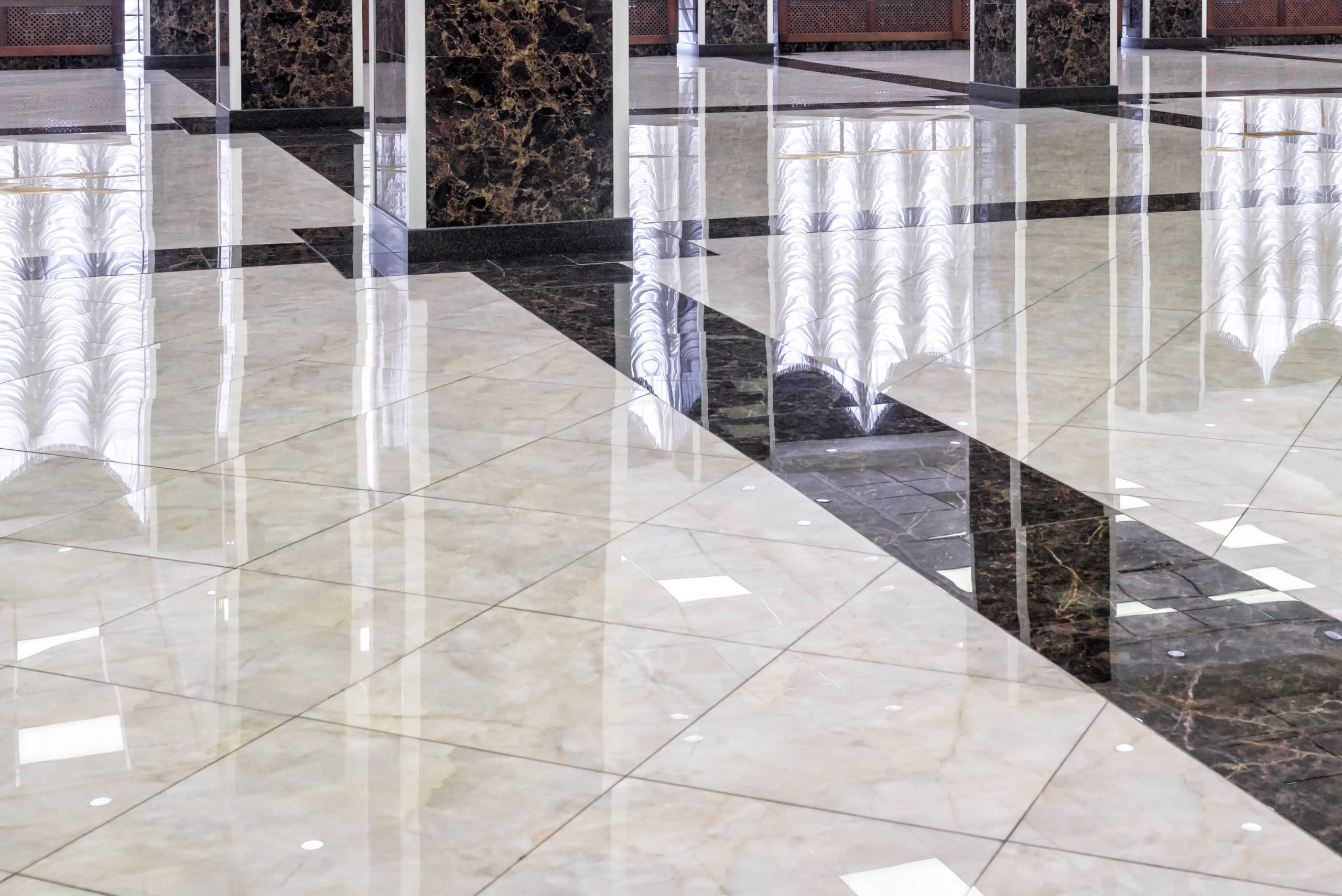
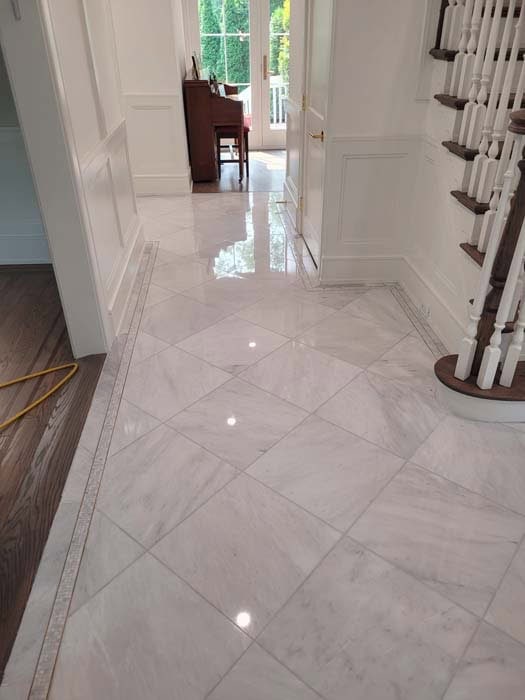
Polishing is the final step that brings marble to its characteristic shine. It’s done with fine diamond pads or professional-grade marble stone polish compounds, and it works best when the surface is already in reasonably good condition. If your marble is just looking a little dull — flat, lifeless, not quite right — polishing alone may be all it needs. This is the least intensive and least expensive service level.
Honing goes a step further. It uses abrasive pads to remove surface-level scratches, light etching, and scuff marks before the polishing stage begins. Etching is what happens when acidic substances — lemon juice, wine, certain cleaning products — come into contact with marble and chemically dull the surface. It’s extremely common in New York County kitchens and bathrooms, and it can’t be polished away without honing first. If you’ve noticed dull spots that don’t respond to cleaning, etching is probably the culprit.
Marble grinding is the most intensive process. It’s used when there’s significant damage — deep scratches, uneven tile edges (called lippage), or surfaces that have been neglected for years. Grinding uses coarser diamond tooling to level and resurface the stone before honing and polishing can begin. It’s also what’s required when marble tiles have shifted slightly over time and the edges no longer sit flush — a common issue in older New York County buildings where settling and moisture have taken their toll over decades.
The reason this matters for cost is straightforward: each step adds time, labor, and equipment. A polish-only job on a bathroom floor is a very different scope than a grind-hone-polish-seal restoration on a 1,500-square-foot pre-war lobby. Knowing which one your surface actually needs — rather than which one a contractor is recommending — puts you in a much stronger position.
What Factors Push the Price Up or Down in New York County?
The square footage of your marble surface is the obvious starting point, but it’s rarely the only variable that matters. In New York County specifically, there are a handful of factors that consistently affect what a job ends up costing — and most of them are unique to this market.
Building access is a real cost driver in New York County. If a contractor needs to coordinate with building management, schedule service elevator time, and work within specific hours to avoid disrupting residents or tenants, that adds time to every job. We factor this into our process from the start. Less experienced contractors either don’t account for it upfront or tack it on after the fact.
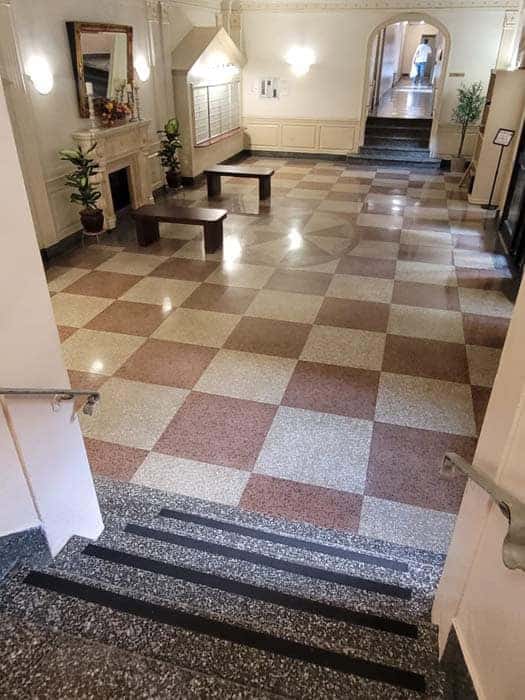
The condition of the marble matters enormously. A surface that hasn’t been professionally maintained in five years — or one that’s been cleaned with the wrong products — will require more prep work before polishing can even begin. Pre-war buildings in neighborhoods like the Upper West Side, Gramercy, and Midtown often have original marble that’s 80 to 100 years old. That marble can absolutely be restored, but it requires a more careful, methodical approach than newer stone.
The finish type you want also affects the price. A high-gloss mirror finish requires more polishing stages than a honed (matte) finish. Some property managers in commercial buildings actually prefer a honed finish for high-traffic areas — it’s less slippery and shows wear more gradually than a high-polish surface.
Finally, the marble type itself plays a role. Different marbles have different hardness levels and porosity, which means different compounds and techniques are required. A contractor who treats every marble the same — regardless of whether it’s Carrara, Emperador, or something else — is cutting corners, and the results will reflect that.
Marble Floor Refinishing vs. Replacement: Which Actually Makes Sense?
This is the question that doesn’t get asked enough. When marble looks bad — really bad — the assumption is often that it needs to go. That assumption is almost always wrong, and it’s an expensive mistake to make in a New York County renovation.
Professional marble floor refinishing, which encompasses the full process of grinding, honing, polishing, and sealing, typically costs a fraction of what full marble replacement would run. In a market where stone slab replacement in a New York County bathroom or lobby can easily climb into the tens of thousands of dollars, restoration at $3 to $8 per square foot is a compelling alternative — not just financially, but in terms of timeline and disruption.
How Long Does Marble Refinishing Actually Last?
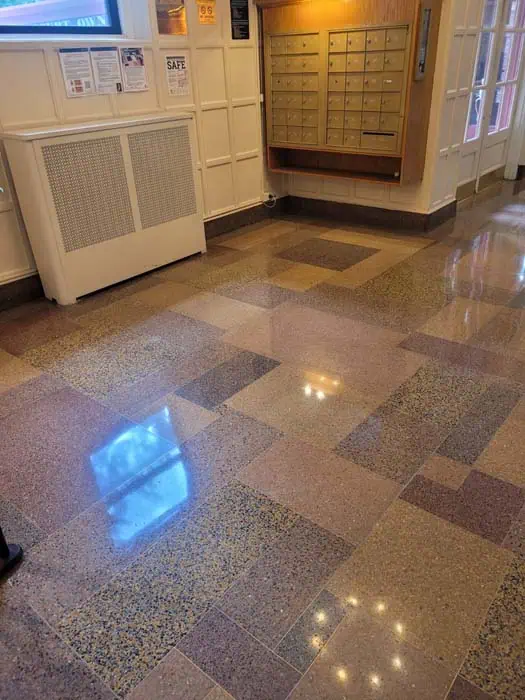
A well-executed marble floor refinishing job — one that includes proper honing, polishing, and sealing — extends the life of your stone surface by 10 to 15 years. That’s not a marketing claim; it’s a practical outcome of restoring the stone’s integrity and applying a quality sealant that protects against future damage.
The longevity of the result depends on a few things: how the surface is maintained afterward, how much foot traffic it sees, and whether the right cleaning products are used going forward. Marble is sensitive to acids. That means vinegar-based cleaners, citrus products, and many common household sprays will etch the surface over time — undoing the polish and requiring professional attention sooner than necessary.
For high-traffic areas in New York County — building lobbies, hotel corridors, restaurant entryways — professional polishing every 6 to 12 months is a reasonable maintenance schedule. For residential marble in a bathroom or kitchen, every 12 to 24 months is typically sufficient. The goal isn’t to polish constantly; it’s to catch the surface before it deteriorates to the point where grinding becomes necessary. Grinding is more expensive and more time-intensive than polishing. Staying ahead of it with regular maintenance is almost always the smarter financial decision.
After a professional refinishing job, the sealer needs time to cure before the surface sees heavy use. We’ll walk you through the care instructions before we leave — including what products are safe to use and how long to wait.
Is Marble Polishing Worth It for New York County Apartments and Commercial Buildings?
In the New York County real estate market, the condition of your marble surfaces is not a cosmetic detail — it’s a financial one. Building lobby presentation directly affects tenant perception, property valuations, and lease renewal conversations. In co-op and condo buildings, the state of common-area marble is something boards take seriously, and for good reason.
For residential owners in New York County, polished marble in a bathroom or kitchen is the kind of detail that shows up in listing photos and open house impressions. In a market where buyers and renters are comparing units at similar price points, a dull or etched marble floor is a liability. A restored one is an asset.
For commercial property managers, the calculus is slightly different but the conclusion is the same. Office building lobbies, hotel common areas, and retail spaces with marble floors are constantly evaluated by the people who walk through them. Worn, scratched marble signals neglect. Restored marble signals that the building is well-maintained — which matters to tenants, guests, and investors alike.
There’s also a practical scheduling reality in New York County that’s worth acknowledging. Commercial restoration jobs often need to happen outside of business hours — overnight, on weekends, or during low-occupancy windows. That’s a logistical requirement that not every contractor can accommodate. We understand this and build it into our process rather than treating it as an exception.
The short answer to whether marble polishing is worth it: yes, almost always — and especially in New York County, where the cost of neglect compounds faster than anywhere else. Foot traffic is higher, building standards are more demanding, and the gap between a well-maintained surface and a deteriorated one is visible to everyone who walks past it. Restoration keeps that gap from opening in the first place.
Ready to Get a Straight Answer on Marble Polishing Cost in New York County?
The biggest takeaway here is simple: marble floor polishing in New York County costs more than the national average, but it costs far less than replacement — and in most cases, it’s the only option you actually need. Whether your marble needs a basic polish to restore its shine, a honing treatment to remove etching and scratches, or a full refinishing process from the ground up, the right scope depends on the condition of the stone and the outcome you’re after.
What it shouldn’t depend on is a contractor who won’t give you a number until you’ve already committed to a visit. Pricing shouldn’t be a mystery, and a professional assessment shouldn’t feel like a sales pitch.
We offer free estimates with no obligation — and we give you a real number, not a runaround. If you’re in New York County and you want to know exactly what your marble restoration would involve and what it would cost, reach out to us directly. We’re straightforward about scope, honest about what your surface actually needs, and experienced enough to know the difference.