Summary:
You’ve noticed something’s off with your floors. Maybe they look dull no matter how much you mop. Maybe the grout has gone from light gray to something closer to black. Maybe your marble has those faint cloudy marks that won’t come out no matter what product you try. So you search “tile polishing” — and now you’re wondering if that’s even what you need.
Here’s the honest answer: it might be. Or it might be sealing. Or deep cleaning. These aren’t the same service, and they don’t fix the same problems. Understanding the difference is the first step to actually solving yours.
What Tile Polishing Is and When You Actually Need It
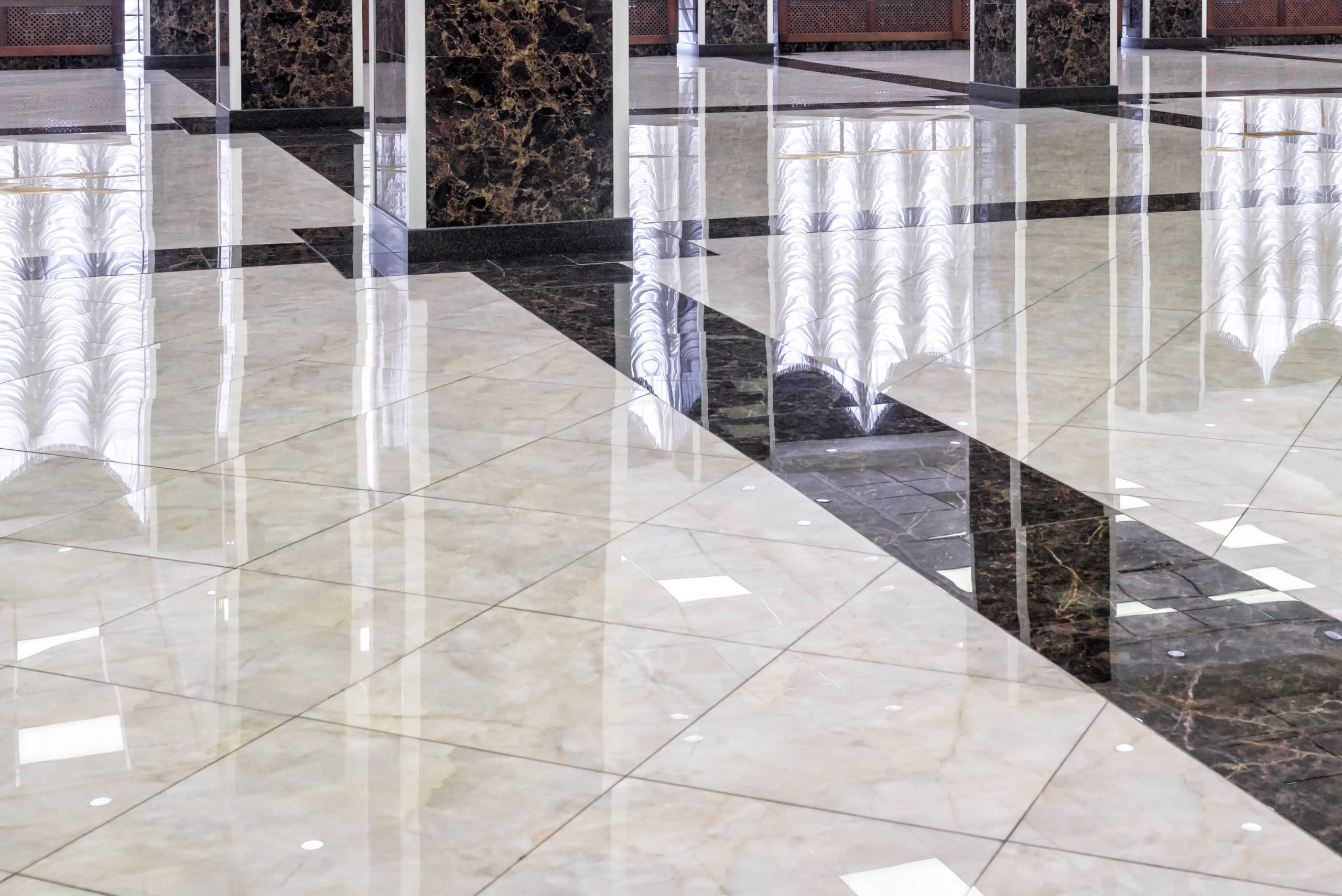
Tile polishing is a mechanical process. We use diamond-grit abrasives and professional buffing equipment to refine the surface of the tile itself — smoothing out scratches, removing etch marks, and restoring the kind of shine that cleaning products simply can’t produce. It’s not a coating applied on top. It’s the actual surface being worked down and brought back.
That distinction matters. If your tile looks dull because it’s scratched, etched, or has lost its finish from years of foot traffic, polishing is what addresses that. If it looks dull because it’s dirty, polishing won’t fix it — cleaning will. And if the surface looks fine but stains keep coming back, what you likely need is tile sealing.
How to Tell If Your Tile Needs Polishing vs. Something Else
The easiest way to start diagnosing your tile is with a simple water test. Drop a small amount of water onto the surface and watch what happens. If it beads up and sits on top, your sealer is still doing its job. If it absorbs into the tile or grout within a minute or two, the sealer has worn down and the surface is vulnerable — that’s a sealing problem, not a polishing problem.
For polishing, the signs are different. Look for a surface that looks hazy, scratched, or has lost its reflective quality even after a thorough cleaning. On marble tile specifically, you might notice etching — those dull, slightly rough patches left behind by acidic substances like citrus juice, wine, or even certain cleaning products. That kind of damage sits in the surface itself and can’t be wiped away. Polishing is what removes it.
Staining that lives in the grout lines — the dark, discolored buildup that makes your grout look permanently dirty — is its own category. That’s a deep cleaning issue. Grout is porous by nature, and over time it absorbs everything: foot traffic grime, spilled coffee, soap residue, moisture.
The reason this matters so much across New York County is that the conditions here accelerate all three of these problems simultaneously. The fine particulate matter from city streets, the mineral content in NYC tap water, the sheer volume of foot traffic in residential lobbies and commercial spaces — all of it compounds. A tile floor in a pre-war Upper West Side building or a Financial District office lobby doesn’t degrade the way a floor in a quieter environment would. It takes a beating, and the damage tends to show up in layers: surface wear, embedded contamination, and compromised sealant all at once.
Marble Tile Polish: Why Marble Needs a Different Approach
Marble tile is not the same as marble slabs, and it doesn’t respond the same way to polishing. The grout joints, the edge profiles, the way the tiles were cut and installed — all of it changes how we approach the work. And marble itself is acid-sensitive in a way that ceramic or porcelain simply isn’t. The wrong product or technique on marble doesn’t just fail to help — it can cause damage that’s difficult to reverse.
Our marble tile polish uses compounds specifically formulated for calcium-based stone. The process typically moves through progressively finer abrasives, starting with a level of grit appropriate for the existing damage and working toward a smooth, refined finish that matches the tile’s original specification — whether that’s a high-gloss mirror finish or a softer, honed look. Trying to replicate that with a consumer rental machine is a real risk. The equipment isn’t calibrated for it, and an uneven result on marble is obvious.
There’s also the question of what comes after polishing. Once we’ve mechanically refined a marble surface, the newly smoothed material is more open and more vulnerable to staining until it’s sealed. Polishing without sealing is incomplete work. We treat them as a sequence, not separate options.
For New York County homeowners with original marble bathroom tile, lobby floors, or kitchen backsplashes — especially in older buildings where those materials are irreplaceable — this matters enormously. Restoration is almost always the better path, both financially and practically. Sourcing matching marble tile for a pre-war building, navigating building management logistics for a full retile, and absorbing the labor costs in one of the most expensive construction markets in the country adds up fast. Professional polish and seal is a fraction of that cost.
Grout Cleaning and Sealing: The Part Most People Skip
Grout is the most overlooked part of any tile installation — until it becomes impossible to ignore. Because it’s porous, it starts absorbing contaminants almost immediately after installation. Without sealing, it doesn’t stand a chance against the daily wear of a kitchen, bathroom, or commercial corridor.
Our professional grout cleaning goes well beyond what a scrub brush and a store-bought cleaner can accomplish. We pull embedded dirt, bacteria, and staining out of the grout’s pores using methods that consumer products can’t replicate. What follows is sealing — applying a protective layer that makes the grout significantly more resistant to future staining and easier to maintain.

How Often Does Grout Need to Be Cleaned and Sealed?
The honest answer is: more often than most people think, especially in New York County. Industry guidance generally points to resealing grout every one to three years, depending on how much traffic the area sees and how much moisture it’s exposed to. A bathroom in a busy Manhattan apartment is not the same as a guest bathroom that gets used twice a year. Neither is a commercial kitchen floor or a lobby that sees hundreds of people a day.
A useful checkpoint is that same water test mentioned earlier. If water dropped on your grout absorbs quickly rather than beading, the sealer is gone and the grout is unprotected. At that point, cleaning and resealing is the practical next step — not a luxury, but basic maintenance that extends the life of the installation.
One thing worth knowing: grout that looks severely stained or discolored isn’t necessarily beyond saving. In most cases, even years of accumulated grime can be extracted with professional deep cleaning before sealing. Replacement is rarely necessary if the grout is structurally sound. That’s a meaningful distinction in New York County, where renovation logistics — building permits, elevator access restrictions, debris removal — make even minor tile work more complicated and more expensive than it would be elsewhere.
Ceramic tile installations, which are more porous than porcelain, tend to need more frequent attention to grout sealing. If you’re not sure what type of tile you have, we can assess that on-site before any work begins.
Tile Cleaning and Sealing as a Maintenance Strategy
There’s a version of this conversation that’s reactive — something’s wrong, you need it fixed. But there’s also a proactive version that more property owners in New York County should be having with whoever manages their building maintenance.
Tile cleaning and sealing, done on a regular schedule, keeps surfaces in a condition where they rarely need polishing. It’s the difference between maintaining something and restoring it. Maintenance is cheaper, faster, and less disruptive. Restoration is what happens when maintenance has been skipped for too long.
For property managers overseeing residential buildings, co-ops, or commercial spaces across New York County, this is a practical consideration. Common areas — lobbies, elevator banks, stairwells, shared bathrooms — take on an enormous amount of foot traffic. The grit tracked in from the street, the hard water deposits that build up around drains and along walls, the seasonal shifts between humid summers and dry winters that stress grout joints and sealers — all of it accumulates. A scheduled cleaning and sealing program keeps those surfaces looking maintained rather than neglected, and it’s far easier to justify to a board or a building owner than an emergency restoration job.
Polished porcelain tile, which is common in newer New York County construction and renovations, has its own specific consideration here. The polishing process that gives it that high-gloss finish also creates microscopic pores in the surface. Without sealing, those pores make the tile more susceptible to water and grout infiltration than it looks. Sealing polished porcelain isn’t optional — it’s part of finishing the job correctly.
Whether the space is a single-family brownstone in the West Village, a condominium building in Tribeca, or a commercial office lobby in the Financial District, the principle is the same: clean surfaces, protected surfaces, and a maintenance plan that keeps them that way.
Which Service Does Your Tile Actually Need? Here's How to Decide
If your tile looks scratched, etched, or has lost its finish, polishing is the starting point. If it looks fine but stains keep appearing or water is absorbing into the surface, sealing is what’s missing. If the grout is dark, discolored, or has years of buildup, deep cleaning comes first — then sealing to protect what you’ve restored.
In most real-world situations, especially in New York County buildings where surfaces have been through years of urban wear, the answer involves more than one of these services working together. That’s not upselling — it’s just how the problem actually presents.
If you’re not sure where your floors fall, the best next step is a professional assessment. We work with homeowners, building managers, and commercial clients across New York County. Reach out for a free estimate, and we’ll tell you exactly what your tile needs — and what it doesn’t.