Summary:
You’ve mopped it, scrubbed it, tried the marble spray from the hardware store. And it still looks dull. Maybe there are cloudy patches that won’t budge, or the surface just doesn’t have the depth it used to. It’s frustrating — especially when you know the marble underneath is still good.
Here’s the thing: what you’re dealing with probably isn’t a cleaning problem. Cleaning removes what’s sitting on top of the stone. Polishing works on the stone itself. Those are two completely different processes, and mixing them up is one of the most common reasons marble surfaces in Manhattan apartments and commercial lobbies stay dull no matter how often they’re maintained.
What Marble Floor Cleaning Actually Does — and Where It Stops
Cleaning marble removes surface-level buildup — dust, residue, foot traffic grime, spilled coffee, whatever’s accumulated on top of the stone. Done correctly, with a pH-neutral cleaner that won’t react with the calcium carbonate in the marble, it keeps the surface hygienic and clear. That matters. Regular cleaning is part of good marble maintenance.
But cleaning has a ceiling. It cannot remove etching. It cannot fill in micro-scratches. It cannot restore a finish that’s been worn down by years of foot traffic or aggressive cleaning products. When your marble looks dull, flat, or cloudy after a thorough clean, you’re looking at damage to the surface of the stone — and no amount of mopping will touch that.
Why Wrong Cleaner Damage Is So Common in New York County Homes
Manhattan apartments and homes throughout New York County are cleaned constantly — and often with whatever’s under the sink. Vinegar, multi-surface sprays, bleach-based products. They’re convenient, they smell clean, and they seem to work. The problem is that marble is composed primarily of calcium carbonate, which reacts chemically with acids. Vinegar is an acid. So is lemon juice. So are a surprising number of household cleaners that don’t advertise it on the label.
When an acidic product contacts marble, it doesn’t just sit there — it chemically etches the surface. You’ll see it as a dull, whitish patch that looks almost like a water stain but won’t wipe away. That’s because it isn’t a stain. It’s a physical change to the stone’s surface layer. The finish has been eaten away at a microscopic level, and no cleaner can put it back.
This is one of the most common calls we receive. A homeowner has been cleaning their marble bathroom or kitchen countertop regularly, but over time the surface has gotten progressively duller and developed these cloudy marks. They’ve tried everything. What they don’t realize is that their cleaning routine has been the source of the damage — and that the fix isn’t a better cleaner, it’s professional marble polishing.
In New York County specifically, this pattern shows up constantly in pre-war co-op bathrooms, luxury condo kitchens, and high-traffic building lobbies where well-meaning maintenance staff have been using the wrong products for years. The marble itself is often in perfectly restorable condition. It just needs the right process, not more cleaning.
Marble Cleaning and Polishing: How the Two Work Together
Cleaning and polishing aren’t competing services — they’re sequential steps in a complete care approach. Cleaning prepares the surface by removing loose debris and residue before any mechanical work begins. Polishing then addresses the stone itself, working through a progressive sequence of diamond abrasive pads that physically resurface the marble from coarse to fine, removing scratches, etching, and worn-down finish at each stage.
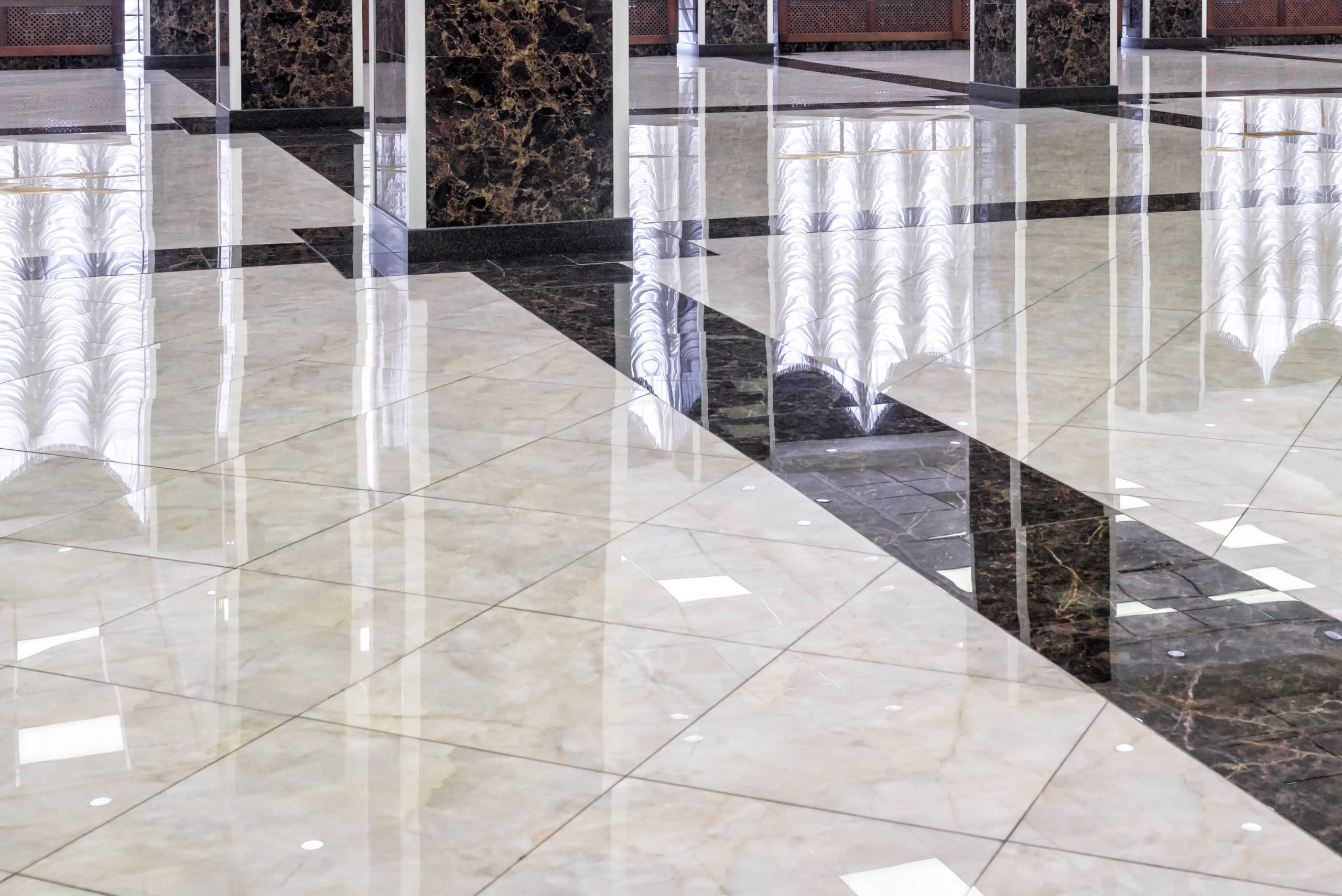
The grit sequence matters more than most people realize. Professional marble polishing typically moves from around 200 grit — which removes deeper scratches and surface damage — up through progressively finer grits, sometimes reaching 3,000 or higher. Each stage removes the scratches left by the previous stage while creating finer ones of its own, until the surface is smooth enough to reflect light evenly. That’s where the gloss comes from. It’s not a coating. It’s the stone itself, brought back to a mirror-like finish through mechanical refinement.
After polishing, sealing is what makes the results last. A penetrating sealer saturates the marble’s pores, making it significantly more resistant to moisture and acidic spills going forward. Without it, a freshly polished surface can be re-damaged relatively quickly — especially in a kitchen or bathroom that sees daily use. Marble and limestone typically benefit from resealing every six to twelve months, with professional polishing recommended every one to two years depending on how much wear the surface sees.
The full sequence — cleaning, honing if needed, polishing, sealing — is what produces results that actually hold up. Skipping steps, or substituting a surface-shine product for real polishing, gives you temporary results that fade within weeks. We use our proprietary Safe Marble Solution as part of this process, a product developed specifically for marble surfaces rather than adapted from general-purpose formulas.
Buff Marble Floor vs. Professional Polishing: Not the Same Thing
“Buffing” and “polishing” get used interchangeably, but they describe very different outcomes. Buffing — running a soft pad with a surface compound over the marble — adds a temporary layer of shine. It can make a floor look better for a few weeks. But it doesn’t remove scratches, etching, or subsurface damage. It’s closer to waxing a car with a deep dent in the hood — it looks shinier, but the dent is still there.
Professional marble polishing physically resurfaces the stone using diamond abrasives. The difference in longevity is significant: professional polishing results last one to two years with proper maintenance. Buffing results can fade within weeks, especially in high-traffic areas.
When Buffing Is Enough — and When It Isn't
Buffing has a legitimate role in marble maintenance. If your marble is in good overall condition — no etching, no visible scratches, just a slight reduction in shine from normal use — a light buff can be a reasonable interim step between professional polishing sessions. It’s a maintenance tool, not a restoration tool.
The moment you’re dealing with visible etching, cloudy patches, scratches you can feel when you run your hand across the surface, or a finish that’s gone genuinely flat rather than just slightly less glossy, buffing won’t get you there. You need the progressive diamond abrasive process that professional polishing provides — the mechanical removal of the damaged surface layer, not a temporary shine applied over it.
One way to tell the difference: run your fingernail lightly across a dull or cloudy area. If you can feel a slight roughness or depression compared to the surrounding surface, that’s physical damage to the stone. Cleaning and buffing won’t fix it. If the surface feels smooth but just looks less shiny, a light maintenance treatment may be all you need for now.
In commercial settings — hotel lobbies, office building entrances, retail spaces throughout Midtown and Lower Manhattan — the stakes are higher because the foot traffic is relentless. A buffed floor in a high-traffic lobby might look acceptable for a week. A professionally polished and sealed floor holds up for months. That’s why building managers and facilities teams in New York County tend to schedule professional marble polishing on a regular cycle rather than relying on interim buffing to carry the load.
Can Marble Be Too Far Gone to Polish — or Does It Need Replacing?
This is one of the questions we hear most often, and the honest answer is: professional restoration fixes more than most people expect. The assumption that severely damaged marble needs to be replaced is understandable — when a surface looks genuinely bad, replacement feels like the logical next step. But marble is a durable stone, and the diamond abrasive process can address damage that looks irreversible from a distance.
Deep scratches, widespread etching, staining, and even lippage — where individual tiles or sections of floor have shifted slightly out of plane — can all be addressed through a combination of grinding, honing, and polishing. Grinding uses more aggressive diamond tooling at the coarser end of the grit range to level and remove significant surface damage before the finer polishing stages begin. It’s the starting point for marble that’s in rough shape, not a sign that the stone is beyond saving.
Replacement is a significant cost. Comparable marble — Calacatta, Carrara, Nero Marquina — is expensive to source and expensive to install, particularly in Manhattan where building access, elevator scheduling, and co-op board requirements add layers of logistical complexity to any renovation project. Professional restoration, done correctly, achieves results that are visually comparable to new stone at a fraction of that cost. For a building manager responsible for a six-story lobby floor, or a homeowner with a marble kitchen island they love, that math matters.
Not every piece of marble is salvageable — if the stone is cracked through, structurally compromised, or has been damaged beyond what abrasive refinishing can address, we’ll tell you that honestly during the assessment. But in our experience working across Manhattan, Astoria, and the surrounding Tri-State area, the cases where replacement is truly the only option are far less common than most people assume when they first look at a damaged surface.
When to Call a Professional for Marble Polishing in New York County
If your marble has lost its shine, the first question worth asking is whether you’re dealing with a cleaning problem or a surface problem. Cleaning handles what’s on top of the stone. Polishing handles the stone itself. Most of the time, when marble looks genuinely dull or damaged despite regular maintenance, it’s the latter — and no cleaning product will change that.
The good news is that professional marble polishing is not the dramatic undertaking many people imagine. An assessment takes the guesswork out of it — you find out exactly what the surface needs, what the process involves, and what to expect afterward. From there, the work is methodical: the right diamond abrasive sequence, the right finish, and a proper seal to protect what’s been restored.
If you’re in New York County and your marble isn’t responding to cleaning the way it should, Diamond Stone Restorations Corp offers free estimates and can usually give you a clear picture of what’s going on and what it will take to fix it. Reach out and we’ll take it from there.
—
**Marble Cleaning Services: Common Questions**
**What’s the difference between marble cleaning and marble polishing?** Cleaning removes surface-level dirt, residue, and buildup using pH-neutral products safe for stone. Polishing physically resurfaces the marble using diamond abrasives, removing scratches, etching, and worn finish from the stone itself. Cleaning maintains what’s already there. Polishing restores what’s been lost. In New York County, where marble floors in pre-war co-ops and luxury condos endure heavy daily use, most surfaces that look dull or cloudy need polishing, not just a deeper clean.
**Can I polish marble myself with a kit from the store?** Consumer polishing kits exist, but they can’t replicate the progressive diamond grit sequence or the professional-grade equipment needed to produce lasting results. Without moving through the correct grit stages, you risk leaving uneven surfaces or applying a temporary shine over damage that’s still there underneath. For marble that genuinely needs restoration, DIY approaches tend to be a short-term fix that makes the professional job harder later.
**How often does marble need to be professionally polished?** For most residential marble in New York County — bathroom floors, kitchen countertops, entry foyers — professional polishing every one to two years is a reasonable baseline, depending on how much use the surface sees. Sealing should happen more frequently, roughly every six to twelve months, to keep the stone protected between polishing sessions. High-traffic commercial spaces like hotel lobbies or office building entrances often require more frequent attention.
**What marble cleaning services does Diamond Stone Restorations Corp offer?** We provide professional marble cleaning, honing, polishing, and sealing for both residential and commercial clients throughout New York County. Whether you’re dealing with a dull lobby floor in a Midtown office building, etched countertops in an Upper West Side apartment, or post-construction residue on a newly renovated bathroom, we assess the surface first and build the approach around what the stone actually needs — not a one-size-fits-all treatment. Free estimates are available, and we work around your schedule. You can reach us at 929-335-0190, Monday through Friday, 9am to 7pm.