Summary:
If you’re a property manager or co-op board member in New York County, you already know the lobby floor tells a story. Residents notice it. Guests notice it. And when it looks dull, scratched, or hazy, it reflects on the building — not just the stone.
The good news is that most marble damage isn’t permanent. The frustrating news is that fall is a short window to do something about it before winter makes everything harder and more expensive.
This guide is built specifically for New York County buildings — pre-war co-ops, commercial lobbies, and everything in between. Here’s what to look for, what to do, and why timing matters more than most people realize.
Why Fall Is the Right Time for Marble Floor Maintenance in New York County
Manhattan winters are hard on marble in ways that most other cities simply don’t experience. Road salt and calcium chloride get tracked in from treated sidewalks, and those deicing chemicals react chemically with marble’s calcium carbonate surface — etching it, dulling it, and creating pitting that deepens with every passing week of the season.
By the time spring arrives and the damage becomes obvious, you’re dealing with a floor that absorbed months of chemical exposure. Restoring it then is still possible, but it costs more and takes longer than it would have if the surface had been sealed and protected going into winter.
Fall — roughly September through November — is the last viable window to assess, restore, and seal before that cycle begins. Get it done now, and your New York County building enters the season protected.
How NYC's Winter Salt Problem Damages Marble Floors
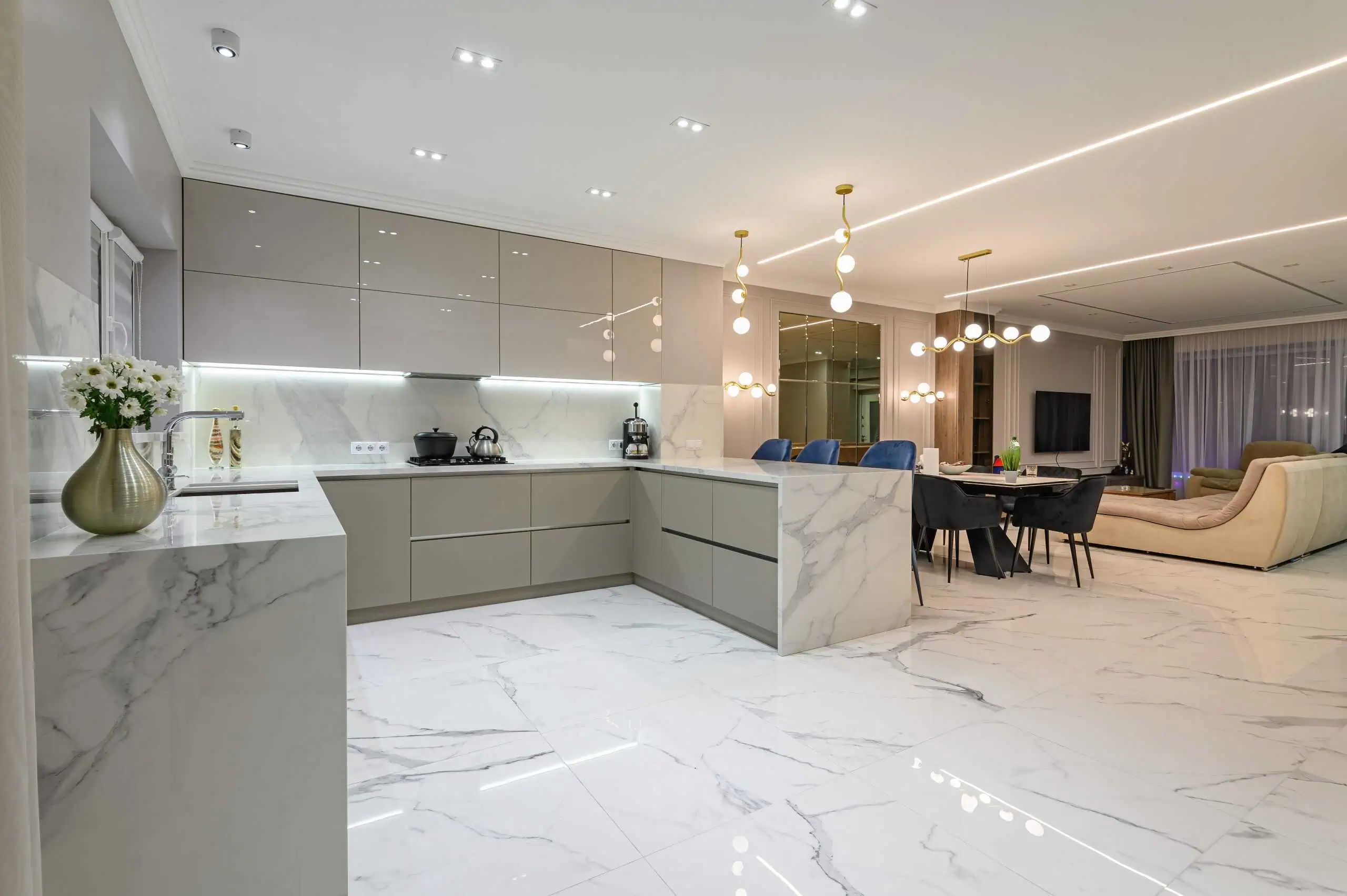
Marble is calcium carbonate. That’s not a minor detail — it’s the reason marble behaves so differently from ceramic tile or concrete when it comes into contact with acids and salts. Road salt and calcium chloride are among the most chemically aggressive substances that regularly enter New York County building lobbies, and they don’t need to sit on the surface for long to cause damage.
What happens is straightforward: the salt dissolves in water tracked in on shoes and boots, and that solution contacts the marble surface. The chemical reaction etches the stone — removing the polished layer and leaving behind the dull, hazy appearance that no cleaning product will fix. Over a full winter season, with hundreds of people moving through a lobby daily, this etching accumulates. By February, a floor that looked acceptable in October can look genuinely bad.
The fix isn’t complicated, but it has to happen before winter, not after. Professional restoration grinds away the damaged surface layer using diamond abrasives, restoring the polish. Then a professional-grade sealer is applied — creating a barrier between the stone and whatever the season brings. That sealed surface is dramatically easier for building staff to maintain, and it retains its appearance far longer between professional services.
Here’s what’s worth understanding about the sealing step: it doesn’t make marble indestructible, but it buys you a meaningful buffer. High-traffic lobby floors in commercial buildings typically benefit from resealing annually. Residential common areas can often go longer — every one to three years, depending on foot traffic and conditions. The point is that a sealed floor entering winter is a fundamentally different situation than an unsealed one.
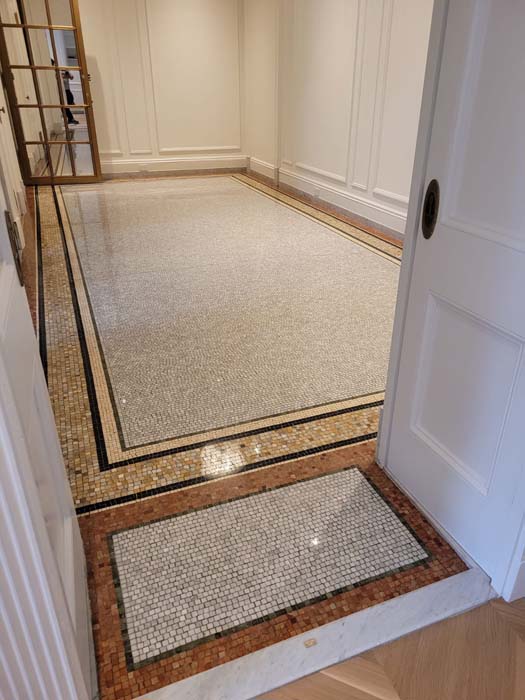
For buildings in New York County with original pre-war marble lobbies still in active use after 80 or 100 years, this isn’t just maintenance. It’s preservation. Those surfaces can’t be replicated with modern materials, and they shouldn’t have to be.
The Holiday Lobby Test: Why New York County Building Managers Can't Wait Until Spring
There’s a second reason fall matters that has nothing to do with chemistry. Thanksgiving through New Year is when Manhattan building lobbies face their most visible scrutiny of the year. Residents host guests. Holiday decorations go up. Board members walk the common areas. Building staff is focused on the season, not on scheduling contractors.
A lobby floor that looks worn, dull, or stained during that window doesn’t just reflect poorly on the building’s appearance — it becomes a topic at board meetings. It affects resident satisfaction. In buildings where units are being sold or rented, it affects how prospective buyers and tenants perceive the property.
Fall restoration addresses this before it becomes a problem. A polished, sealed lobby floor entering the holiday season signals that the building is well-managed. It’s a small thing in isolation, but in a New York County co-op or luxury condo, details like this carry real weight.
There’s also a practical scheduling argument. Spring is when the demand for marble restoration peaks — building managers assess winter damage and try to book contractors simultaneously, which means longer wait times and less scheduling flexibility. In fall, there’s more room to work around building operations, complete the job efficiently, and avoid disruption to residents. For a 24/7 residential building, that matters.
The co-op board approval dynamic is worth mentioning here as well. Most co-op and condo boards in New York County hold fall meetings where annual maintenance budgets and vendor contracts for the coming year are reviewed. If you’re a building manager who wants stone restoration included in the budget, fall is when that conversation needs to happen — and having a written estimate in hand makes the approval process straightforward. Getting that estimate now, before the scheduling window closes, puts you in the right position.
Natural Stone Restoration: What the Process Actually Involves
One of the most common misconceptions we encounter is the assumption that damaged marble needs to be replaced. It almost never does. Etching, scratches, dullness, and surface staining are all phenomena that affect the top layer of the stone — not the marble itself. Professional restoration removes that damaged layer and brings the surface underneath back to its original condition.
The cost difference is significant. Restoration typically runs $3 to $15 per square foot. Replacement materials alone — before labor and disposal costs in New York County — run $15 to $50 per square foot. For a building lobby, that gap can represent tens of thousands of dollars. Most building managers, once they understand this, don’t seriously consider replacement unless the stone is physically broken or missing.
What Does Professional Marble Floor Restoration Actually Include?
The process starts with assessment — identifying the stone type, the nature and extent of the damage, and the right sequence of treatments. This step matters more than most people realize. New York County’s building stock contains an enormous variety of marble types: Carrara, Calacatta, Emperador, and many others, each with different hardness, porosity, and surface characteristics. Applying the wrong abrasive sequence or the wrong sealer to a given stone can cause damage that’s harder to fix than the original problem. A qualified restoration professional identifies what they’re working with before any equipment touches the floor.
The restoration itself uses diamond abrasive technology — a sequence of progressively finer grinding and honing pads that remove the damaged surface layer and restore the polish. This is the professional standard for marble restoration, and it’s what separates a genuine restoration from a surface buff that temporarily masks the problem. Diamond honing is particularly important for lobby floors in New York County’s older buildings, where the marble may be uneven, heavily worn in traffic paths, or showing decades of accumulated surface damage.
After honing and polishing, sealing protects the restored surface. The sealer penetrates the stone’s pores and creates a barrier against moisture, salt, and staining agents. For commercial lobby floors, this step is not optional — it’s what makes the restoration last and what protects the investment through the season ahead.
Cleanup is part of the job. We leave the space ready to use, not a construction site. For residential buildings where lobby access is continuous, this matters — the work needs to be completed efficiently and the space returned to service without extended disruption.
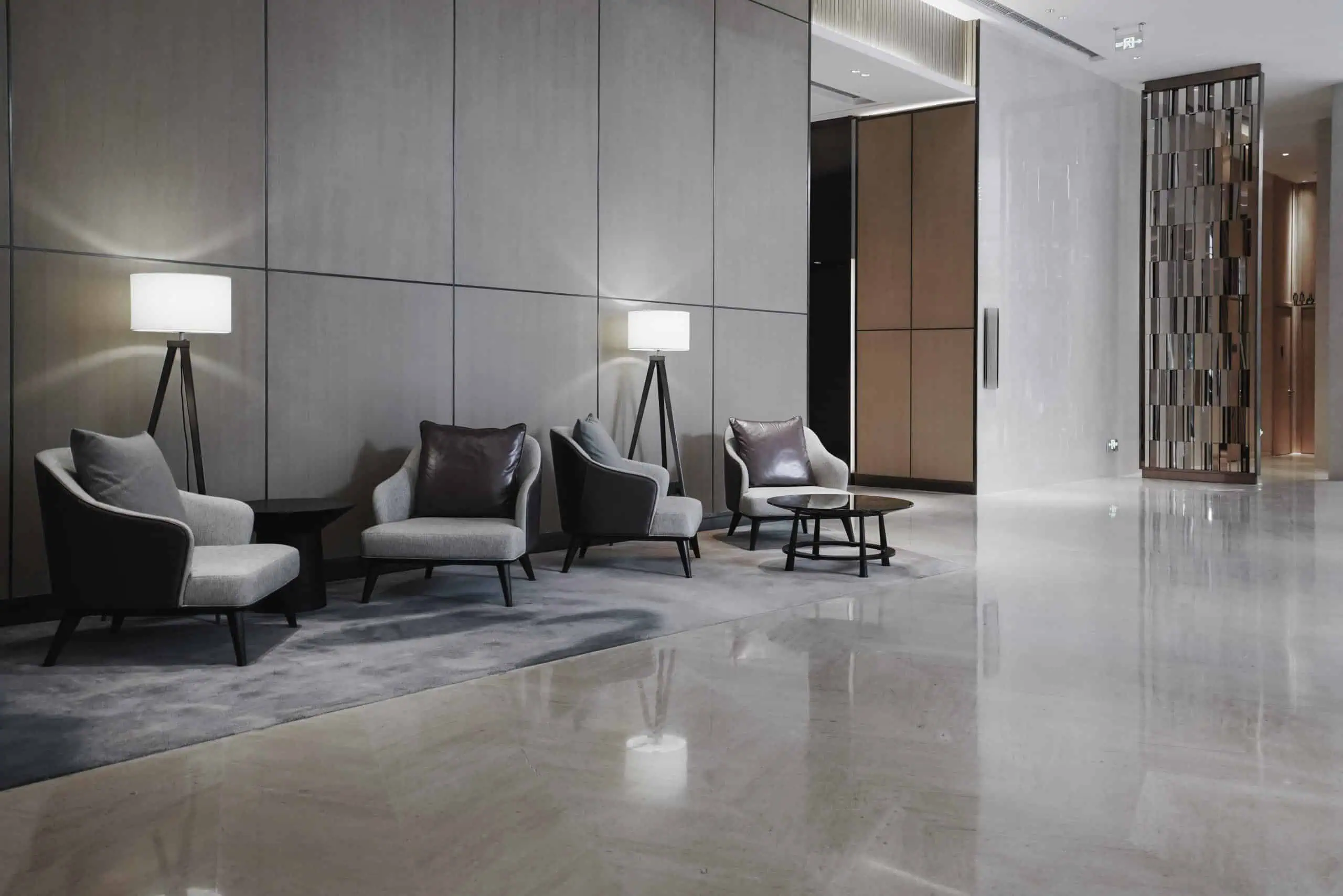
One thing worth saying plainly: the restoration process can produce results that exceed the surface’s original appearance. We’ve heard this from clients directly — that the marble looked better after restoration than they ever remembered it looking. That’s not unusual. Years of accumulated micro-scratching, mineral deposits, and surface oxidation can dull a floor gradually enough that people forget what it looked like when it was properly maintained. Professional restoration resets that baseline.
Stone Restoration Services for New York County Buildings: What to Look for in a Provider
The stone restoration market in New York County includes a wide range of providers, and the quality gap between them is real. Choosing the wrong contractor — one who applies the wrong abrasive sequence, uses an incompatible sealer, or rushes through the honing process — can leave you with a floor that looks worse than before, or with damage that requires more extensive work to correct.
A few things to look for when evaluating providers. First, material-specific experience. Ask whether the contractor has worked with your specific stone type and can explain the treatment approach for it. A contractor who gives the same answer for every marble type is probably applying the same process to every marble type — which is not how professional restoration works.
Second, transparency on pricing. The restoration space has a reputation for estimates that expand once work begins. Look for a contractor who provides a clear, all-inclusive quote that covers materials, labor, and cleanup — with no ambiguity about what’s included. Getting a written estimate you can present to your co-op board is also just good practice; it creates a paper trail and makes the approval process cleaner.
Third, reviews that reference specific projects. Generic positive reviews are easy to accumulate. Reviews that describe a specific building type, a specific damage problem, and a specific outcome are more useful signals. Pay attention to whether reviewers mention honesty — whether the contractor told them damage was minor rather than recommending unnecessary work. In a category where upselling is common, that kind of integrity stands out.
At Diamond Stone Restorations Corp, we work with building managers and co-op boards across New York County and the broader New York City area. We provide free estimates, transparent pricing with no hidden fees, and scheduling that works around your building’s operations. Our work covers marble, terrazzo, granite, and other natural stone surfaces — from pre-war lobby floors on the Upper West Side to commercial spaces in Midtown. If you’re trying to get a project scoped and approved before the season turns, we’re straightforward to work with.
When to Schedule Marble Floor Care in New York County
The window is real and it’s not that wide. Once November arrives and building heat comes on, contractor schedules tighten and the salt season is already underway. If your lobby floor needs assessment, restoration, or sealing, the time to act is now — not after the holidays, not after winter damage becomes visible in the spring.
For most New York County buildings, a fall restoration and seal extends the surface life significantly, reduces the daily maintenance burden on building staff, and protects the floor through the season when it takes the most abuse. The cost of doing it right is a fraction of what replacement would cost, and the results last.
If you manage a co-op, condo, or commercial property in New York County and want a straightforward assessment of what your marble floors actually need, Diamond Stone Restorations Corp offers free estimates and can work around your building’s schedule. Reach out before the season closes the window.