Summary:
You noticed it a few weeks ago — the dull patch near the sink, the hazy film that won’t buff out, the grout lines that look worse every time you clean them. You’ve tried a few things. Maybe it helped a little. Maybe it made it worse. Either way, the marble still doesn’t look right, and now you’re wondering whether a professional is actually worth it or just another expense. That’s a fair question, and it deserves a straight answer. Here’s what’s really going on with your marble — and what it takes to fix it properly in New York County.
Professional Marble Cleaning Services: What You're Actually Getting
Professional marble cleaning isn’t a fancier version of what you do at home. It’s a categorically different process using equipment and compounds that aren’t sold in hardware stores — and for good reason. The results aren’t comparable, and neither is the risk of getting it wrong.
When we assess a marble surface, we’re looking at the stone type, the finish, the existing damage, and what the space demands. Carrara marble in a pre-war Upper East Side bathroom behaves differently than polished Calacatta in a new Tribeca build. Those differences matter when we’re choosing grit sequences, pH levels, and sealers. Treating them the same way is how damage happens.
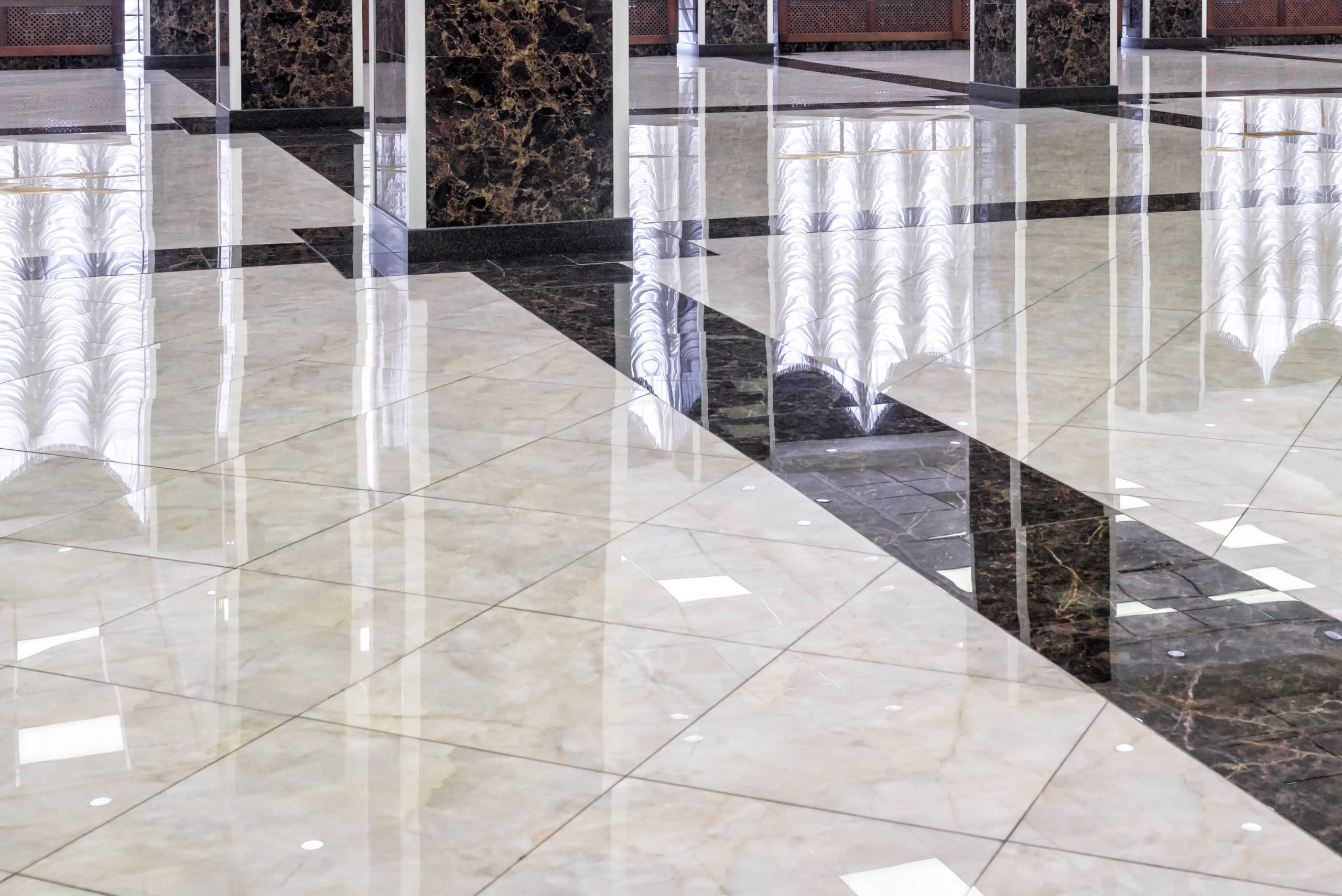
What Professional Marble Floor Cleaning Actually Involves
The process starts with a surface assessment — not a quick glance, but a real evaluation of what the stone needs. From there, we move through a multi-stage diamond polishing sequence. Coarser grits remove the scratches, etching, and surface damage. Medium grits smooth the stone. Fine grits bring back the finish, whether that’s a high-gloss mirror shine or a softer honed look. No consumer product can replicate this. The tools alone cost tens of thousands of dollars.
We use a wet-sanding technique throughout, which matters more than most people realize. The water keeps the stone cool during polishing — heat can cause micro-fractures in marble — and it keeps dust from becoming airborne. In a New York County apartment where you’re living three feet from where we’re working, that’s not a small thing. Dry grinding fills a room with fine marble particulate. Wet sanding keeps it contained.
Once the polishing is done, we apply a professional-grade penetrating sealer. This isn’t the spray-on sealer you’ll find at a home goods store. It bonds with the stone at a molecular level, filling the pores and creating a barrier against moisture, staining, and etching. The type of sealer we choose depends on the marble’s porosity and how the space is used — a kitchen countertop in constant contact with food and water needs a different approach than a lobby floor that sees heavy foot traffic.
The final step is a detailed walkthrough with care instructions. You’ll know exactly what cleaners are safe, how often to damp mop, and when to schedule the next professional service. That guidance is part of what you’re paying for — not just the result on the day, but protecting that result for the next year or more.
Marble Tile Floor Cleaning and Grout — Why This Is Where DIY Goes Wrong Most Often
If you have marble tile floors, the grout is probably what’s bothering you most. It darkens over time, resists regular mopping, and makes even clean marble look neglected. The instinct is to reach for a grout cleaner — something with bleach or acid that promises to cut through the buildup. That’s where things go sideways.
Most grout cleaners have a pH between 2 and 4. Marble etches at anything significantly below 7. When an acidic cleaner seeps into the joint between the tile and the grout, it doesn’t just clean — it eats into the stone along the edges. What you’re left with is a darkened, rough border around every grout line that looks worse than what you started with and can’t be scrubbed away. We’ve seen this in apartments across New York County, from SoHo lofts to Midtown co-ops, and it’s one of the more frustrating outcomes because the homeowner was genuinely trying to maintain their space.
Our marble tile floor cleaning uses pH-appropriate compounds applied with controlled technique — cleaning the grout without contacting the marble surface in a way that causes etching. It’s not just about the product; it’s about how it’s applied, how long it sits, and how it’s neutralized afterward. The grout gets clean. The marble stays intact.
Beyond the immediate cleaning, marble tile floors in New York County face specific ongoing challenges. Subway grit — the fine metallic and concrete particulate tracked in from the city’s transit system — acts as a slow abrasive on marble tile surfaces. Every time someone walks across your floor in shoes that have been on a subway platform, they’re grinding that grit into the stone. Over months and years, this creates a dull, scratched surface that no amount of mopping will reverse. Our restoration process removes that accumulated surface damage and resets the stone. Proper sealing afterward slows the process back down.
Professional vs. DIY Marble Care: The Real Cost Comparison for New York County Property Owners
The DIY argument usually comes down to cost. Professional service costs money; cleaning products don’t — or at least, they don’t seem to. But the math changes when you factor in what happens when DIY goes wrong.
Etching from vinegar or citrus cleaners, scratching from abrasive pads, sealer buildup from consumer products applied incorrectly — all of these require professional correction that costs more than the original service would have. And in some cases, the damage compounds over time, meaning a minor fix becomes a full restoration.
Why New York County Marble Needs Professional Attention More Than Most Markets
New York County’s conditions are genuinely harder on marble than most places. The water is the first issue. NYC tap water is safe to drink but mineral-rich, and those minerals — primarily calcium and magnesium — leave white deposits on marble surfaces over time, especially around faucets and in showers. The instinct is to use a descaling product to cut through the buildup. Most descalers are acidic. On marble, that’s a serious problem. The deposit might lift, but the surface underneath is now etched, and that etching is permanent without professional intervention.
Then there’s the salt. From October through March, the city treats sidewalks and streets with road salt, and it gets tracked into buildings constantly. Salt causes surface pitting and accelerated wear on marble entryways and lobby floors. By February, the damage is often visible. By spring, building superintendents across New York County are fielding complaints about lobby marble that looked fine in October. This is a seasonal pattern we see every year, and it’s entirely specific to the region’s winter maintenance practices.
Pre-war buildings add another layer of complexity. Many of Manhattan’s older co-op buildings — particularly on the Upper East Side, Upper West Side, and in Midtown — have original marble that’s 80 to 100 years old. That stone is irreplaceable. It was quarried and installed before World War II, and there’s no modern equivalent available in the same cuts and colors. Restoring it requires a different level of care than working on new marble, and the margin for error is essentially zero. Using the wrong compound or the wrong grit on century-old marble can cause damage that simply cannot be undone.
How Often Should You Schedule Professional Marble Cleaning in New York County?
This is one of the most common questions we get, and the honest answer is that it depends on how the space is used. For most residential marble floors in New York County — bathrooms, entryways, kitchen areas — professional cleaning and sealing every 6 to 12 months is a reasonable baseline. High-traffic areas, like a building lobby or a heavily used kitchen, benefit from our attention every 3 to 6 months. Countertops in active kitchens typically need professional care annually.
The reason frequency matters is compounding. Minor etching that costs relatively little to address today becomes deeper surface damage that requires more aggressive restoration if left for two or three years. The longer the gap between professional services, the more work the stone needs — and the more it costs. Staying ahead of the damage is almost always more economical than catching up to it.
For property managers in New York County overseeing co-op or condo buildings, this is especially relevant. Lobby marble is one of the first things prospective buyers and residents notice. It signals how well the building is maintained. A lobby floor that looks dull or stained affects perceptions of the entire building — and in a market where the average Manhattan home value exceeds $1 million, those perceptions translate directly into property values and board expectations.
One useful indicator: if water no longer beads on your marble surface, the sealer has worn down and the stone is exposed. That’s the point at which staining and etching happen most easily, and it’s a clear signal that professional service is overdue. You don’t need to wait for visible damage to justify the call — ideally, you’re scheduling before you reach that point.
When to Stop Guessing and Call Our Marble Cleaning Service
If your marble looks dull, feels rough in spots, or has stains and marks that don’t respond to gentle cleaning, it’s not going to fix itself. And the longer you wait, the more the damage compounds. The good news is that most marble — even surfaces that look badly damaged — can be restored. Etching, scratching, hard water deposits, grout discoloration: these are all addressable with the right process and the right expertise.
New York County is a demanding environment for natural stone. The water, the grit, the salt, the density of daily use — none of it is forgiving. Professional marble cleaning services aren’t a luxury in this market; they’re maintenance that protects a real investment. Whether you’re a homeowner in a pre-war co-op, a property manager overseeing a building lobby, or someone who just moved into a place with marble and isn’t sure where to start, the answer is the same: get a professional assessment before the problem gets bigger.
We’ve been working with marble, stone, and terrazzo surfaces across New York County for over a decade. If you’re ready to stop guessing and get a straight answer about what your marble actually needs, reach out to our team today.