Summary:
To protect stone, tile and grout from stains and moisture, see our tile and grout sealing service.
Why NYC's Climate Destroys Unprotected Stone Pavers
Most stone damage happens invisibly, building up over months before you notice the first crack. NYC’s freeze-thaw cycles create what engineers call “frost jacking”—water seeps into tiny stone pores, freezes overnight, and expands with enough force to split granite.
The process accelerates when road salt lowers water’s freezing point. Instead of one freeze-thaw cycle per cold snap, you get multiple cycles as temperatures fluctuate. Each cycle widens existing cracks and creates new ones. Within three winters, untreated stone surfaces show visible damage that costs thousands to repair.
The Hidden Damage From NYC's 50+ Annual Freeze-Thaw Days
Research shows NYC experiences about two-thirds of its below-freezing days as freeze-thaw days, with roughly one-third qualifying as frost-jacking days. That means your stone surfaces endure 50+ damaging cycles every winter season. Each cycle forces water deeper into the stone structure.
Bluestone, limestone, and granite each respond differently to this assault. Limestone’s softer composition makes it vulnerable to acid damage from dissolved salt. Granite’s density provides some protection, but its natural fissures become water highways during freeze-thaw cycles. Bluestone’s layered structure can delaminate when water freezes between its natural planes.
The cumulative effect creates what stone restoration experts call “progressive deterioration.” Year one brings minor surface dulling. Year two shows hairline cracks. By year three, you’re looking at major repairs or complete replacement. Professional sealing breaks this cycle by preventing water infiltration at the source.
Most property owners discover the damage too late. They notice one obvious crack and assume it’s isolated. In reality, that visible crack represents dozens of invisible stress points throughout the stone. The entire surface has been compromised. At this stage, restoration costs 3-4 times more than preventive sealing would have cost.
How Road Salt Accelerates Stone Deterioration in NYC
Research shows NYC experiences about two-thirds of its below-freezing days as freeze-thaw days, with roughly one-third qualifying as frost-jacking days. That means your stone surfaces endure 50+ damaging cycles every winter season. Each cycle forces water deeper into the stone structure.
Bluestone, limestone, and granite each respond differently to this assault. Limestone’s softer composition makes it vulnerable to acid damage from dissolved salt. Granite’s density provides some protection, but its natural fissures become water highways during freeze-thaw cycles. Bluestone’s layered structure can delaminate when water freezes between its natural planes.
The cumulative effect creates what stone restoration experts call “progressive deterioration.” Year one brings minor surface dulling. Year two shows hairline cracks. By year three, you’re looking at major repairs or complete replacement. Professional sealing breaks this cycle by preventing water infiltration at the source.
Most property owners discover the damage too late. They notice one obvious crack and assume it’s isolated. In reality, that visible crack represents dozens of invisible stress points throughout the stone. The entire surface has been compromised. At this stage, restoration costs 3-4 times more than preventive sealing would have cost.
Professional Exterior Stone Cleaning and Sealing Process
Effective sealing for stone pavers requires more than applying a surface coating. The process starts with specialized cleaning that removes existing salt deposits, organic stains, and microscopic debris from stone pores. Standard pressure washing can’t reach these contaminants—it takes professional-grade cleaning solutions and techniques.
The cleaning phase determines sealing success. Any residue left in stone pores prevents proper sealer penetration, creating weak spots where water can still infiltrate. We use pH-balanced solutions that dissolve salt residue without damaging the stone matrix.
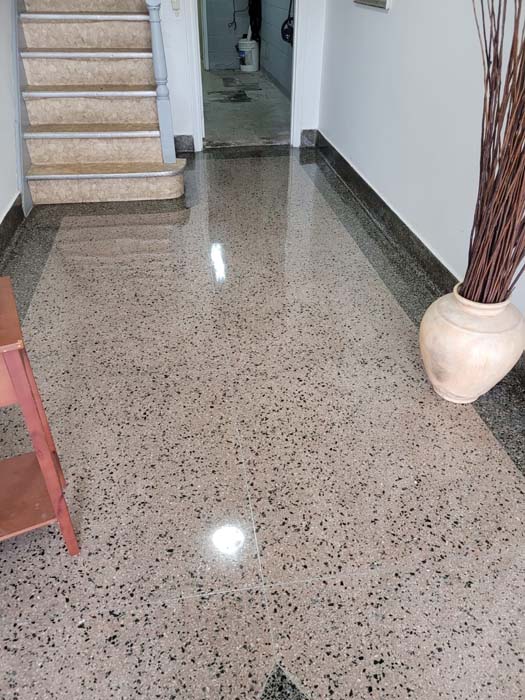
Deep Cleaning That Prepares Stone for Maximum Sealer Penetration
Our exterior stone cleaning services use specialized equipment that standard cleaning can’t match. Hot water extraction systems reach temperatures up to 200°F, dissolving years of accumulated salt deposits and organic stains. The process removes contaminants from stone pores without using harsh acids that can damage limestone or marble surfaces.
Different stone types require different cleaning approaches. Bluestone’s layered structure needs gentle cleaning that won’t force debris deeper into natural fissures. Limestone requires pH-neutral solutions because acidic cleaners cause permanent etching. Granite can handle stronger cleaning solutions, but the process must still preserve any existing sealer that’s still functional.
The cleaning phase also includes joint cleaning between pavers. Accumulated debris in joints creates water collection points that accelerate freeze-thaw damage. Professional cleaning removes this debris and prepares joints for resealing, creating a continuous moisture barrier across the entire surface.
Timing matters for exterior cleaning. Spring cleaning removes winter salt accumulation before it can cause permanent damage. Fall cleaning prepares surfaces for sealer application before winter weather arrives. Many property owners make the mistake of cleaning and sealing during summer’s peak heat, when rapid moisture evaporation prevents proper sealer curing.
Sealing Outdoor Pavers NYC: Penetrating vs. Surface Protection
Two types of sealers protect outdoor stone surfaces, and choosing the wrong one can cause more problems than no sealer at all. Penetrating sealers soak into stone pores and create protection from within the stone structure. Surface sealers create a protective film on top of the stone. Each has specific applications depending on your stone type and exposure conditions.
Penetrating sealers work best for most NYC outdoor applications because they allow stone to breathe while blocking water infiltration. They last 5-10 years and become part of the stone structure. Surface sealers provide more dramatic visual enhancement but can trap moisture if the stone isn’t perfectly dry during application. In NYC’s humid climate, trapped moisture leads to spalling and surface delamination.
The application process requires specific environmental conditions. Stone must be completely dry—not just surface dry, but moisture-free throughout the stone structure. We use moisture meters to verify readiness and monitor weather forecasts to ensure 24-48 hours of dry conditions after application for proper curing.
Quality sealers don’t change stone appearance dramatically, but they do enhance natural colors and provide subtle depth to the surface. If someone promises dramatic color changes from sealing, they’re likely selling a surface coating that won’t provide long-term protection. Our sealing for stone pavers focuses on protection first, aesthetics second.
Protecting Your Stone Investment Against NYC Winters
Professional sealing transforms vulnerable stone surfaces into weather-resistant barriers that can handle decades of NYC winters. The investment pays for itself by preventing major repairs and extending your stone’s functional life by 15-20 years. More importantly, it maintains the curb appeal and property value that drew you to stone surfaces in the first place.
The key is working with specialists who understand NYC’s specific climate challenges and have experience with bluestone, limestone, and granite in outdoor applications. Generic sealing services often use inappropriate products or techniques that provide temporary results at best.
We combine deep knowledge of stone restoration with specialized expertise in exterior applications. Our approach focuses on long-term protection rather than quick fixes, ensuring your stone surfaces can handle whatever NYC weather brings.