Summary:
If your marble looks dull, scratched, or stained, your first instinct might be to replace it. That’s understandable — but in most cases, it’s not necessary. Marble resurfacing can restore a surface to near-original condition at a fraction of the cost, with minimal disruption and results that last years. Before you start getting demolition quotes, it’s worth understanding what resurfacing actually involves, what kinds of damage it can fix, and whether it’s the right call for your specific situation. That’s exactly what this guide covers.
What Is Marble Resurfacing and How Does the Process Work?
Marble resurfacing is a professional restoration process that mechanically removes the damaged surface layer of the stone and rebuilds the finish using diamond abrasives, honing compounds, and sealers. It’s not cleaning, and it’s not a coating applied on top. It physically resurfaces the marble itself — which is why it can address damage that no amount of scrubbing or polishing spray will touch.
The process typically starts with a thorough surface evaluation to understand the type and depth of damage. From there, our technicians use a progressive diamond abrasive system — starting with coarser grits to remove scratches, etching, and staining, then moving through increasingly finer grits until the surface is smooth and even. The final stage involves polishing to the desired finish (honed or high-gloss) and applying a penetrating sealer to protect the stone going forward.
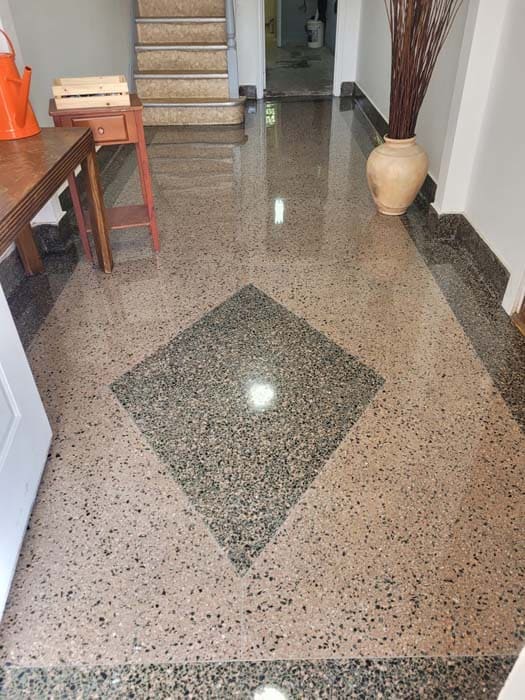
Done correctly, the results are dramatic. Surfaces that looked permanently damaged come back looking the way they did when they were installed.

Marble Resurfacing vs. Replacement: What's the Actual Difference in Cost and Time?
This is the question most people are really asking when they start researching resurfacing. And the numbers make the answer pretty clear.
Professional marble resurfacing typically runs between $10 and $20 per square foot, depending on the condition of the stone and the scope of work. Marble replacement, on the other hand, costs $50 to $150 per square foot — and that’s before you account for demolition labor, disposal fees, and installation. For a 40-square-foot kitchen countertop in a Manhattan apartment, you’re looking at roughly $400–$800 for restoration versus $2,000–$6,000 or more for a full replacement. On a larger surface — say, a 500-square-foot lobby floor — restoration runs $5,000 to $10,000. Replacement for that same space could cost $25,000 to $75,000.
The time difference is just as significant. Most residential resurfacing projects wrap up in a day or two. Replacement in a New York County apartment means demolition, material lead times, contractor scheduling, and often a week or more of an unusable kitchen or bathroom — in a space where every square foot matters.
There’s also the disruption factor that’s easy to underestimate in Manhattan specifically. Many co-op and condo buildings have strict rules around renovation work — noise restrictions, required contractor approvals, dust management policies. We sidestep most of that. We use a dust-free wet process that produces no airborne particles, which means we can work while you’re home and your building management has far fewer concerns about the scope of work.
The sustainability angle matters too. Replacing marble means demolition waste, landfill disposal, and the carbon footprint of quarrying and shipping new stone. Resurfacing preserves what’s already there, using biodegradable compounds and professional-grade sealers to extend the life of the original material by up to 15 years.
What Types of Marble Damage Can Actually Be Fixed?
One of the most common misconceptions about marble is that certain types of damage are permanent. Etching in particular — those dull, cloudy spots left by acidic contact from wine, citrus, coffee, or even some cleaning products — is widely assumed to be irreversible. It isn’t. Etching is surface-level damage, and professional honing removes it by mechanically resurfacing the stone to below the damaged layer.
Deep scratches, widespread dullness, light staining, and surface-level chips are all within the scope of what resurfacing can address. The key variable is depth. Damage that has penetrated deeply into the stone — severe structural cracks, for example — may require repair work before or alongside resurfacing. That’s why a proper surface evaluation at the start matters. It tells you exactly what you’re dealing with and sets realistic expectations before any work begins.
What resurfacing can’t do is fix damage that goes beyond the stone itself — like a countertop that’s cracked through to the substrate, or marble that has been improperly repaired before with the wrong compounds. In those cases, the honest answer is that repair work needs to happen first, and sometimes replacement is genuinely the better path. We’ll tell you that upfront rather than oversell a restoration that won’t hold.
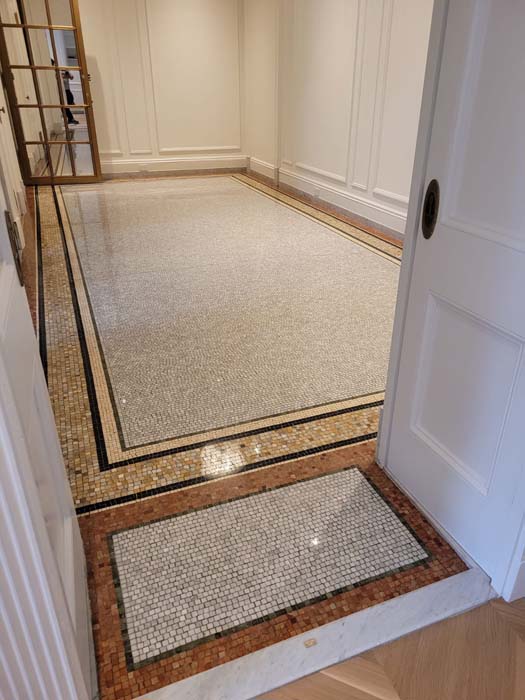
For most surfaces in New York County — whether it’s Carrara marble in a pre-war Upper West Side bathroom, Calacatta countertops in a Tribeca loft, or original marble lobby flooring in a Midtown commercial building — the damage we see is well within what resurfacing handles. The marble in New York County’s older buildings has often been in place for 60, 80, even 100 years. It’s survived a lot. A professional restoration is almost always the right call before considering replacement.
How to Refinish a Marble Countertop: What the Process Looks Like Surface by Surface
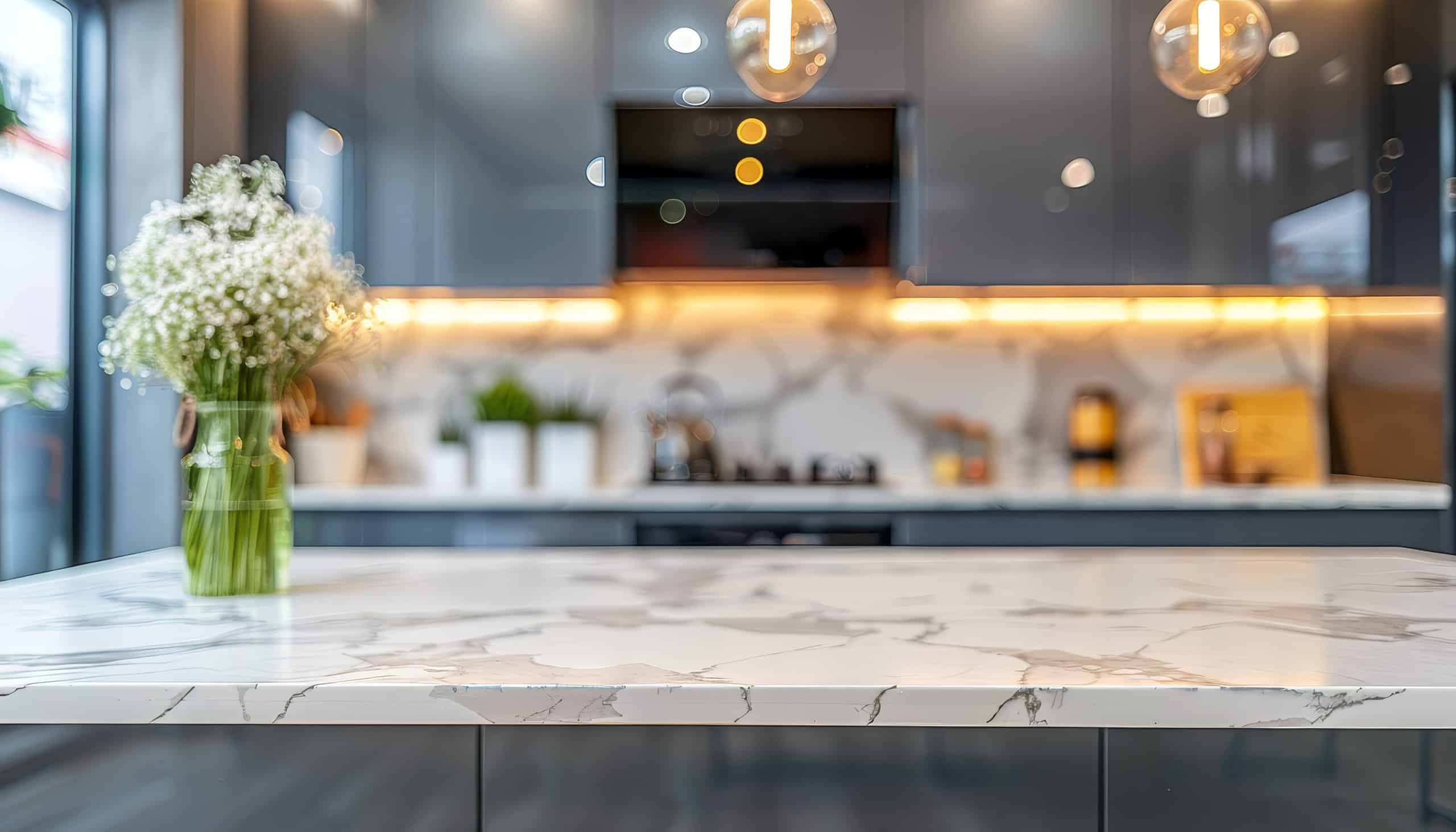
Countertops take more abuse than almost any other marble surface — heat, acids, daily contact, and cleaning products that aren’t always marble-safe. The good news is that countertop marble is also one of the most straightforward surfaces to restore, as long as the damage hasn’t gone too deep.
The refinishing process for marble countertops follows the same core steps as broader marble resurfacing — evaluation, honing, polishing, sealing — but the specifics vary based on the finish you want and the condition you’re starting from. A countertop with light etching and surface dullness needs a different approach than one with deep scratches or widespread staining. Getting that assessment right at the start is what separates a good outcome from a patchy one.
Marble Table Restoration: What's Different About Restoring Furniture-Scale Stone?
Marble dining tables, coffee tables, console tables, and antique marble-top dressers are common in New York County apartments — and they’re frequently overlooked when people think about stone restoration. Most people assume restoration is only for floors and countertops. It isn’t.
Marble table restoration follows a similar process to countertop refinishing, but the scale and context create some practical differences. Furniture marble is often thinner than countertop or floor stone, which means the depth of the diamond abrasive work needs to be calibrated carefully. Edge profiles on marble tables — ogee edges, beveled edges, pencil edges — also require hand work and attention that a flat surface doesn’t demand. And depending on the piece, the marble may be original to an antique frame, which means the goal isn’t just a good finish but a finish that’s appropriate to the age and character of the piece.
We work on marble furniture regularly, including Carrara dining tables, marble-top Victorian dressers, and designer coffee tables. The results are often striking — particularly for pieces that have been sitting in storage or have accumulated decades of surface damage. A marble table that looks like it belongs in a renovation debris pile can, with the right restoration, look like it belongs in a showroom.
For Manhattan residents, marble furniture restoration also makes practical sense from a cost standpoint. A quality marble dining table can be worth thousands of dollars. Refinishing it for a fraction of that cost — rather than replacing it or living with a surface that looks terrible — is an easy decision once you know it’s an option.
Cultured Marble Restoration: Why It's a Completely Different Process Than Natural Stone
Cultured marble is not the same material as natural marble, and restoring it requires a completely different approach. This distinction matters a lot — because applying natural stone restoration techniques to cultured marble can cause permanent damage.
Cultured marble is a manufactured composite: crushed limestone or marble dust mixed with polyester resin, poured into molds, and finished with a gel coat surface layer. It’s common in bathroom vanities, shower surrounds, and tub surrounds, particularly in buildings constructed from the 1980s through the 2000s. Many New York County apartments and co-op buildings have cultured marble bathrooms that owners don’t immediately recognize as manufactured rather than natural stone.
Because the surface is a gel coat rather than solid stone, it cannot be diamond-polished the way natural marble can. Attempting to do so removes the protective layer and exposes the composite beneath — making things significantly worse. Cultured marble restoration instead involves cleaning and preparing the surface, addressing chips and cracks with compatible filler compounds, and then applying a new gel coat or resin layer to restore the surface finish. The result looks like new, but the process is fundamentally different from natural stone work.
Cost-wise, cultured marble countertop restoration typically runs $2 to $6 per square foot. Cultured marble flooring runs higher, around $16 to $20 per square foot, due to the additional surface area and wear typically involved.
Knowing which type of marble you have before any work begins isn’t just helpful — it’s essential. We assess every surface before recommending a restoration approach, and we’ll tell you clearly what you’re working with and what the right process is. That’s especially important in New York County, where older buildings often have a mix of natural stone and manufactured surfaces installed across different renovation eras, and where a misidentified surface can lead to costly mistakes.
Is Marble Resurfacing Worth It for Your New York County Property?
For most surfaces — countertops, floors, vanities, lobby stone, marble furniture — the answer is yes. Resurfacing costs a fraction of replacement, takes days instead of weeks, and produces results that last five to ten years or longer with proper care. In a city where renovation disruption is genuinely painful and every square foot carries a premium, it’s often the smarter call by a wide margin.
The key is knowing what you’re working with. Natural marble and cultured marble require different approaches. Light etching and deep structural damage are not the same problem. A surface that looks hopeless to an untrained eye is often fully restorable — and a surface that looks fine might need sealing before it gets worse.
If you’re dealing with worn, dull, or damaged marble anywhere in New York County and you’re not sure whether restoration or replacement makes more sense, reach out to us. We’ve been doing this work since 2007, and we’ll give you a straight answer before recommending anything.