Summary:
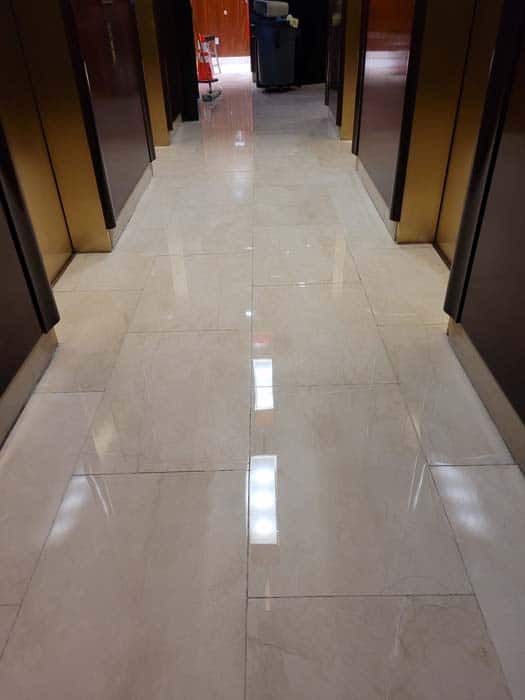
If you manage a commercial building in New York County, you already know that tenants notice things before they say anything. The lobby floor is usually first. It takes the most foot traffic, absorbs the most winter grit and salt, and reflects — literally and figuratively — how the building is being run. The property managers who consistently earn strong tenant retention and leasing velocity across Manhattan and the broader county aren’t just lucky. Many of them have figured out that commercial floor cleaning isn’t a reactive chore. It’s a strategic decision. Here’s a closer look at what that actually means in practice.
Commercial Floor Cleaning Services: What the Best Managers in New York County Do Differently
Most commercial buildings in New York County get their lobby floors mopped every morning. And most of those lobbies still look dull by spring. That’s not a cleaning frequency problem — it’s a product and process problem.
Standard commercial cleaning solutions are often not pH-neutral, which means they’re quietly etching and dulling marble and terrazzo surfaces every single time they’re used. By the time the damage is visible, it’s been accumulating for months.
The property managers who avoid this cycle aren’t necessarily spending more money. They’ve made a clear distinction between general janitorial cleaning and professional stone floor care — treating those as separate line items with separate vendors. That single shift changes the outcome considerably.
Why Manhattan's Building Stock Makes Stone Floor Cleaning a Specialized Job
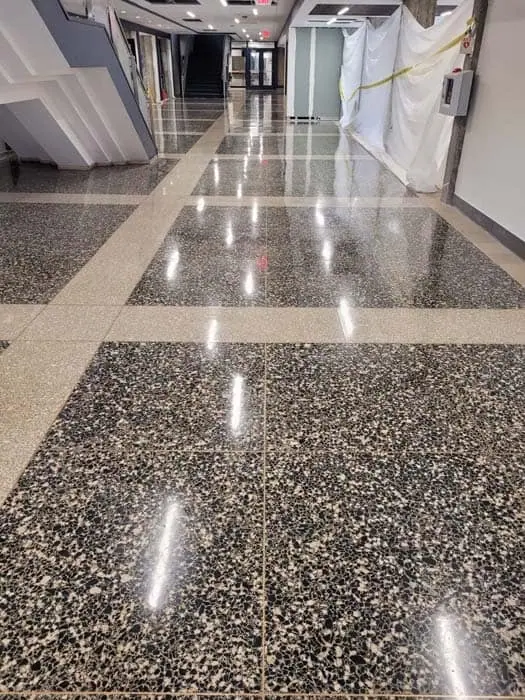
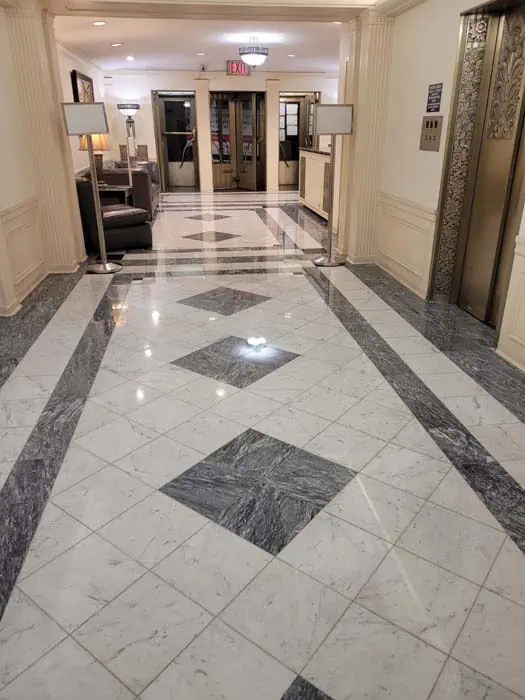
A significant portion of New York County’s commercial and residential building stock was constructed between the 1920s and 1950s. Those buildings — the prewar co-ops on the Upper West Side, the limestone-clad office towers near Grand Central, the terrazzo-floored lobbies in the Financial District — were built with natural stone that was meant to last a century. In many cases, it has.
But lasting and thriving are different things. Original marble and terrazzo installations from that era are still in active daily use, absorbing foot traffic from thousands of people, enduring New York winters, and being cleaned with products that were never designed for them.
Road salt — specifically calcium chloride, which is acidic — gets tracked in from October through March and makes direct contact with marble surfaces that are chemically sensitive to acid. Each contact event is minor. Accumulated over a winter season, the effect is visible dulling, surface etching, and a floor that looks older than it is.
This is why stone floor cleaning in New York County is genuinely different from stone floor cleaning almost anywhere else. The building age, the foot traffic volumes, the climate, and the density of co-op boards and property management firms all create a specific set of demands that a generalist cleaning crew isn’t equipped to handle. Marble requires pH-neutral chemistry. Terrazzo requires a different approach than marble. Granite behaves differently from limestone.
A technician who doesn’t know the difference before they start is a liability, not an asset. The property managers who understand this — and there are many in New York County who do — tend to work with specialists rather than generalists for their stone surfaces. They also tend to have fewer emergency restoration calls, because proactive maintenance prevents the kind of deterioration that requires a full intervention.
The Hidden Cost of Getting Commercial Stone Floor Cleaning Wrong
Here’s something that doesn’t come up often enough in conversations about building maintenance: the wrong cleaning product on a marble floor doesn’t just fail to clean it. It damages it. Permanently, in some cases. And because the damage is cumulative and gradual, it’s easy to miss until the floor looks noticeably worse than it did two years ago and no one can pinpoint exactly when things went sideways.
This is a systemic issue in New York County commercial buildings. Janitorial staff are skilled at what they do, but stone care is a specialty — and the products in a standard supply closet are rarely formulated for acid-sensitive surfaces like marble and limestone. Using the wrong cleaner repeatedly is a bit like using the wrong soap on a car’s paint finish. Each pass seems harmless. The damage only becomes obvious over time.
For property managers, the consequence is a restoration bill that could have been avoided — or a capital expenditure conversation with a board that nobody wants to have. Professional stone restoration is significantly less expensive than full floor replacement, but it’s still a cost that proactive maintenance programs can delay or reduce considerably.
The property managers who avoid this cycle tend to do a few things consistently. They use pH-neutral cleaners on stone surfaces between professional sessions. They schedule periodic professional polishing and sealing rather than waiting for the floor to look bad. And they treat the post-restoration maintenance guidance they receive from their stone care vendor as an actual protocol — not a suggestion. That combination keeps lobby floors looking sharp year-round and dramatically extends the intervals between major restoration work.
What Proactive Commercial Floor Cleaning Actually Looks Like in New York County
Proactive stone floor maintenance in a New York County commercial building isn’t complicated, but it does require intentionality. It starts with knowing what surfaces you have — marble, terrazzo, granite, limestone, or a combination — and understanding that each one has different maintenance requirements.
From there, it’s about building a schedule rather than reacting to complaints. For high-traffic lobbies in Midtown or the Upper East Side, professional cleaning and polishing on a regular cycle keeps surfaces from reaching the point of visible deterioration. Sealer reapplication is part of that cycle — without it, stone is left exposed to staining, moisture, and foot traffic abrasion.
The goal is a floor that never looks like it needs attention, because it’s consistently getting it.
How Property Managers in New York County Evaluate Stone Floor Cleaning Vendors
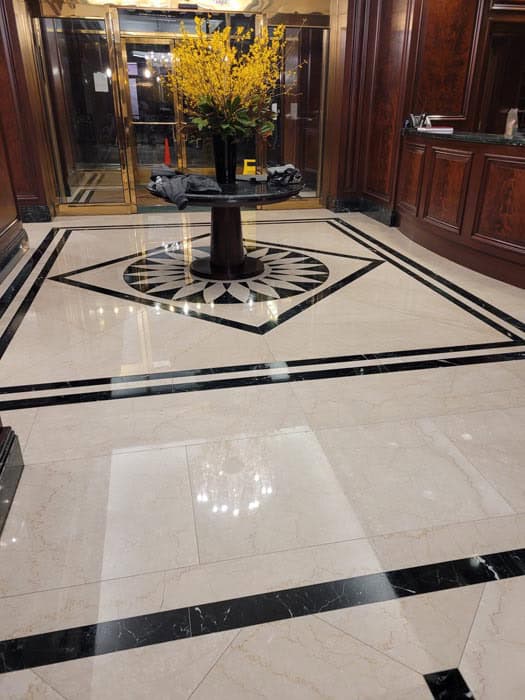
The conversation property managers in New York County tend to have when evaluating a stone floor cleaning vendor is different from the conversation a homeowner has. They’re not just asking “can you make this look better?” They’re asking whether the vendor can work around building occupancy schedules, handle commercial-scale projects, and be trusted not to damage surfaces that have been there since the Truman administration.
A few things tend to matter most in that evaluation. First, material-specific expertise. A vendor who can articulate what they’ll do differently on marble versus terrazzo versus granite — and why — is demonstrating the kind of knowledge that separates a specialist from someone who cleans floors generically. Technique language matters here: progressive diamond abrasive polishing, pH-neutral chemistry, sealer selection by surface type. These aren’t buzzwords. They’re signals that the person knows what they’re doing before they start.
Second, commercial-scale capability. Property managers want to see evidence that a vendor has worked in buildings like theirs — not just residential kitchens. A company that has completed restoration work across multiple floors of a commercial building, on a schedule that didn’t disrupt tenants, is a fundamentally different proposition than one whose portfolio is mostly countertops.
Third, scheduling flexibility. Manhattan commercial lobbies don’t have a convenient window for being out of service. The best vendors work evenings, weekends, or in phases — whatever keeps the building functional while the work gets done. This isn’t a nice-to-have for commercial properties. It’s a baseline requirement.
Finally, honest assessment. Property managers who have been in this business long enough have encountered vendors who recommend the most expensive option regardless of what the floor actually needs. The ones who earn long-term relationships are the ones who tell you what you actually need — even when the answer is less work than you expected.
Common Questions Property Managers in New York County Ask About Stone Floor Care
One question that comes up often: how frequently does a commercial lobby floor actually need professional attention? In New York County, where foot traffic volumes are genuinely extreme by any U.S. standard, the honest answer depends on the building. A high-rise office tower in Midtown with thousands of daily visitors needs professional attention on a shorter cycle than a smaller co-op building on the Upper West Side. But in both cases, waiting until the floor looks bad means you’ve already waited too long. The deterioration that’s visible is the end of a process that started months earlier.
Another common question: is restoration really a substitute for replacement? For most surfaces — yes, and meaningfully so. Professional stone restoration removes surface-level damage through grinding, honing, and diamond polishing, restoring the original finish without replacing the stone itself. The cost difference is significant. For property managers making a case to a co-op board or building owner, that economic argument is often the deciding factor. Restoration preserves the building’s original materials, avoids the disruption of full replacement, and delivers results that regularly exceed expectations — even on floors that are decades old.
A third question, specific to New York County: what should building staff be doing between professional visits? The short answer is pH-neutral cleaners only, consistent dust mopping to remove grit before it can scratch the surface, and immediate attention to spills — especially anything acidic. Winter months require extra vigilance, because road salt tracked in from the street is one of the most damaging things a marble lobby floor encounters all year. Building staff who follow a proper protocol between professional sessions extend the life of the restoration work considerably and reduce the frequency of major interventions.
Getting Commercial Floor Cleaning Right — Where to Start
The property managers in New York County who get this right aren’t doing anything exotic. They’ve made a clear-eyed decision that their building’s most visible surface deserves a specialist, not a generalist — and they’ve built a maintenance schedule around that decision rather than reacting when things go wrong.
If your lobby floor is showing the effects of a few hard Manhattan winters, or if you’ve been relying on general janitorial cleaning for stone surfaces that need something more specific, the starting point is an honest assessment of what you’re actually working with. Not an upsell. Just a clear picture of what the floor needs and what it would take to get it there.
We work with commercial property managers across New York County and the broader NYC area — and the first conversation is always about understanding the surface before recommending anything. If that sounds like the kind of vendor relationship you’re looking for, reach out to Diamond Stone Restorations Corp for a free quote.