Summary:
If your building’s floors still look dull after the cleaning crew leaves, you’re not alone — and you’re probably not imagining it. In New York County, where lobbies and common areas are judged hard and often, standard janitorial cleaning routinely falls short of what stone, tile, and marble surfaces actually need. Some of it comes down to the wrong products. Some of it comes down to the wrong process. Either way, the result is the same: floors that look tired no matter how often they’re cleaned. This guide covers what professional commercial floor cleaning services really involve, what each process does, and why the distinction matters more in New York County than almost anywhere else.
Why Standard Cleaning Isn't Enough for New York County Commercial Floors
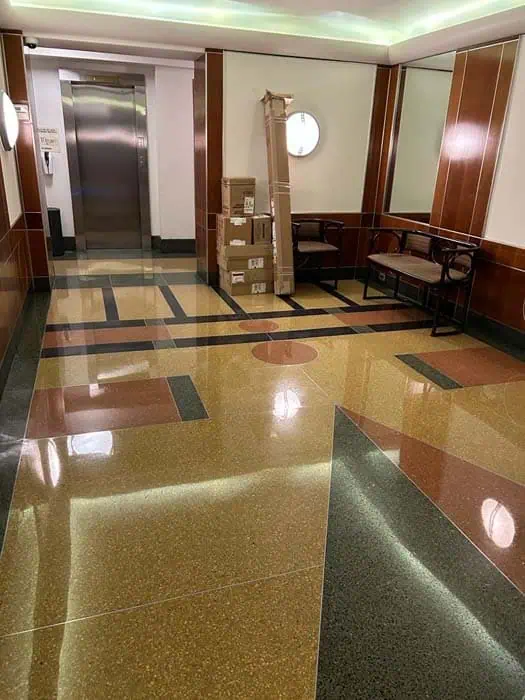
Most commercial buildings in New York County were built in an era when marble lobbies, terrazzo staircases, and granite floors were standard. These aren’t just aesthetic choices — they’re irreplaceable materials that require a fundamentally different approach than vinyl or concrete. The problem is that most janitorial services use the same cleaning products and methods across every floor type, and those products — many of them acidic or abrasive — slowly etch, dull, and damage natural stone surfaces over time.
It’s a counterintuitive situation: the more often a marble lobby gets “cleaned” with the wrong products, the worse it looks. That dull, hazy appearance isn’t just age. It’s chemical damage that accumulates with every mop pass. Professional floor cleaning services exist precisely to address what routine maintenance can’t — and in some cases, to undo what routine maintenance has caused.
Floor Polishing vs. Floor Buffing: What's the Difference?
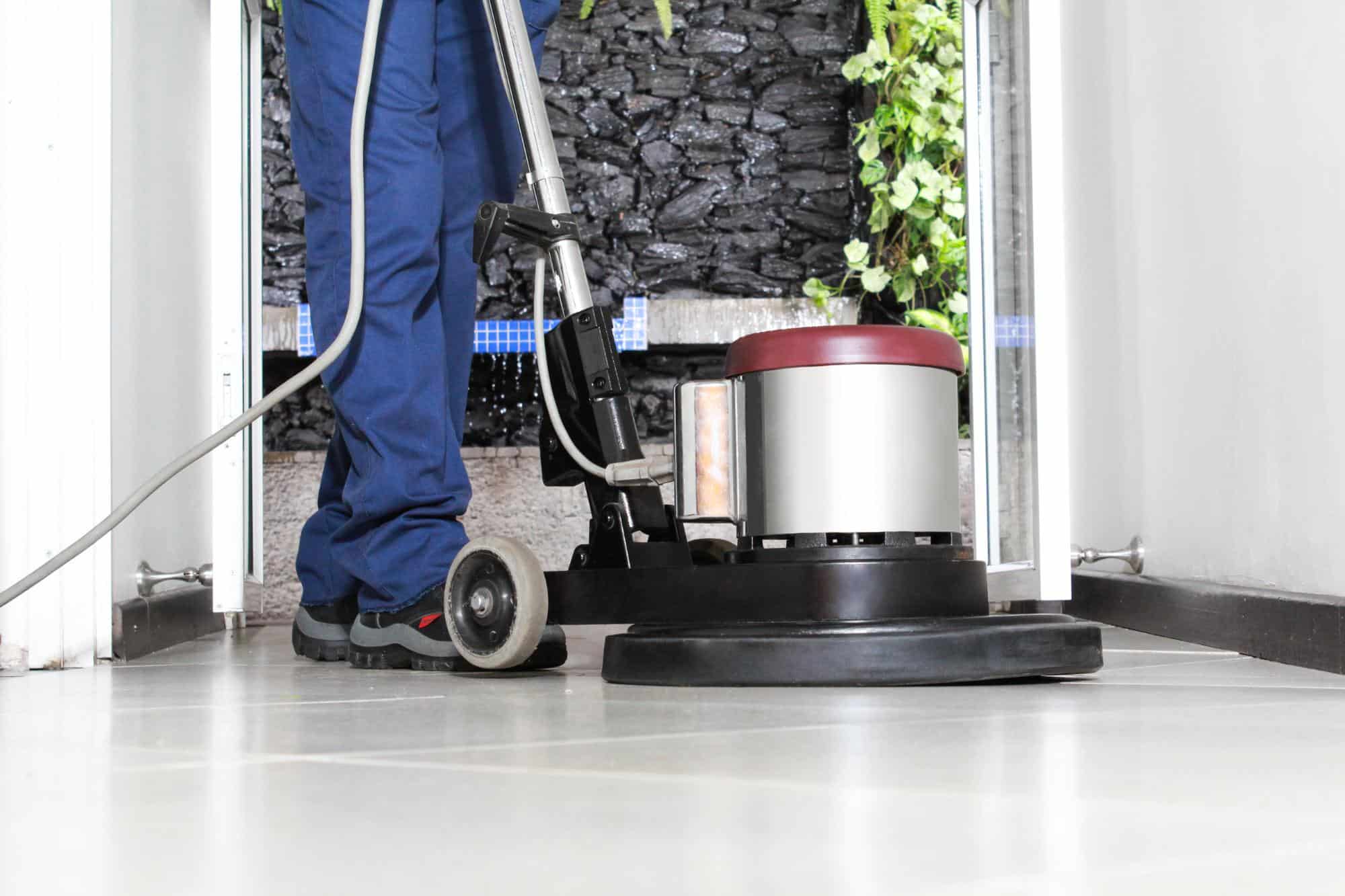
These two terms get used interchangeably, but they describe very different processes. Buffing is a maintenance step — it uses a high-speed pad to restore surface sheen between deeper cleanings. It’s useful for keeping floors looking presentable in the short term, but it doesn’t remove damage. Think of it as a touch-up.
Floor polishing is a restoration process. It uses abrasive compounds — often in a progressive sequence of finer and finer grits — to remove surface scratches, etching, and dullness, and then rebuild reflectivity from the ground up. For marble and natural stone, professional polishing uses diamond-embedded pads that physically reshape the surface at a microscopic level. The result isn’t just a shinier floor — it’s a structurally cleaner surface that’s more resistant to future damage.
For high-traffic commercial environments like hotel lobbies, office building entrances, and restaurant dining rooms, polishing is typically needed on a quarterly or monthly basis depending on foot traffic volume. A lobby in a Midtown office tower seeing thousands of foot passes per day will degrade faster than a boutique retail space in Tribeca. The frequency of professional polishing should be calibrated to the specific environment — not set to a generic schedule.
One more thing worth knowing: polishing alone isn’t always the right starting point. If a floor has significant scratches or surface damage, honing — a coarser abrasive process that removes a thin layer of the stone’s surface — needs to come first. Polishing over a honed floor is what produces a lasting, uniform result. Skipping that step is one of the most common reasons commercial floor restorations don’t hold up.
Floor Stripping and Waxing for Commercial Buildings
Not every commercial floor is natural stone. Many New York County buildings — particularly in retail, healthcare, and institutional settings — have vinyl composition tile, linoleum, or sealed concrete floors that are maintained with wax coatings. Over time, those coatings build up, yellow, and trap dirt in layers that buffing can’t remove. That’s when stripping becomes necessary.
Floor stripping is the process of chemically removing all existing wax and finish layers down to the bare floor surface. It’s labor-intensive and requires the right stripping solution for the specific floor type — too aggressive, and you risk damaging the floor itself. Once stripped, the floor is cleaned, allowed to dry completely, and then refinished with fresh wax coats applied in sequence.
The number of wax coats applied matters. A single coat provides minimal protection in a high-traffic environment. Commercial-grade floor finishing typically involves multiple coats, each allowed to cure before the next is applied, building up a durable layer that resists scuffing, moisture penetration, and daily wear. For facilities subject to NYC Department of Health and Mental Hygiene inspections — restaurants, medical offices, food service operations — a properly stripped and refinished floor isn’t just aesthetic. It’s a compliance issue.
For buildings that mix floor types — stone in the lobby, VCT in back-of-house corridors, tile in restrooms — the stripping and waxing program needs to be managed separately from the stone restoration program. Using wax products on marble or natural stone is a common mistake that creates a cloudy, uneven surface that’s difficult and expensive to correct.
Stone Restoration and Marble Floor Polishing in New York County
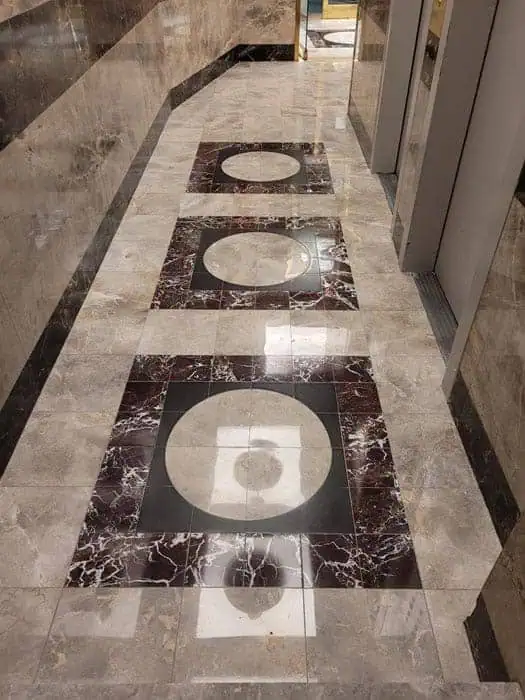
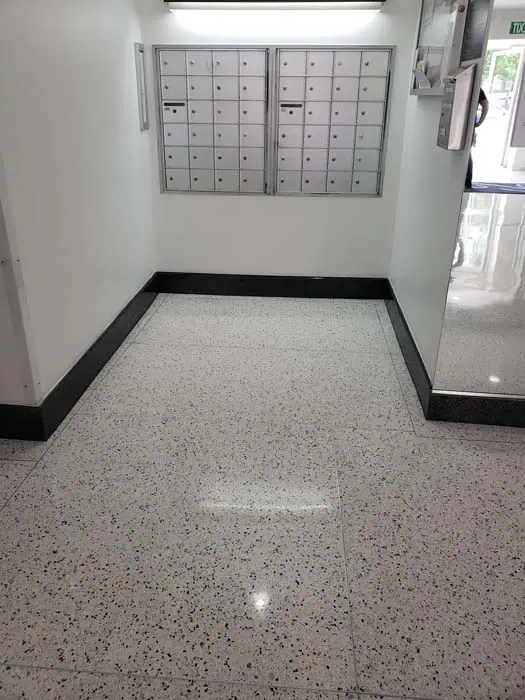
New York County has more natural stone in its commercial buildings than almost any other county in the country. Pre-war office towers, Beaux-Arts civic buildings, Art Deco lobbies, luxury condominiums on Fifth Avenue and Central Park West — marble, limestone, travertine, terrazzo, and granite are everywhere. And because many of these buildings sit within NYC Landmarks Preservation Commission historic districts, replacement isn’t always an option. Restoration is the only viable path.
This is where professional floor cleaning services diverge sharply from general commercial cleaning. It requires material-specific knowledge, the right equipment, and an honest assessment of what’s achievable before any work begins. The process varies significantly depending on the stone type, the extent of damage, and the desired finish.
Marble Floor Polishing and Honing: What the Process Actually Involves
Marble is calcium carbonate-based, which makes it beautiful and also makes it unusually vulnerable. Acidic substances — including many common cleaning products, citrus, wine, and even the calcium chloride ice-melt chemicals tracked in from New York County sidewalks every winter — react with the surface and cause etching. Etching looks like dull, whitish marks or patches that don’t wipe away. It’s not a stain. It’s physical damage to the stone’s surface.
Marble floor polishing addresses etching and surface dullness through a multi-stage process. Diamond-embedded pads are used in progressively finer grits — starting coarser to remove damage and moving to finer grits to restore reflectivity. The sequence matters. Rushing through grits or skipping stages leaves micro-scratches visible in raking light and produces a finish that degrades faster under foot traffic.
Honing comes before polishing when the damage is deeper — scratches, heavy etching, or uneven wear patterns. A honed marble floor has a matte or satin finish; polishing after honing brings the surface to a semi-gloss or high-gloss result depending on the client’s preference. Both finishes are durable when properly maintained, but they require different ongoing care protocols.
For property managers dealing with New York County’s notorious winter season — rock salt and ice-melt chemicals tracked in from October through March — the damage cycle is predictable. Lob marble polishing by floors that looked good in September often show significant etching and surface degradation by February. Scheduling a professional service in early spring, after the worst of the salt season has passed, is one of the most cost-effective maintenance decisions a building operator can make.
One detail worth noting: getting scratches out of marble is achievable in most cases, but the depth of the scratch determines the approach. Surface scratches respond well to polishing. Deeper scratches require honing first. Very deep gouges may require marble filler — an epoxy or polyester resin compound color-matched to the stone — before any surface work can begin. An honest assessment upfront will tell you which situation you’re dealing with.
Marble Etching Repair and Water Stain Removal
Water stains and rings are among the most common complaints we hear from New York County building managers and commercial clients. They appear on marble lobby floors, reception desk countertops, conference tables, and bar tops — anywhere water sits long enough to leave a mark. The mechanism is usually mineral deposits from hard water, which bond to the stone surface as the water evaporates.
Removing water rings from marble requires understanding what you’re actually dealing with. If the ring is a mineral deposit sitting on top of a sealed surface, it may respond to careful professional cleaning. If the water has penetrated an unsealed or poorly sealed surface and caused etching beneath the deposit, polishing is needed to restore the surface. Black marble water stains are a specific challenge — darker stones show water spots more visibly, and the contrast between the stained area and the polished surface can be stark. Professional polishing and re-sealing addresses both the stain and the underlying vulnerability.
A word on DIY approaches: a baking soda poultice can draw out certain types of stains from porous marble, and it’s a technique that works in the right circumstances. But it’s also easy to apply incorrectly — wrong dwell time, wrong consistency, or using it on the wrong type of stain — and the result can be a larger problem than the original mark. For commercial surfaces where appearance matters and replacement isn’t cheap, professional assessment before attempting any DIY treatment is the smarter call.
Marble repair and restoration also covers cracked marble floors, which are more common in older New York County buildings where settling and thermal cycling have stressed the stone over decades. Hairline cracks and chips can often be filled with color-matched marble filler and polished flush with the surrounding surface. The result, done correctly, is nearly invisible. What it isn’t is a permanent structural fix — if the underlying cause of the crack is movement in the substrate, that needs to be addressed separately.
Choosing the Right Commercial Floor Cleaning Partner in New York County
The difference between a floor that looks good and a floor that holds up comes down to whether the people working on it actually understand the material. In New York County — where a lobby’s appearance affects tenant perception, lease renewals, and property valuation — that distinction has real financial weight. Full marble restoration in New York County runs $10 to $25 per square foot. Full floor replacement typically costs several times that, and in landmark-designated buildings, it may not even be permitted.
Getting the right professional involved early — before damage compounds, before the wrong vendor makes things worse — is almost always the more cost-effective path. That means someone who can assess what’s achievable honestly, work around your building’s schedule, and bring material-specific expertise to every surface they touch.
If your building’s floors are in New York County and they’re not responding to routine cleaning, it’s worth having a real conversation about what they actually need. We at Diamond Stone Restorations Corp offer free on-site assessments — reach out to start there.
—
**Frequently Asked Questions**
**What is the best tile and grout cleaner for commercial floors?** For commercial environments in New York County, professional-grade alkaline cleaners are generally the right starting point for ceramic and porcelain tile — they cut through grease and soil without damaging the tile or grout. The honest answer, though, is that the “best” cleaner depends on the tile type, the grout type, the soil load, and whether the grout has been sealed. Using the wrong pH product on natural stone tile or unsealed grout can cause permanent damage. For New York County commercial buildings where floor surfaces vary by area, a professional assessment of each zone is worth more than a single product recommendation.
**Can a baking soda poultice remove marble stains at home?** It can, in the right situation. A baking soda poultice works by drawing oil-based or organic stains out of porous marble through absorption. Mixed to a paste consistency, applied over the stain, covered with plastic wrap, and left for 24 to 48 hours, it can produce noticeable results on the right type of stain. The problem is that not all marble stains are the same — water-based mineral deposits, etching from acid exposure, and dye stains each require different approaches. Applying a poultice to an etched surface won’t fix the etch; it may just add moisture to a vulnerable area. If you’re unsure what you’re dealing with, professional diagnosis before treatment is the safer route.
**What is cultured marble restoration, and is it different from natural marble?** Cultured marble is a manufactured material — a blend of marble dust, resin, and pigment with a gel coat surface finish. It’s common in commercial bathroom vanities and some residential applications. It looks similar to natural marble but behaves very differently. The gel coat surface can be polished and restored if it’s scratched or dull, but the process is distinct from natural marble restoration — the compounds and techniques used on natural stone can damage the gel coat finish. If you’re not sure whether a surface is cultured or natural marble, we can identify it on-site during a free assessment. In New York County buildings, both materials appear frequently, and treating them the same way is a common mistake that we see regularly.
**What is the best marble cleaner for water stains?** For light water spotting on sealed marble, a pH-neutral stone cleaner applied with a soft cloth is the safest starting point. For more significant water rings or mineral deposits, a professional polishing service is typically needed — the staining is often accompanied by surface etching that no cleaner alone can address. Avoid acidic cleaners, vinegar-based products, and anything labeled “bathroom tile cleaner” on natural marble surfaces. In New York County’s hard-water environment, where tap water mineral content is relatively high, water staining on unsealed or poorly sealed marble is a recurring issue — re-sealing after polishing is what prevents it from coming back.
**Can you remove rings from marble surfaces?** In most cases, yes — but the method depends on what caused the ring. Mineral deposit rings from water or beverages sitting on the surface can often be addressed through professional cleaning and polishing. Rings caused by acid etching (wine, citrus, coffee) require polishing to remove the physical damage from the stone surface. DIY attempts with abrasive pads or household cleaners frequently make the situation worse. For commercial surfaces — reception desks, conference tables, bar tops — where the damage is visible to clients and tenants, professional assessment is the right first step.